In this episode, Chris Goede and Perry Holley unpack the power of momentum and why it’s a game-changer for leadership and team performance. They explore how momentum starts—with a clear vision, realistic goals, and a culture of collaboration—and why leaders must protect the “spark” that sets it in motion. You’ll hear practical strategies and real-world examples to help you build, sustain, and amplify momentum, while avoiding common missteps that can bring it to a halt.
BELAY Ad:
Needing a break this summer but not sure how you’ll find the time. If that to do list feels never ending, you may be holding on to tasks you should be delegating. You wouldn’t pay someone your hourly rate to do administrative tasks right? When you’re tackling too many of these for your business, you’re overpaying. Belay gets it. Every dollar counts and a full time hire might not make sense right now. That’s why Belay offers fractional support that provides full time quality help for a part time price. Your time is too valuable to waste on managing your inbox or scheduling meetings. A US based Belay Executive assistant can take it all off your hands.
BELAY Ad:
To learn more about the power of delegation, download Belay’s free Delegation worksheet and guide. Inside you’ll find three simple exercises to discover what you can delegate today so you can enjoy summer tomorrow. Just text the word exec to 55123 for your free copy today. That’s exc to 55123 to have your best summer ever with Belay.
Perry Holley:
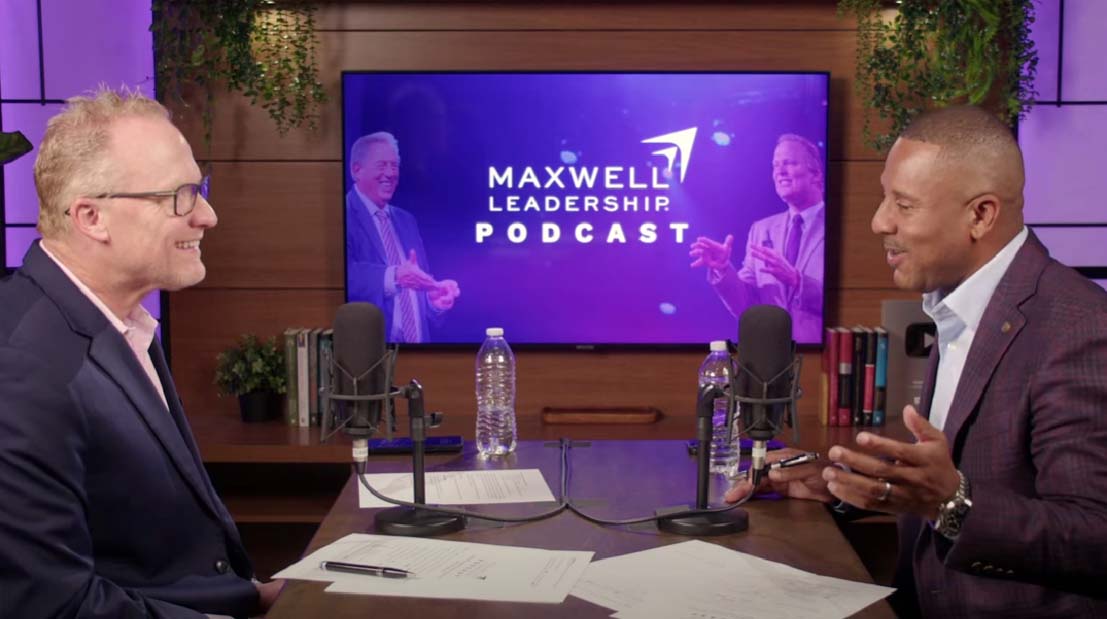
Welcome to the Maxwell Leadership Executive Podcast where our goal is to help you increase your reputation as a leader, increase your ability to influence others, and increase your ability to fully engage your team to deliver remarkable results. Hi, I’m Perry Holley, a Maxwell Leadership facilitator and coach.
Chris Goede:
And I’m Chris Goede, Executive Vice President with Maxwell Leadership. Welcome and thank you for joining us today. We’re going to talk about momentum. Big mo, the big mo. And it can help you one way or another as a leader, by the way. And so we’re going to get into this as a leader and as a team. And Perry and I love to talk about sports analogies. We’ll bring some of that in and then we’re going to talk about some business applications.
Chris Goede:
So, so grateful that you’re here. I want to encourage you to go to MaxwellLeadership.com/ExecutivePodcast. There you can fill out a form, you can ask us a question, leave a topic for us for a future episode. Or maybe you even need some help with momentum with your team. We would love to to be able to do that. So let’s dive in. Let’s start talking about that. Today’s topic around momentum is Stop killing my momentum.
Chris Goede:
Now I don’t know if that’s a statement that I am repeating to myself. I think it probably is as a leader or if it’s my telling me to stop killing my momentum. But this is as serious as it sounds. It is one of the most valuable assets. As a leader, it can be a tremendous friend of, of a leader. But unintentionally, if we’re not careful, we could be sabotaging that momentum. Right. And so you and I know that we could take a mediocre team that’s got some momentum, talking about sports that all of a sudden is making a run the last seed of a, of a playoff run of any sport.
Chris Goede:
And all of a sudden they have a little bit of momentum, things are following their way and all of a sudden they end up in the championship game or momentum can also get you to a place where you just feel stuck as a team. Your team may be extremely talented, but you feel stuck spiraling a little bit. Yeah. And we’re going to talk about this based off of a book of a dear friend of ours. And one of the reasons we want to do this was like you have to go out and find this book, go to Amazon and purchase this book. But Perry’s going to tell you a little bit about it. Don Yeager has released a new book around this momentum and so we’re excited to dive into some that content today.
Perry Holley:
Yes. I don’t normally buy books with the word science in the title, but Don’s. Don’s new book is called the Science of Momentum and I have really enjoyed reading it. And we’re going to try and get Don on the podcast. He’s a good friend of ours and good friend John Maxwell. But I went ahead and, and got it and was going through it. I think that this idea that Don is and his partner on the book have really captured some of the. What makes.
Perry Holley:
How do you. Can you. Can you put a framework around how momentum is built, how you see that it’s not just a sports thing, as Chris was saying it really what separates good teams from great teams being able to see it. I want to talk a lot about that with you. And before we do that, anyways, like a high level overview, I wanted you to speak just for a moment kind of how you see momentum in the business world. But could you also. Let’s relate it to the five levels because this is a topic that we do address in all, all of our training around five levels of influence, five levels of leadership and that level three type of a thing. But I’d love for you to put your thoughts on it.
Chris Goede:
I’d like to even back up from level three and think about this. I think you can have momentum and at each level in the five levels and it really becomes something that is. It’s Something that’s a multiplier for what you and the team are working on or you and the individual are working on. For me, when you look at this, I think momentum is part of the five levels. I think at every level. I know you Talked about Level 3, we can talk about this because it’s really about the production level and what’s going on inside the organization as a leader, as your team, winning and hitting their KPIs, whatever they might be, revenue or on the operational side. But when you think about this, when you begin to focus and have an intentional plan around investing in and connecting with your people at level two, you’re going to build momentum in your relationship with them. You’re going to.
Chris Goede:
They’re going to want to be following you, they’re going to want to be on your team, they’re going to give you more permission to lead them. Same thing with producing when you have a couple of small wins. That’s why a lot of leaders talk about, hey, we have a big goal, but what are the small goals and how do we begin to produce and create some momentum? And I think the more that we do that with people and we create wins and we call it out, we’re going to talk about how do you recognize this as we get in here? You create some momentum. Before you know it, the team’s rolling versus if you don’t and you’re not acknowledging it, you don’t do level two well, what’s going to end up happening is your momentum is going the other way and the team’s walking out the back door. Finally, at level four. For me, there are people that I’ve had the privilege of coaching and mentoring and developing. And when you create momentum, when you speak into something that someone’s going through and help them and develop them and reproduce yourself, and they begin to get a little bit of sale behind, win behind their sale, and they begin to get a little momentum, they come back for more and there’s more and more momentum in that coaching, mentoring, relationship. So I, I can take momentum and look at it from a production, a personal, you know, personal connection and even a reproduction side on level four and talk about it as well as we can see it in sports and we can see it in the business world.
Chris Goede:
So I love the topic of momentum.
Perry Holley:
You know, and thinking as you’re saying that how does. Well, in sports momentum happens. I always ask when we’re in a training session because it’s hard in people’s minds to think about what is momentum in business, in My business look like? Yeah. I said, what does it look like in sports? So something. If you hear the announcer say, momentum is shifted, A has momentum. What did. What did team A do? Yeah, everything’s working. They throw a pass backwards, somebody catches it, it bounce off a helmet, something, a shot goes in, and then it goes.
Perry Holley:
And then the next thing. And the next thing. And then I say, what does the other coach do? And almost everyone knows, call a timeout. Call a timeout.
Chris Goede:
Gotta stop them.
Perry Holley:
Yeah. And so why do you do that? To try and break the momentum. I said, okay, so what does break the momentum in your business? When everything’s kind of working, people are working, the. The process is working, the customers, things are just cranking. What breaks the momentum? And you think, well, a process, break, issue, timing, drop, delivery, miss, what, you know, think of those things. But it also, this I was relating to what you’re saying about five levels is that if I haven’t established the relationship and I we’re not driving at level three to push and to get those, that’s where your credibility results. That’s where everything’s happening. If we don’t have that engine cranking that relationship, you may question my motive.
Perry Holley:
You might question, why are we doing it, you might question our strategy. All of a sudden, momentum has to take a hit. And so I like where Don goes in the book and then some of the other ideas that I’ve thrown in here to say, what should we be looking at as leaders in business? What does it look like? And. And can you notice it? I think I want to get to that in a minute, but let’s go through some of these characteristics of momentum and. And see what it is you got to do to get yourself in position to make momentum happen.
Chris Goede:
So we’ll. We’re going to just kind of list these off for you, and then we’re going to dive into some additional content. But in the. In the book we talk about, the first one is you got to have a set of clear vision, right? Like for us, we talk about if there’s not clarity, you create confusion, by the way, if there’s confusion, you have failure. And so if we clearly don’t understand what the goal is and we get in halftime, we’re all excited, but we’re not even clear on what the vision is. That. That that is a problem. We’ve got to know what we’re going after, and you got to know how what you’re doing is tied to that vision.
Chris Goede:
By the way, every single person on your team’s got to understand that where.
Perry Holley:
Do I fit in that what is the goal? So, you know, the achievable vision might be for the. If you put in sports for the season, we’re retaining the championship. But what’s the goal? It might be this week. We have to next game this, and then what’s my role, as you said, in that, so that everybody’s clear on where we’re going, what the next steps are, and what’s my part of it.
Chris Goede:
Yeah.
Perry Holley:
To do that.
Chris Goede:
It’s so true that. You know, one of my favorite press conferences of Bill Belichick is when he is dealing with an issue or dealing with a loss or even dealing with a big win, and he gets into his first press conference of the week and they want to start talking about all of that. He goes, we’re on to Chicago. Like, doesn’t even address it because the vision for the team is, don’t worry about that. Good, bad, whatever. Like, we’re going after, like. And they have that clear vision. So.
Perry Holley:
I’m enjoying his book, by the way. Thanks for joining me.
Chris Goede:
It’s a great book.
Perry Holley:
I don’t know how of all the books, I missed this one, but it just came out.
Chris Goede:
It just came out. And so you always have, like, a Runway of 40 books. And. And so you probably just haven’t even noticed it.
Perry Holley:
I thought it was old.
Chris Goede:
Yes. Nope. Just came out.
Perry Holley:
And he reads it. So it’s unlisted on audio. Sorry.
Chris Goede:
Yeah, no, it’s good. No, it’s good.
Perry Holley:
Tell me something else.
Chris Goede:
So second here is establish achievable goals. You. You understand I said achievable, by the way, because I know a lot of leaders that will establish goals, and they are not achievable, by the way. And so what ends up happening is they. They become. They’re unrealistic. And the team either starts off knowing that they can’t accomplish those goals or even everything that they got, they end up, you know, falling way, way short because the leader, whatever situation is I think a lot about. Again, go back to sports, where let’s say you have a minor league baseball team and you enter them into the Major League Baseball playoffs, right? Like, it’s just it.
Chris Goede:
More than likely now anything can happen, right? But more than likely, it’s an unachievable goal for them to win the World Series as a minor league team.
Perry Holley:
And then if you have those goals, celebrating the progress, celebrating milestones on there, another one would be fostering collaboration. Really think about that is, well, I guess what’s the opposite of fostering collaboration much in individual types of efforts. Again, sports analogy is a good one there about team. And are we collaborating? Are we bringing our best, or is it a bunch of individual performances, or are we acting as a team?
Chris Goede:
I think also under this collaboration, I want to say this. One of the things that you. There are times you can be too collaborative. Hear me say that at the end of the day, leader you’re called, and it’s your responsibility to make certain decisions. Don’t allow collaboration to delay decisions. But at the same point in time is that when you can be collaborative and you can share ideas, you can support each other. Gallup says that teams that are proactive in that communication are 40% more engaged together. Right.
Chris Goede:
So part of that fostering the collaboration and creating momentum is having the team speak into potential things down the road or what they’re dealing with now. And so I think that collaboration is a big part of that. Cool.
Perry Holley:
Yeah. Talk about modeling positivity. That this really is about setting the tone that with your, with your team, you know, optimism or, you know, saying calm is contagious. Optimism is contagious. Energy is contagious. Like energy and energy out. I always say that people are watching you. And so what do you bring to that? You, you know, think about a leader personally killing momentum by.
Chris Goede:
Because, you know, what I thought about around this was you always say people are watching you all the time. All the time. And leadership is contagious. And so, man, just think about if you’re in the sales world and you’re selling something and you’re in the first week of the month, and the sales leaders, like, I mean, guys, it’s not going to happen this month. Like, what I mean, versus, you know, it’s bringing in. And you got to be authentic. Hear me say this, you got, again, it goes back to achievable goals and this, that you got to have authenticity. But, man, you got to, you got to model that positivity.
Chris Goede:
It’s contagious.
BELAY Ad:
Hey, podcast listeners, many of you listening right now would probably love the autonomy that comes with owning your own business or becoming a coach that helps other businesses succeed. Well, we have a phenomenal strategy where you are 100% in control of your business, your own business, earning income on your own terms, and have access to the people, tools, and resources you need to build a thriving leadership development business. When you become a Maxwell Leadership Certified Team member, you join a global community of entrepreneurs led by our expert team of mentors and faculty, including John C. Maxwell. You also get one of the top leadership certifications in the world next to your name, giving you the boost you need to get started. Visit us online at MaxwellLeadership.com/JoinTheTeam to find out more.
Perry Holley:
Just on a call the other day, and we’re seven days left in the month, and the business we’re coaching is really monthly goals. Every month is a marathon, is a sprint. It’s a long sprint, but then they start again. But they were. I always ask, how’s it going? Well, we’ve got seven days. We’re really far behind, but we’ve got this. I see it. We can see it from where we’re sitting.
Perry Holley:
I know he’s hurting. The team’s on the call, too, and they’re listening, and he’s modeling optimism because then what happens?
Chris Goede:
The team goes and makes one more call, makes one more meeting, whatever it might be. So another one is provide support. I love this. I think, man, leaders, one of your biggest responsibilities is to remove barriers and to get them away from the team. We were just in a team meeting, and one thing, I mean, I got to do a much better job at is fixing some of operational challenges, right? We talk about them, and, man, they’re. They’re holding your team back from effectiveness and efficiency.
Perry Holley:
How many sticky notes were in that.
Chris Goede:
Stack we gave you? Yeah, thanks, Perry. I didn’t really need everybody to join the meeting that’s listening to our podcast, but if you want to bring them in there. Another one is to continuously evaluate the strategies that you have in place and making sure that you’re not. Remember, you. You have to figure out, hey, what is the goal? We’re going to win the game, whatever that is for you to create momentum and understanding that some of the things that you’re doing are going to change. That’s why there’s halftime adjustments. Some of your strategies are going to change. And so are you evaluating? Are you working on it? Are you letting your team speak into it, by the way? Because they’re the ones that are closest to the dollar, in essence, or, you know, where the rubber meets the road.
Chris Goede:
And so I think be able to evaluate and to adjust is key.
Perry Holley:
Yeah. You think what kill momentum is what your strategy or your. Your work if not working and well, we’ll just keep working harder, more hours. No, be agile and know when to flex on that. And that kind of leads into building resilience about when there are setbacks. Help the team bounce back. Don’t just let people get beat down, but teach resilience to go back to the optimism and keep moving people forward. It’s uphill most of the way in business.
Perry Holley:
And guess what? Behind that hill is another hill. So that resilience to follow through, that’s good.
Chris Goede:
And then finally maintain focus. These are quick lists for you here. Avoid distractions and keep everybody aligned. I kind of giggled on that because that is a problem around Maxwell Leadership. We love to to get involved in adding value to all kinds of people and sometimes we lose focus on really what we’re going after. When you do that, your momentum again, you’re going to self sabotage it. Just unknowingly. It’s just going to start happening if you don’t stay focused.
Perry Holley:
So this gets me the point. I really want to ask you this because don’t Don Yeager in the book brings up what kind of has a model. I’m not going to go into the whole model here. We’ll get him to come in and talk about the model. But the one thing that was in the model said momentum starts with a spark and he calls it the spark and that. And it’s unfortunate that he starts the book. Let me just say as a we live in Atlanta, Georgia.
Chris Goede:
Maybe we’re not going to have him on the podcast. Yeah, I mean we needed him.
Perry Holley:
He starts the book with a story of Atlanta’s last, maybe only super bowl appearance. I don’t know. Last super bowl appearance against the New England Patriots and Belichick and Brady and Atlanta up by three scorers at halftime, looking like they’re just thumping the Patriots. But something happens and Don plays this out a bit about what happened was there was a spark there. Somebody made a diving catch for the Patriots and then that led to a fumble recovery which then led to a first down, which then. And then how Brady and the I just wanted to get your perspective on when you think about a spark and there’s so much around what a leader. You have to be able to see the spark. You have to, you have to be prepared to receive, you know, when the spark happens.
Perry Holley:
But that’s a kind of an odd term that I don’t think a business person thinks in that I really like how Don’s position this.
Chris Goede:
But yeah. So when I think about this, I think about it actually two different ways. I think about both for your team, whatever that looks like, there is a. There’s a spark that happens from either something that you did, you executed or maybe it’s a competitor or maybe it’s a customer or something that created a spark. In this analogy, the Falcons did several Things to create a spark for the New England Patriots. And they were both aware of not only the sparks they were creating, but also that were being created by the team and ready to take advantage of what that might look like. And so as you get further in the book, you’re going to hear a little bit more from Coach Belichick on what his mindset was going into the second half of that game, and inevitably probably had something to do outside of a late play call decision on our end to be able to do that. But I want you to be thinking about this, because as we talk about this, spark it.
Chris Goede:
For me, it’s something inside an individual or a team that gives it energy, right? That gives it more than hope, but something that’s just like, man, we got this. Like, we got a shot. Like, we’re gonna go after this. Like, we only need to sell two more. Whatever. We only need to cut this much cost. We’re already halfway there, man, that new process, whatever it might be. So there’s something that happens, an action item that.
Chris Goede:
That happens, that creates that inner, I think, believability, that inner energy, the. The inner. Oh, man, this really could happen. And so as leaders, we need to be aware of that, what that looks like inside our team, no matter what industry, no matter what skill set we’re. We’re delivering to the organization, it’s going to happen both in your individuals, of your team, but also in the team collectively. So there’s something there that Falcons had.
Perry Holley:
Full momentum at the whole first half. It was all Falcon momentum. And they come back out and they still have momentum.
Chris Goede:
They’re.
Perry Holley:
They’re up by a big amount. But so this spark happens. A play. Something. Something happen. Tell me the leaders. So Don in the book talks about Brady’s role in walking down the sideline after they had gotten the turnover. I think whatever happened, they got the ball, then they made a play and that.
Perry Holley:
But he continued to walk the sidelines, going player to player to player. Is this.
Chris Goede:
That.
Perry Holley:
With that optimism and that belief and celebrating those things we just talked about 100%, right? He would not let momentum. That spark, it was like blowing on the spark to make it flame. Is that.
Chris Goede:
I would agree with that. I don’t know in that moment that he created the spark, but he was aware.
Perry Holley:
Spark happened.
Chris Goede:
The spark happened.
Perry Holley:
He saw he was aware, and he.
Chris Goede:
Was aware that it happened. And then immediately, you know, as. As Don talks about, like, you got to be able to recognize that both as individuals and. And leaders. And so you got to say, man, I spotted it, he sensed it, and now let’s build off of it. Let me rally the truth. So I’ll rally and cry around that. So you go, okay, that’s great.
Chris Goede:
Yeah, I understand that in sports, what’s that look like in. In the business world? So when I think about it, one of the things that we do is we, we help train and develop and coach and consult organizations on leadership culture. We do it through coaching expertise. We do it through content, intellectual property. And so as I was thinking about this, I was like, okay, here’s is a spark. Couple a couple of different examples for you. Number one, let’s say we. We know that corporate America and teams and organizations are dealing with a certain thing.
Chris Goede:
So we go ahead and we ask Perry to develop a content piece for it. Well, we’re going to start talking about it, but really no one’s going to be super excited about it until we see the first organization partner with us to bring that inside there, close that sale in order to do that in the sales world. And all of a sudden, that little spark energizes our facilitator who’s now going to get to deliver something new. Obviously, the client, that’s great. But the team that’s selling it and the team that, that is having to manage that account goes, man, this is, this is going to work. This is adding value to them. And oh, by the way, their peers then see them and they see the spark that happened and that spark happens inside of them, right? So whether it is on a, again, revenue side or an operational side, if you start a new process inside your organization and it saves six minutes, it saves one of your team members from having to spend 30 minutes inputting something manually. And all of a sudden that energy happens inside there because of what happened in that new process.
Chris Goede:
Then all of a sudden it becomes contagious throughout, you know, the organization. There are all kinds of different ways to be able to do that. Sometimes another sales example is I’ll have someone come to me and they’ll be like, Chris, the organization that we were working with really needed this. Now I had to get a little creative and I had to do something a little bit different. And here’s what it looked like. And I know we don’t normally do this. And then it created a spark in me going, oh, if that adds value to them, does that add value to other organizations? And then just off of an idea that maybe somebody had created a spark actually in the, in the leader itself, that I then need to be able to come Back to Perry, who’s the content guy for me, and say, what do you think about this? What do you think about that? So I think there’s. You just got to be.
Chris Goede:
You got to be aware of what is creating positive energy in and around your team. And like Don says, you got to be able to recognize it, and that’s the first step of it.
Perry Holley:
I’m thinking that you were telling me we were together in an event and. But you kind of had an impromptu request to go with one of the guests at the event to their location.
Chris Goede:
Yeah.
Perry Holley:
And you went and you told me that the response from there, as you told me, I felt like the spark had happened. It was the best thing they’d ever done. They didn’t see it coming, but you provided that spark. I think they’re going to have some momentum picking up from that. A couple things had to happen there. You had to be prepared. So we’ve been doing the work. We’re preparing.
Perry Holley:
All of us here are preparing. We get the opportunity, the spark happens. And then Don taught you got to move quickly to build upon the spark. So you think, what’s the next step that you’re doing? And then this idea of nurturing, it’s a word we don’t hear in leadership a lot, that this. The spark alone, and Don calls it the spark alone is not enough. I mean, sparks happen. If you don’t blow on them, they don’t become a fire. So what is getting.
Perry Holley:
The reinforcing positive behaviors?
Chris Goede:
Yeah.
Perry Holley:
Is that celebrating the progress something in a sports game or in that situation?
Chris Goede:
It is. It is. Let me back up one. I want to give you one thing I thought about with our notes today, was on this action piece. Right. Being ready to act. As you talked about. When John says this about momentum, when things are going well for your business, why would you take pto? Why would you take vacation when things are not going well? Take pto.
Perry Holley:
Right.
Chris Goede:
Like. And he’s always said that for as long as I can remember. And John loves to have fun with that statement. But. But it’s true. It’s like. So if you’re as an organization, as a team, as a leader, as an individual, if you feel things are going well, man, that’s the time to continue to mash the gas pedal. And so I thought I’d share that with you guys, the kind of, like, inside humor that he talks about.
Chris Goede:
But. But that’s John knowing that that momentum is a big deal. And don’t take your. Don’t take your foot off the gas Pedal. The other thing about this nurturing piece that I want to address real quick is this is a topic, and I don’t know how Don would, Would, would respond to this, but for me, I feel like in this nurturing, part of it is when you acknowledge not the action that happened. Let’s say it was a turnover. Let’s say the defender broke on the ball early, was able to intercept it. Okay.
Chris Goede:
It’s not the interception that I would be encouraging or nurturing. Right. What I would do, no matter what the skill set is or what happened to Spark, is I would be encouraging and lifting up the behavior. Right. That drove that skill set, that drove momentum, because really it’s the behavior of the individual. It was that DB being prepared, but it was jumping on the route. It was crashing to the ball. It was all 11 guys, right? What is the behavior? And that’s what I want you guys to be celebrating, because I think that’s how you continue to nurture and you reinforce that positive behavior which Don talks about.
Chris Goede:
And I think a lot of us, when we do this, we actually nurture and reinforce the actual action.
Perry Holley:
This is so big.
Chris Goede:
The end. The end of it. That created the momentum, not the behavior that Don’s talking about here. That created the action that changed the momentum. And so I think I just, I just was thinking about that. I wanted to share that with our listeners.
Perry Holley:
Into classic Carol Dweck mindset conversation there is that we get in trouble because. And then Carol Dweck, she talks about, you know, kids in school exhibiting a fixed mindset. Yeah, because we praised. They got an A once and you praise the A and then they, they. With a fixed mindset, they don’t want to take a chance of not getting an. So they will. They stop. They back off.
Perry Holley:
They don’t give their all. They think that I’m not even going to tell you about the other stuff. Matter of fact, I’m not even going to try anymore because what if I don’t get the A instead? Her research says if you praise the. Don’t say anything about the A. But say, man, you must have worked. Really, you praise the process that got the A. To your point, you, you. And she calls it, are you appro.
Perry Holley:
An improving team. And if they’re approving, they’re trying to get their. Their, you know, the interception in front of you. No, the improving team says, look how I crashed and got and caused the intercept. So the process is more important than the outcome. And I think that the momentum backs that up. Just before we wrap what kills momentum is I just think as a leader, I want to be thinking about are the things that I do. I think of, you know, a couple, like, unclear communication.
Perry Holley:
That’d be number one on my list. Lack of clarity and maybe indecision. Not moving on, that not making a.
Chris Goede:
Decision is a decision. And 100. You saw, it’s the person that starts first that wins. Like, I can’t remember who I was talking to. Or I heard a speaker and a very successful female executive, and she was like, the difference between us and other organizations is that we decide immediately and then learn after our decision and fix. Most people want to learn, then decide. And we’ve already then changed three things in a matter of 10 days, but we decided to start 10 days earlier. So making sure that you make a decision quicker helps create momentum.
Perry Holley:
I also think shifting priorities. If you’re not clear on what is important, are you majoring on majors or majoring on minors, and people can get, you know, confused on what’s important that we mentioned, you know, optimism and recognition and some of those things. What do you think about the, like, just natural resistance to change. If you’re moving quickly and momentum’s on your side and you’re. You. You’re making efforts to. To shift resistance to change. Can.
Perry Holley:
Can people start putting up a ball?
Chris Goede:
It’s going to absolutely slow it down. Because here’s the deal. As you increase your momentum, you will not keep doing the same thing you’ve always done over and over again. So the leader’s got to be able to just make small changes to keep the sail going, to keep the boat going in the wind. Right. To follow that momentum. And if you’ve got people on your team or leaders that don’t want to make that change and want to just ride that same course of momentum, it’s going to die out quicker than the ones that if you made small adjustments. So if you’re resistant to change, it will kill that momentum.
Perry Holley:
Well, as you wrap it up, tell me what the Falcons did to lose more.
Chris Goede:
Yeah, no, we’re not going to talk about that until Don comes back. Back. And then don’t be here. Be here. And then I’m sure he’ll talk about it. The other thing is we just kind of wrap up is what Don’s talking about right here. And I want to encourage you. Go get this book at.
Perry Holley:
It has the word science in it.
Chris Goede:
Has the word science. That’s right. It’s a little bit above the pay grade of Perry and Chris and our executive podcast, but it’ll kill. Yeah, we took a risk. It’ll kill momentum if. If you’re not prepared and leverage what Don calls as a spark, are you looking intentionally looking for the spark? Well, as I wrap up, Don says in his book, he says momentum is a force multiplier, a force multiplier. And in most organizations, it’s not lost. It’s actually killed.
Chris Goede:
It’s actually killed right by. By probably by the leaders. And so remember, momentum is not accidental. It is intentional. And there are things that hopefully we shared with you today out of the content and some of our thoughts that will help you be a little bit more intentional about it. Here’s what I want you to do. I just said it is killed and probably unintentionally killed. So I want you to go and I want you to ask your team this question, okay? What is one thing that we are doing either as an organization or as leaders, that is unintentionally slowing you down as a person? Because whatever that is, one of the things we talked about early on was got to remove those obstacles.
Chris Goede:
You got to know what that is. And if it’s slowing them down, you need to make sure that you move out of the way. And I just want to make sure, man, stop killing momentum. Let’s start multiplying it because it is the leader’s best friend. And like you said, I think early on, right. We’re never as good as we think we are with the momentum going. We’re never as bad as we really think we are when momentum’s going the other way. So let’s spend as much time creating good, positive momentum that we can.
Perry Holley:
Fantastic. Thank you. Reminder, if you want the learner guide for this issue, like to learn about our other podcast offerings, including Don Yeager’s podcast, or would like to leave us a question or a comment, we you can do all that at MaxwellLeadership.com/ExecutivePodcast. We love hearing from you, and we’re very grateful you’d spend this time with us. That’s all today for the Maxwell Leadership Executive Podcast.
Transcript created by Castmagic.
Maxwell Leadership delivers corporate training that strengthens executive leaders, aligns teams, and transforms culture. Discover how our proven frameworks equip your organization to lead with clarity and impact.




Be the first to comment on "Stop Killing My Momentum"