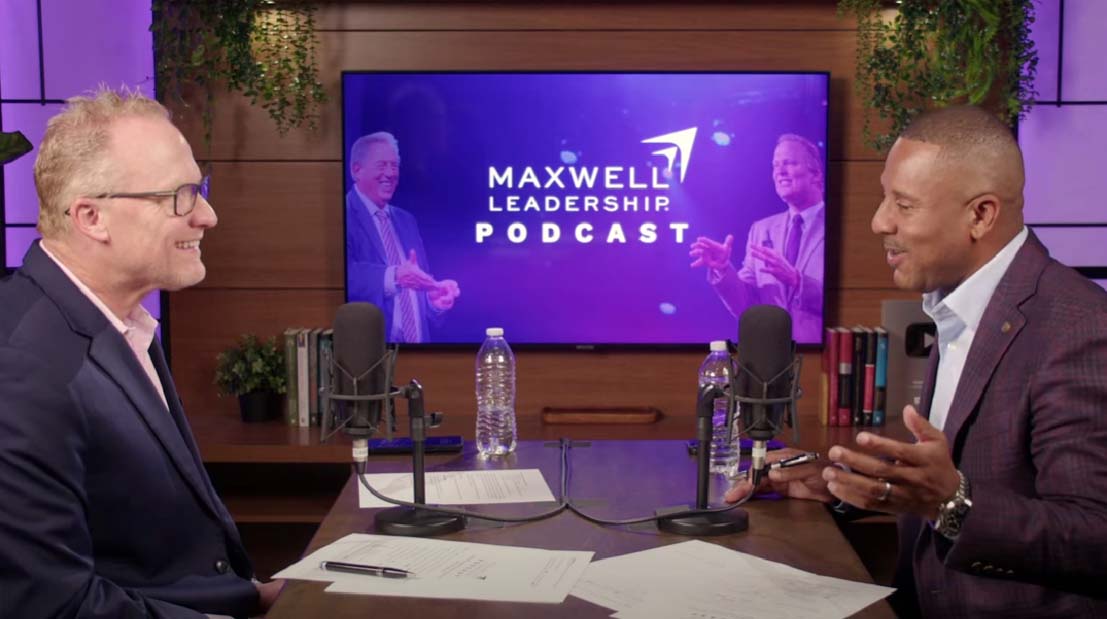
In this episode, Perry Holley and Chris Goede explore gravitas as a key element of leadership presence and influence. They share practical ways to develop itâbuilding self-awareness, communicating with confidence and humility, and staying calm under pressure. With consistency and integrity, leaders can inspire trust, command attention, and strengthen connections with their teams.
Perry Holley:
Welcome to the Maxwell Leadership Executive Podcast where our goal is to help you increase your reputation as a leader, increase your ability to influence others, and increase your ability to fully engage your team to deliver remarkable results. Hi, I’m Perry, Holley, a Maxwell Leadership facilitator and coach.
Chris Goede:
And I’m Chris Goede, executive vice president with Maxwell Leadership. Welcome and thank you for joining. Today we’re going to talk about an interesting word around leadership. And again, you guys know Perry brings this content to us from what he’s learning, not only just personally, but in the field, like what he’s coaching on, what we’re training on. And you hear this word and immediately I began to think about these paradoxes that even Tim Elmore, great, you know, author friend of ours, and we’re going to talk a little bit about different words today that I think are paradoxes to, to each other in leadership. But the title today has the word gravitas in it. And then sometimes immediately when you think about that, not everybody thinks of it in a positive way. We all know some people that believe they have gravitas, but the title for today is the gravitas that drives connection.
Chris Goede:
Right. So if you’re going to have it, let’s have it the right way and then let’s have it in a way that will connect us with those that we have influence with, with those that we lead. And so that’s what we’re going to dive into in just a minute. Before we do, man, I want to encourage you to go to MaxwellLeadership.com/ExecutivePodcast there, fill out a form. We’re getting ready to roll out a brand new content piece around the rules of resilience. Valerie Burton. And this is a topic that in corporate America and teams, the psychological safety and capital is draining and leaders need to know how to identify it. And I want to encourage leaders themselves to make sure that they’re identifying that in themselves and how are they becoming resilient? And so you work closely with Valerie on that.
Perry Holley:
I did. And her roll that out, roll it out here in the next few days. And I just, just to pile on what you’re saying that 10 rules, I think I quote since I’ve been studying it for months with Valerie and the team as we developed a quoting a rule here and a rule there.
Chris Goede:
You did it this morning?
Perry Holley:
I did it this morning. I was going down here like, hey.
Chris Goede:
I was on a coaching call and I said, hey, rule two and three.
Perry Holley:
Yes.
Chris Goede:
And. And went right into it.
Perry Holley:
I think that they’re the most applicable thing you could probably pick up to for just your personal life, professional life, help your team, help your kids. I think it’s, it’s going to be a winner.
Chris Goede:
Yeah. So fill out that form. We’ll get back in touch with you about what that looks like. We’d love to come spend some time with your team or even one on one from a coaching standpoint. Well, back to what we’re going to talk about today, this gravitas that drives connection, you know, it’s hard to describe. Some people may say it’s the, they have the it factor. Like you’ve heard that before. Oh, you know, he or she’s got the it.
Chris Goede:
It’s hard to kind of see it. But what I’ve learned from you, because you’ve been a big studier of this executive presence. Right. What does that look like? That’s a main component about that, of that. And we’re going to kind of break that down and what that looks like. But we want to talk today about how do you have it in the right way and have it so that it drives connection to your people. All based off of, remember level two of the five levels of leadership. That’s the foundation to all leadership.
Perry Holley:
Well, it’s this whole idea of executive presence. Gravitas is the leading component of that. We’ll talk more about it. But I know it’s hard, I mean, looking at me now, know me the way you know me, to think that I would have ever struggled with this. Sorry.
Chris Goede:
Yeah, yeah, listen, I mean he started smiling before he would talk, so I started laughing because I didn’t even know what he’s going to be talking about. But it wasn’t true.
Perry Holley:
Yeah, I can say it straight. This is, I think, a lot of us coming up, you know, imposter syndrome or do I deserve to be in the room or I want to seat at the table and all these types of things. But people are, you know, you’re smart, your content, your, your competency goes a little ways, but it’s. How do people perceive you and to. That’s not charisma. A lot of people think, right, I have to be charismatic to have gravitas. No, it probably would help, but it’s not required to do that. And I think about the five levels of leadership and influence.
Perry Holley:
So gravitas, why I said connection, it drives a, it’s a heavy driver of influence. It gets you more influence of people because you cause them to kind of stop and you’re noticeable. You can’t just go past you.
Chris Goede:
Right.
Perry Holley:
You’re in matter of fact, the word gravitas, I kind of got in a little trouble. I was doing a big international swing through a number of countries, five countries in one trip. And I was speaking on this and I thought, you know, I’ll be clever. I’m going to look up gravitas in each of the languages and have that on my chart. And they’ll think, wow, he really did his work.
Chris Goede:
He knows us.
Perry Holley:
This is a professional. And so I looked up, you know, what is gravitas? And I was in Spain in Spanish. Oh, gravitas. Okay. What is gravitas? In France, I’m going to. Oh, it’s gravitas. And about the third country I went, my wife is laughing at me because I’m the only one in the family that took Latin in high school when everybody else was taking Spanish. And she keeps saying, how’s that working for you? Yeah, that’s one of those words that has a root that is very similar in a lot of languages.
Perry Holley:
So. But we get the word gravity and it’s a heaviness. You have to be dealt with. It’s a noticeable thing. And so I love this idea, and I think it’s a big piece of how you come across as a leader.
Chris Goede:
Totally agree. I would add on to that. It’s almost like we were just talking a minute ago about, as we were talking, kicking off here about Valerie and resilience, and she’s been studying that content for years. Right. And it makes me think about gravitas as a leader or in a certain vertical or topic. Right. Like, you know your stuff. You know, it cold like that.
Chris Goede:
Like, you could go, we could ask her six, seven, eight deep questions.
Perry Holley:
Yes.
Chris Goede:
And she’s got the answer like, that’s it. Right. Like that’s. That’s part of that gravitas. And people are. They’re going to gravitate towards that and be connected because of that. You know, I was thinking about this, and I’ve been in a lot of meetings, and many of you can remember some of your early meetings post Covid and what that looked like for your business or your teams. And I remember coming into a meeting with Mark Cole, our CEO, and our leadership team around the table, and no one had the answers.
Chris Goede:
But the way that Mark carried that meeting and went about it and understanding kind of where our focus was, what our true north was, no matter what the questions he asked around the table, right. You come into a meeting like that where there’s chaos and people have so many unknowns in their mind. And to be able to facilitate a meeting, to bring the, the temperature of that meeting down a little bit, to be consistent across that. Mark and I obviously know each other on a personal level. And I know that his, his wife says you, you were made for hard. And I think in essence what that was translating to me is in meetings like that, I want him facilitating a meeting when it’s hard situations because you can just kind of feel that, that presence and the assurance of that leader. Not a cockiness thing. Right.
Chris Goede:
But it’s just, hey, I know where we’re going, but may not know how we’re going to get there, but this is what we’re going to do. And just moving forward.
Perry Holley:
But he could have easily leaned on his title and his position, but he didn’t. He leaned on his presence. I love you use that word to do that. And it’s really this invisible advantage that I think leaders can carry with them. And we’re going to talk today about how do you build this? How do you develop? If you say, I want to have more executive presence, I want to have more gravitas, how do you do that? But, you know, it refers is really to the sense of seriousness about you, a dignity or importance that you carry with you, a manner and how you speak and how you behave a little bit about how you look. It’s a depth of your personality that really inspires others that they kind of lean in towards you. They don’t push back. It inspires respect and trust.
Perry Holley:
They’re big words that are follow on behind that. It makes someone seem weighty in a good way. Yeah, makes you seem significant. It makes you capable of commanding attention. So it’s a big deal. You think, if I’m a leader, can I inspire trust and belief and demand attention without demanding anything? Just by my presence, people pay attention.
Chris Goede:
You know, I was thinking we talk a lot about culture of organizations and the five levels of leadership being the model, the methodology. And we talk about common language, common beliefs, common behaviors. And I was just thinking about those three things as you were talking about content and gravitas. Oftentimes you see it in those people that they have a consistent common way they go about things. Right. They believe a certain way and then their behavior show that. And there’s consistency throughout that. And I think that’s one of the ways just kind of popped in my head about how you can determine if somebody has gravitas.
Chris Goede:
Now we were also talking about this right before we jumped on the air to record this for you guys. Perry’s Been a studier of this content for a long time. Matter of fact, he and I connected first over executive presence. And I’ve heard him talk about the three pillars of executive presence and even just give me kind of the percentages of what’s important in these three pillars. And I want to share them with you really quick just in case you’re not familiar with it. They surveyed 268 executives as they came out with these statistics. And they said of the three pillars, number one was the gravitas. How, you know, how you carry yourself in the room.
Chris Goede:
That’s 67 of what makes up your executive presence. The second one was communication. Are you clear? Do you. Can you. Do you have eq? Are you concise? Are you decisive? What does that look like? That was 28 at number two. And then finally, which. This is where a lot of us think executive presence actually shows up. I got my suit and tie on.
Chris Goede:
I got my penny loafers on, no pennies in them. I think I lost just making crowd. I lost more than half our crowd right there that are listening. Appearance of how you kind of have this external image with your inner confidence is only 5%, which is. Now you made a comment. That’s the first thing people see.
Perry Holley:
Yeah, it’s the first impression, you know.
Chris Goede:
Kind of get you in there. But the weight of this comes in that gravitas category.
Perry Holley:
Yeah, the appearance, it is the lowest. But then I love Sylvia and you. It is one of the authors you. If you want to know more about this, her book EP Executive President 2.0 and there’s a 1.0. I read them both. They’re fantastic. She’s kind of the expert in the space, but she said it’s not. People think that you have to be the 6:2 model from Central Casting.
Chris Goede:
Right.
Perry Holley:
No, it is about. It is about grooming and polish that you did. You take care of yourself. And when you show up, are you disheveled? Because people are going to make that first impression and it’s going to affect your gravitas and your communication if you don’t look like you’ve at least cared for yourself. So we’re not going to talk a lot about appearance today, but that is where that came from. So gravitas, as you said, is weighted the heaviest there. I think about, you know, examples that people may know in the public space. But I always, always admired Nelson Mandela, watching Mandela show up and his.
Perry Holley:
If anybody had the right to be angry, mad, putting his fist down, forcing things, it would be Mandela. 27 years in a prison, but came out and it was, had this it factor you talked about. When he spoke, people listened and he had an empathetic communication style around him. He was others focused. He wasn’t talking about his past, he was talking about the future of South Africa. He was attractive to people to come, to come into his cause. He inspired trust and inspiration for what the. What’s possible.
Perry Holley:
I thought, what a great example. If you want something in your mind from the public space, that that’s what that probably looks like.
Chris Goede:
Yeah, I love it. So you mentioned earlier, I’m going to go back to this because I think this is key. A lot of people think that gravitas is the same as having charisma. Right. And we’ve done some podcast sessions on charismatic leaders and different things. But let, let’s, let’s bust that, that myth because executive presence is not about polish and it’s definitely not about charisma. You mentioned a little while ago about, you know, just being decisive, having composure. Right.
Chris Goede:
Having the calmness. You say this where, you know, calm is contagious. Like having that leader, like going back to the example I shared with Mark in that first meeting, all hands. It’s like there it was just calm, like, okay, this is what we’re dealing with now we know what this is. Our true north is it’s going to look a little bit different. How do we go about that? How do we take a, a chaotic situation and calm it down? Because if not, we say leadership is contagious. Well, however the leader is portraying him or herself, the team’s going to follow and you’re going to, you’re going to have that, either the calm or the chaotic piece of that. And so one of the things that we want you to ask yourself is, hey, when, when I’m in a high stakes situation, when my back’s against the wall, the team needs to deliver.
Chris Goede:
You need to deliver. The organization may be behind. Do people feel calmer around you or does their blood pressure go up a little bit and the tension rises? I think that’s what you’ve got to ask. And what’s great about that is you don’t have to ask other people. You’re going to see it in their body language of what happens when you walk into that room.
Perry Holley:
Right. It’s funny. Well, I, I think of examples, obviously in, in the news, you heard what was the miracle on the Hudson.
Chris Goede:
This is a great example.
Perry Holley:
Sully Sullenberger is gonna, you know, has a massive, all engines are gone and he’s got it but they after of course everyone lived and it was. He landed in the middle of the river quite a sight. But in the reflection of that afterwards, they said that his calm nature and his command of obviously very competent as a pilot. But he didn’t, he didn’t rush into. When he’s under the pressure, he didn’t lose it. He and everybody, the flight attendants were looking at him, right. And when the leaders calm it brings a calmness. And then he said the quotes about some of the survivors that saying that wow.
Perry Holley:
That he just his calm was the leadership we needed to take the next step and not to panic because he. If you look at the captain and he’s losing it, you know, you’re losing it.
Chris Goede:
You know they played back a lot of the recordings and even just thinking about what we’re talking about here today, not only did his, his pace and his tone of his words never change, he was also very decisive. If you remember, they were like, hey, go ahead and go to Runway. Nope, not going to do that. We’re going to land it right there. Well, what about that? Nope, we’re going. This is where we’re going. And it was just that consistency, concise decisiveness, calm nature. And then, you know, man, he pulled.
Perry Holley:
It off, didn’t panic at all. I think about the. One of the things words that Sylvia and you uses is that if you have this gravitas, it’s grace under fire. You mentioned the five questions deep, seven questions deep. I’m even thinking our example about Valerie. If you said Valerie says resilience is the most important skill you could have and you said I think that’s wrong. I think you’re completely wrong. What would Valerie.
Perry Holley:
I’ve been around her enough to know she would say, well that’s interesting, tell me more. And it’s a grit and maybe a little showing of teeth that I’m going to stand up for my beliefs, but I’m going to do it respectfully. I’m curious now. I want to know more about that. Tell me where that came from. And it’s that grace under fire. And you and I have both been in enough meetings where someone got attacked and then they fought back and that you’ve just lost your gravitas at that point to do that. So let’s talk about some practical things you can do.
Perry Holley:
And I think the first one for me is and it’s probably obvious everyone but you have to master self awareness. You we always talk about what’s it like to be on the other side of you, right? And how aware are you of that? 360 evaluations, feedback from others. But the, the comment that I, that stuck with me was you, you can’t project what you don’t possess. And thinking if I have this, this quiet calm, this ability to be. Be courage under, you know, pressure and grace under pressure, I. I can’t project it if I don’t have it worked on that. And so that knowing who I am and that self awareness has got to be number one.
Chris Goede:
Number two would be communicate with confidence and humility.
Perry Holley:
And humility.
Chris Goede:
Here we go. And the other side of it. And this is where Perry mentioned just me to go, right? Like have that conviction but still be approachable. Like not that you’re standoffish, but be convicted by what you believe, but be approachable and other perspectives. Man, this is another thing is try to speak last in meetings and be more concise in what you’re saying versus, you know, telling people a story. And it’s like land the plane. Like you, you know, you, you’ve lost them. And so when you do that, there’s a little bit of a lack of confidence in that.
Chris Goede:
And then finally under this is trust is the balance of competence and connection. So I thought this interesting, right? Like the, the trust is balancing the two. Like having the. Having the competence of it and connecting. And when you have the two of those, the trust meter continues to rise.
Perry Holley:
That’s fantastic. This third one was on this very personally affected me was the research I was doing recently said, are you aligning your intent with your impact? And I was telling you earlier that I come into a meeting, I have great intentions, but what are my intentions? Are my intentions for me or my intentions to impact add value to the impact on the audience? Or if I’m going to speak or if I’m going to coach or if I’m just going to our team meeting? What’s the impact? I want to leave and am I intentional about that and make sure that those line up. And I was told once by a brave team member that I come across as intimidating. Now I got to tell you from inside my head, I’m the least intimidating person ever. I’m a nice guy and always go, nah, you, you, you’re, you know, I’m big and you have a deep voice and you look very stern. And I go, what? That’s not my intent. And my impact is not what I wanted. I’m intimidated.
Perry Holley:
People are pulling away from me, not toward me. And so I think you got it really clear on the emotional footprints. You want to Leave in people’s lives. Because I didn’t mean that. And I had to really make some efforts to mind my face, put a smile. We’re all different people when we smile. You just, you just. People come across.
Chris Goede:
This is why you do that at the airport.
Perry Holley:
I do.
Chris Goede:
You force people to smile.
Perry Holley:
I’m practicing the, the part about this.
Chris Goede:
Right, is that we are. We’re giving you some content that is going to help you gain the foundation of influence. That level two piece like that is you build that and then level three, level four comes right behind it. Well, the fourth one we want to talk about is to demonstrate calm command. And when we talk about contagious like this, is it like grounded leaders? The result of that is grounded teams. And then the same thing is, is that when you’re thinking about this and maybe you feel your blood pressure rising or you’re frustrated. Right. What, what are your, what are the techniques that you’re going to use? Is it a breathing technique? Is it some type of a pacing thing that signals activity that you need to slow down a little bit.
Chris Goede:
Like, you know, and you. As the more self aware you become, you’ll feel that in yourself. And you’ve got to be able, as a leader, you got to be able to have that calm command. There’s no doubt back in the meeting that I was talking about as we kicked off with Mark. Mark. I mean the company’s his.
Perry Holley:
Yeah.
Chris Goede:
And no one knew anything but yet you wouldn’t have been able to see that. Now it’s like having the duck on the pond. There’s no doubt that the feet were moving quite quickly. But how do you, how do you demonstrate that calm command?
Perry Holley:
Well, I have a picture for years, I can’t not take it every time I’m in London. But on their subway tube platforms they have. It’s etched into the concrete mind. The gap is painted in yellow because there is a gap between the train and the platform and you can get hurt. But I took a picture of that as my reminder to say, you know, between what, what somebody else said or did and my next words, I need to mind that gap. And just taking a breath, just pausing. And that’s another gravitas moment is to pause. You don’t have to speak right away and take in the moment to do that.
Perry Holley:
It’s a game changer. Number five was, I said live with consistency and integrity. This is nothing more than just being the same person. You are in the boardroom as you are in the hallway. When people see you don’t have that overblown sense of importance. Don’t you know, just be the consistent.
Chris Goede:
Be.
Perry Holley:
Be who you are, and you’re really. Your reputation is built when no one’s watching. So be that. Be that empathetic, kind, authentic type of a leader that people can approach, that you’re approachable and you’re known. You’re a known quantity for that. Cultivating gravitas. And we’ll wrap up with this was is. It’s not inherited.
Perry Holley:
It starts with a number of things you can do. So I’ll just give a couple. Maybe you give a couple, but we already hit a few of these. But I just want to just bring them home. About managing your emotional reactivity, again, this is just. You think about Sully Sullenberger and how he didn’t react, he responded, and he. And how you handle those moments of pressure and heated moments will tell people a lot about you. And then, as I said earlier, communicating with intention.
Perry Holley:
Really speaking clearly, strategically, directly communicate with intention so that people have no doubt that conciseness. Not overly wordy to do that.
Chris Goede:
Yeah, I love that. Let me give you two more. Own the room without overpowering it. Right. This is something in the notes I was thinking about not only eye contact, but just the way you. Your posture. I can remember with our kids as we were raising them, right. It was about, hey, look at people in the eye when you’re talking to them and communicate.
Chris Goede:
And. And by the way, put your shoulders back, stand up. Right. We don’t want to do this when you come into the room. And then the last one, which you haven’t talked a lot about, but is a big word for Perry and I right now is stay curious, not defensive. So many people get defensive in these moments. And if you’re going to carry gravitas and stay connected, you. You don’t need to get defensive.
Chris Goede:
We’re just looking for the truth between whatever my perspective is and yours.
Perry Holley:
Well, bottom line, gravitas and presence. Executive presence is not about impressing people. It’s really about reassuring them that you’re a known quantity and that you’re someone that they have to deal with. You’re in the room. Your presence is there before you once you wrap it up.
Chris Goede:
Yeah. So as we wrap this up, there are. We see this a lot in younger leaders, specifically. Right. They will on a coaching call or pull you aside and say, hey, how do I get a seat at the table?
Perry Holley:
Right.
Chris Goede:
Like within six months of them being there. And one of the things that we hope this lesson just brings to light Is gravitas is one of the ways for you to move in the right direction. And gravitas is not a negative word, it’s not an overpowering word. But it’s a great way for you to connect both to your peers, those that you do lead, and by the way, your leader, and even your family members. So just remember, like, what is it that when you walk into a room or you’re in a conversation or you’re in a meeting, how did they feel? Like I talk to you again. I’ll go back to the meeting with Mark. I gave you how I felt, how we felt as a team because of his leadership in the moment. I like to call that your leadership brand.
Chris Goede:
Right. You have a title. At times we get all that that gets you in the room, that gets you in the door. How you lead, how you act, how you interact. Everything we talked about today eventually becomes your leadership brand.
Perry Holley:
Yes.
Chris Goede:
And so what, what does that look like? And so as you begin reflecting, you look at this. I would just say, is your presence building trust with people or is it a road knit? What does that look like? And your presence is about not about being seen. Perry said this. It’s not about look at me. It’s about how you’re making other, how you’re standing other people up. And we’ve had people tell us that little story of saying, hey, when a leader walks into the room and they leave, were they the smartest one in the room? Were they perceived to be the smartest one in the room? Or did you feel like you were the smartest one in the room?
Perry Holley:
They made the room smarter.
Chris Goede:
They made the room smarter. Right. And so this is something where maybe some of you are going, I just don’t have that. I would disagree. I think this is a learned behavior. This is something that can be cultivated. And we laid out a roadmap for you to begin working on that.
Perry Holley:
And I just want to add, as I hear you say that, just remember, this is not after I get my first promotion, I’ll work on my gravitas. Once I get become an executive, I’ll work on. No, you can be a 20 something in your first job. You should be working on your gravitas. It is your influence. It is not your title. And a young, inexperienced, new person on the team can develop gravitas to the point where people want to be around you, they want to hear from you when you enter the room. So great stuff, Chris.
Perry Holley:
Thank you. And just a reminder, if you’d like to get the learner guide for this episode. If you’d like to learn more about our other offerings or other podcast offerings, you may do all of that at MaxwellLeadership.com/ExecutivePodcast. You can also leave us a comment or a question there. We love hearing from you. Very grateful you’d spend this time with us today. That’s all for the Maxwell Leadership Executive Podcast.
Transcript created by Castmagic.
Maxwell Leadership delivers corporate training that strengthens executive leaders, aligns teams, and transforms culture. Discover how our proven frameworks equip your organization to lead with clarity and impact.






Be the first to comment on "Gravitas That Drives Connection"