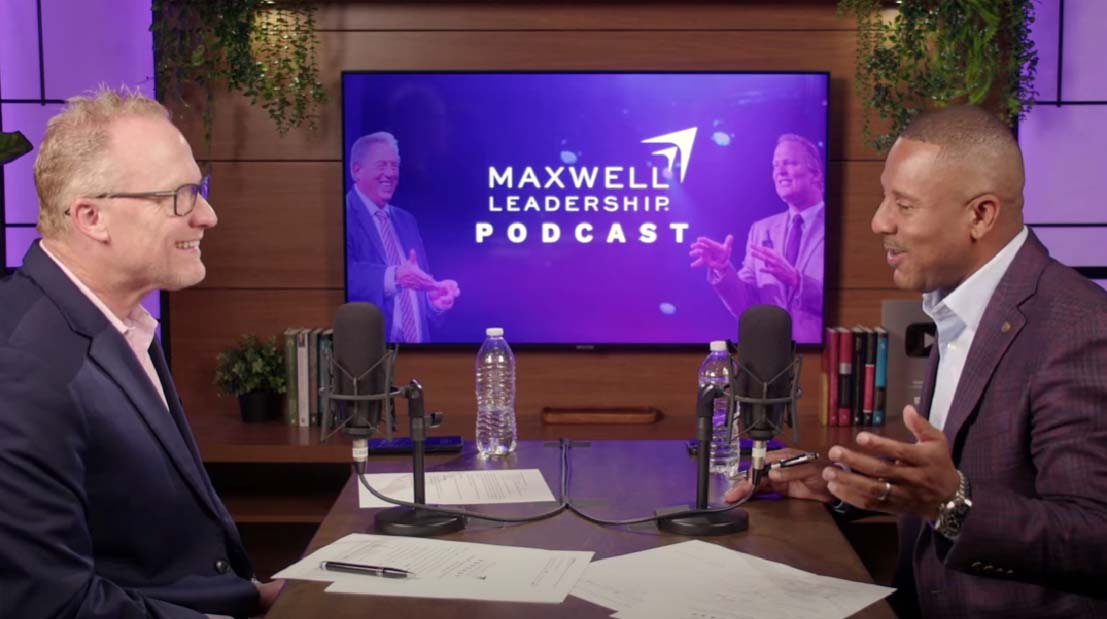
In this episode, Perry Holley and Chris Goede explore how leaders can develop confidence in themselves and their abilities. They share insights from Bill Belichick’s book, The Art of Winning, which emphasizes the importance of preparation, mastering details, and owning mistakes in building confidence. They also discuss the value of creating challenging scenarios for teams to help them perform under pressure and be ready to respond in real-world situations. Furthermore, they examine the paradox of balancing confidence with humility, noting that while confidence earns followers, humility earns trust. The episode offers practical strategies and a thought-provoking perspective on cultivating authentic confidence as a leader.
BELAY Ad:
You want to lead your people well, but you’re stuck in spreadsheets, cash flow, guesswork and trying to make sense of your finances. Here’s the truth. Not hiring an accounting professional isn’t saving you money. It’s costing you your leadership. When you’re buried in numbers, you’re not building a culture, you’re not coaching your team, you’re not steering the vision forward. Your employees deserve to work for a company with financial clarity and confidence and and so do you. That’s why Belay helps growth minded leaders like you delegate what you shouldn’t be doing, starting with your finances. Check out their free resource the cost of not hiring a financial expert to discover how it’s draining your time, your money and your peace of mind.
BELAY Ad:
Just text the word exec to 55123 for your free copy today. That’s exc to 55123 to get ready to delegate your and elevate your leadership with Belay.
Perry Holley:
Welcome to the Maxwell Leadership Executive Podcast where our goal is to help you increase your reputation as a leader, increase your ability to influence others, and increase your ability to fully engage your team to deliver remarkable results. Hi, I’m Perry Holly, Maxwell Leadership facilitator and coach.
Chris Goede:
And I’m Chris Cody, Executive Vice President with Maxwell Leadership. Welcome and thank you for joining. As we get started I want to encourage you to go to MaxwellLeadership.com/ExecutivePodcast. There you can download our learner’s guide. You can leave a comment or a topic that you would love for us into. Perry would love that. And or if you are looking for some training or some coaching, there’s a form there you can fill out. Well, today we’re going to talk about how do you develop confidence as a leader and super excited about this.
Chris Goede:
This is a landmark day besides a quality that every leader needs and to have it in the right way. The landmark day is this. I finally was able to recommend a book to Perry Holly that he had not consumed. Yes, I mean consumed by reading it in like in paper and on the Kindle and audible like he’s just got the system down for every book. The Art of Winning by Bill Belichick. I’m a huge fan of from a leadership standpoint in the sports world of Nick Saban and Bill Belichick and the way that they have built their organizations over time. And in the book he makes it extremely clear that confidence isn’t about hype or ego or or even pretending that you’re bulletproof. We always say three hardest words of A leader.
Chris Goede:
I don’t know. Right. Like, it’s not about that. It’s. It’s something that you earn and it’s built over time. When you begin to understand how it’s built, then you can grow not only yourself and then become more confident, but your team as well. And it just kind of oozes out of you.
Perry Holley:
Yep. Well, nice call on the book recommendation.
Chris Goede:
Thank you.
Perry Holley:
Write it down. I did really enjoy it. And if you do the audio version, coach reads it, which is even more entertaining for me that he does that. But Belichick on confidence and you and I have been watching our sons grow and go into their first. We. I don’t know why we put it on them. We also struggle from time to time with our confidence. And as something you develop.
Perry Holley:
And I thought Belichick says the confidence, it comes from mastering the details through relentless preparation. And he thoughts about film study, disciplined practice, anticipating the other team’s tendencies. He wants to know the fight before you’re in it. I want to know how this is going to go before a minute. And I just thought really for what we see in a lot of our coaching work is that again, we talked last week on having gravitas and executive presence. People want to be in the room, but they don’t exude the kind of confidence that makes people want to invite. Invite them in the room or to the table. So that’s where this is coming from.
Perry Holley:
And I like, I thought when you gave me that book, he, he’s big on developing confidence.
Chris Goede:
Yeah. And he’s big on the preparation. And, and that’s what leads to that. And you’re talking about specifically our two sons and one in the, in the Chick Fil. A business, one in the, in the football coaching business. They, they, they have the knowledge. Right. They, they, they’re not surprised by, by anything.
Chris Goede:
It’s just beginning to understand what is it that I need to do to prepare in a different way now in that industry so that I can carry the confidence. Well, that goes for any of us, whether we get a new opportunity, a new promotion, maybe a new career. Like all of us really kind of back up a little bit with our confidence when we’re in unchartered territory, even if we have the knowledge base. And so some of the things we’ll talk about today, I think will, will help you gain that in any situation. And John Maxwell says, you can’t give what you don’t have. That’s why Perry and I talk a lot about the personal growth side of leader like, what you’re putting in is going to come out of you with your team. And so if you haven’t prepared, then you’re not going to be able to have authentic confidence. There’s.
Chris Goede:
There are a lot of leaders that project confidence, but it’s not authentic. And we know what that looks like. And people can tell that. And so you say, okay, great, well, what’s that look like in the corporate world? You’ve talked about Chick Fil A and the football business and coaching. What’s that look like? One of the big things that Mark Cole has really, really pounded on all of us for years is you better know your numbers. Like, just be in it, right? Like, so when you’re in a meeting, there’ll be times that we don’t even talk about our numbers. But if we’re going to talk about our numbers as a leader inside the organization, then you better know your numbers, right? And thinking about, well, what question could they ask? What are they thinking? Like, for you, as when you’re in the front of the room, whether you’re. You’re speaking and taking Q and A, or you’re facilitating, you’ve already thought through the topic, what some of the questions you might get, some of the scenarios you might get, and you smile and you’re listening, but you already know where you can take them because you’ve anticipated what that looks like.
Chris Goede:
And so it allows you, as you’re prepared, to have a different presence about yourself. Just like we talked about last week.
Perry Holley:
Yeah. And I love this because you’re on a great point about. Do you. I think a lot of individual contributors think like individual contributors, and that’s what they’ve been trying to do. But you’re. What you’re really saying is think like your boss. And what would, what would. What would Mark ask me? What I need to know my numbers.
Perry Holley:
And one thing Belichick really captured me with is he’s known for this. He says his main phrase is do your job. And in order to do your job, you need to know your role. So he puts you in a role. You have your role. You know your responsibilities. Now here’s how you execute. Now do your job.
Perry Holley:
And this idea that. Are you thinking like your boss? What could possibly come up? What do I need to be prepared for? What’s the biggest challenge my boss is facing? What’s the biggest challenge our unit’s facing? Am I prepared to help with that? And then putting yourself in this area that you build confidence by changing your thinking to stop thinking like an individual Contributor and think like an owner, not like a hired hand. And I. I think that what Belichick saying, think like you’re the owner of the team. Do your job. That’s right. And gets people involved.
Chris Goede:
Well, listen, even just thinking about that, do your job. Also, going back a little bit, what you said about what could they ask me? Here’s the deal. There are a lot of meetings that Perry and I have been in previously to where we were prepared to answer certain questions that never came up. Well, you know what? That makes me even more confident the next time, because I’m already thinking about what I know and what I prepared for. And if I’m walking down the hallway and somebody says, hey, I know we didn’t talk about this meeting, but what did the leads look like last week? Oh, great. It was so sometimes people don’t want to prepare because they’re like, you know what? They’re never going to ask me that question. Or you get frustrated when you’re doing your job and looking at your numbers and then no one ever asked you about it. Still do it because it’ll help with your confidence.
Chris Goede:
Well, the other thing I think what Belichick talks about in here that I like is where don’t hide from your mistakes. And you’re talking about him doing the audiobook, which was great. The whole time I’m thinking about his press conferences, is listening to his voice. Just, you know, he took responsibility right away. Now, he didn’t elaborate on a lot of things, but he owned it. And a lot of people thought it was just a stick, but he goes behind the scenes in the book, and he’s like, no, no, no.
Perry Holley:
That’s really quite good.
Chris Goede:
Yeah, I really owned it to my team. And then we revisited it and we studied it, and, man, we just dug in and what were the lessons learned? It wasn’t in the book, but I remember a story about him a long time ago where before every game, one of the things that he does is he’s out on the field and he’s looking up and he’s looking at the wind and he’s looking at the weather and. And he’s studying and making a decision if he wins the coin toss, which way. Because then in the second half, and it all boiled down to in the fourth quarter, I want the wind going with us versus against us, because he had lost some games previously because the wind was causing some issues on his quarterback throwing the ball. Like, I mean, that’s the level of preparation and learning from his mistakes. And so he goes in. And he says, hey, when you. When you’re accountable for it, then it just increases your confidence.
Chris Goede:
I think it also increases the confidence the team has in you. And we talk about this all the time, where it’s okay to fail. Here’s the problem. If you don’t learn from it, then that’s a problem. Right? Then it becomes a fatal flaw. And so you don’t want that. And so what is it that we, as businessmen and women are learning? Are we creating a culture where we’re allowing mistakes to happen? That’s fine. But when.
Chris Goede:
Then we. We dig them up. Like, we figure out why we get to the root of it versus just ignoring it. And so I think when you do that, your team begins to trust you, but I also think you begin to trust yourself in that confidence.
Perry Holley:
Yeah, for sure. And I love this idea of own your mistakes. We talk a lot here about vulnerability as a leader. And are you a little too perfect? I think we did a podcast a few months ago, and I don’t mind you thinking I’m perfect. We don’t, but we’re not.
Chris Goede:
That’s what we did.
Perry Holley:
But when you do that, own your mistakes, people begin to buy into you, and that trust begins to happen. And I’m always reminded about John’s Law, buy in the 21 laws. I always thought, I hear people say this all the time on coaching calls. Well, my team’s just not bought into our vision right now. I go, yeah, that’s not the way that works. Here’s the way it works. They buy into the leader before they buy into the vision. And so by Belichick owning the mistakes, coming clean on where he was growing and what he was learning and where he messed up, it told other people that he’s the real deal.
Perry Holley:
And I’m bought into him. So that built that trust that says, he’s like me. He makes mistakes, too. And like you said, mistakes are not a problem. Not learning from mistakes is the problem. And he was adamant about everything they made a mistake on. They would then practice it and make sure that they learned from that. Wouldn’t happen again.
Chris Goede:
Yeah. One of the things that Belichick is known for as a coach is having extremely hard practices. Usually when you get to the NFL, most coaches just with the wear and tear in the season, they don’t press their teams that hard. And I can remember when my son was in college, buddies of his would. Would have the opportunity to go and they played for the Patriots, and they would come back and they’d be like, oh, My gosh. Like every other team in the NFL, practices are easy. Unfortunately, the. The Patriots is just like college football Georgia.
Chris Goede:
Right. It was like he was grinding. Why was he doing that? He was putting his team under pressure. He was creating chaos in practice. And you hear stories about, you know, taking the footballs and just dipping them in buckets of water and. And creating all kinds of things that weren’t normal for the team. It reminded me of some content I read around Tiger woods and his dad and. And how he would try to distract him in his backswing and.
Chris Goede:
And purposely doing that so that then you could perform under pressure. Well, the same thing goes for us in the business world. What? The situations look a little bit different for us, but are we doing crisis drills? Are we scenario planning? What if this happens? Are we making the team feel extremely unfamiliar with certain situations to see how they respond? Oh, by the way, so they are ready to respond. But also, as a leader, it gets you to understand in the moment when that does happen, how is the team going to react? And so just his attention to even that detail of creating chaos in his practice. There’s a lot to learn there as a leader.
Perry Holley:
And I don’t think we can talk about building confidence unless we’ve been taught around talking about humility as well, because confidence can go overboard. Being overly confident with no humility shows up as arrogance. And I think great leaders, we’ve learned, really balance the two. Our friend Tim Elmore has written about this, that confidence is a paradox that can you be confident and humble at the same time and. And, you know, confident. It really earns followers. He says, but humility earns trust and that, you know, confident leaders say we can do this, but the humble leader says, I can’t do this alone. So I like this idea of putting those two together and really building credibility in the connection you have with people because you’re.
Perry Holley:
What is it Tim would say? He says, I asked him one day, actually, I was on here on the podcast. I said, with these young folks, how do you. Confidence and humility says, well, I talk like I’m right. I listen, listen like I’m wrong. I go, I love that. Is that I don’t mind speaking in confident tones about I think I am right, but I’ll listen curiously and how could I be wrong here and allow other people to speak in to what I’m doing? So this idea of balancing confidence and humility is going to be important once your confidence starts taking off. Share the credit and invite people into that.
Chris Goede:
We talk about your Influence is what leadership really is. And so it’s not a title. It doesn’t matter how long you’ve been there in 10 years. So we’ll go back to our sons for just a minute. Maybe you’re an individual contributor. Maybe you’re new on a team and you’re going, man, I need more confidence, right? Well, listen, you are going to be unsure, like we talked about. Like, you may know you were hired for a skill set, by the way. You’re there because you’re competent enough to do that role.
Perry Holley:
And.
Chris Goede:
And so as you get more experience, as you get more prepared, as you own some of your mistakes, as we go through all this, we’ve seen this in our sons, right? They’re feeling overwhelmed. They. They’re, again, like I said, they’re unsure of what is going on. Then they’re like, do I really belong here? Like, I’ve been preparing for this, you know, and all of a sudden, now I’m. I’m the guy, or I’m the. I’m the girl.
Perry Holley:
Is it imposter syndrome, or is it something like.
Chris Goede:
Good word. Yeah, absolutely. Right. Where you just think, well, I’m not good enough to be able to do that.
Perry Holley:
How did I get in here? What?
Chris Goede:
Yeah, yeah, yeah. So we could talk about that for a long time. What’s awesome for us is we’re sitting back as a coach, maybe if even that, because sometimes they don’t even want us to coach them. And just watching them grow through that and developing the confidence. And I know even just on your most recent visits, just to watch your son lead the team, you know, inside the story, you’re just like, this is amazing.
Perry Holley:
And he’s been very successful, just as like, Rylan has been very successful. And they’ve gotten to where they are because of great accomplishment, results, and discipline and doing the hard part. They both have fought for years and years. This is not a overnight success. This is something they have worked at, both of them. But my son even asking, did, you know, what if it’s not enough? What if I didn’t get the right number? What if they questioned? What was I? I said, let’s bring it down a minute. But I said, what? What? Where does confidence come from? I said, are you doing what’s required of you every day? Yes. Are you working with your leaders to help develop them, to do what’s required of them? Yes.
Perry Holley:
Do you have a plan on the things you know are not right that are going to help move you in the right direction? Yes. Are you communicating that Plan on a regular basis? Yes. Do you believe you have what it takes? Little quiet there.
Chris Goede:
Yeah.
Perry Holley:
Do you believe you have what it takes? Yes, I do have what it takes. And I thought, I watched both. And Rylan’s in a big room, Paul’s in a big room, they’re running in their individual spaces, running big things and being watched by even bigger people. And I just love knowing that you’re. You’re competent, right. You are prepared. I’ve seen them both prepared. And you do have what it takes.
Perry Holley:
And that I’ll just share is my mantra for me, because I’ve heard, you know, you and I, the last big event we spoke at together, we’re both on the stage, somebody came up and said, you guys, you just seem so confident. Are you ever nervous? Oh, my gosh, yes. But I’ve learned that. And my mantra is that I’m confident, I’m prepared, I have what it takes, I’ve worked hard, I am prepared to be here. But I also know there’s always somebody smarter than me in the room, and I’m okay with that. I’m actually energized. So instead of having butterflies, I heard Zig Ziglar say this. Instead of having butterflies, I do have butterflies, but they fly in formation and they are.
Perry Holley:
They give me strength. And that what would be nervousness now becomes energy. Because I’m developing confidence over time by continuing to grow in my art and practice and prepare and then be open, humble that I’m going to make a mistake and somebody’s going to tell me something I don’t know. And when you put those together, I’m watching with our sons come along and I’m watching how we come off day. People that you look very confident. Well, thank you. That’s, you know, I’m a 35 year overnight success, like John says.
Chris Goede:
Are you willing to do what I did? Yeah. Which was a lot of the nights of not.
Perry Holley:
Yes.
Chris Goede:
Feeling confident. So I love that. Well, so here’s the challenge for you. You’re like, okay, that’s great. What do we do with this? Well, I want you to think about your week. I want you to think about something that’s out in front of you, but it’s a meeting, maybe it’s a presentation, maybe it’s on stage somewhere. It’s a decision you have to make, whatever it might be. And I want you to prepare like we talked about.
Chris Goede:
Think about every possible situation and try to prepare for it. Master the details, clarify exactly what the role is, what you need to deliver, what Are the things that potentially could happen that go wrong. They could go wrong. And how would you respond in the moment? And then when it, when it comes to it, you’ll be able to lead, I promise, with some confidence and humility. I think consistency compounds in this category. If you do this for everything, then you’re going to become more and more confident. Not just pick a meeting, not just pick a presentation or a keynote and think, oh, now I’m going to do it. Like, how do you do it consistently over time? And that will compound.
Chris Goede:
And so it reminded me in closing of the phrase that’s like, you know, how we do anything is how we do everything. And so can you get to the place of. We go through some of these little. This is a checklist, this is a system. This is a process. Right. Some do it more naturally than others. And so, you know, lead where you’re strong, but put a system across a process in place where you’re weak.
Chris Goede:
This is a little system that’ll help you become more confident as a leader as you go forward.
Perry Holley:
And I was just in some of study I was doing for keynote I’m giving this week the idea of are you ever not nervous? If you are never nervous and never questioning, then you’re probably way inside your comfort zone and probably not stretching enough. I’ve been asked to go and do some things that normally I think I’ve done similar stuff before, but it’s a different audience. Yeah, I’m nervous. However, those butterflies are in formation and that nervousness is an invitation for me to prepare to and to develop that confidence even further, to go on stage and do and deliver the value that I know I can deliver. Is it going to be right every time? No. Can I always get better? Yes. However, if you’re not nervous, I’d question that too. So.
Perry Holley:
All right. Thank you very much, Chris. Great input. As a reminder, if you want to get the learner guide for this issue, learn about our offerings, about our other podcast offerings. You can do all that at MaxwellLeadership.com/ExecutivePodcast. You can also leave a question and a comment for us there. We love hearing from you. Very grateful you spend this time with us.
Perry Holley:
That’s all from the Maxwell Leadership Executive Podcast.
Transcript created by Castmagic.
Maxwell Leadership delivers corporate training that strengthens executive leaders, aligns teams, and transforms culture. Discover how our proven frameworks equip your organization to lead with clarity and impact.






Be the first to comment on "Developing Confidence as a Leader"