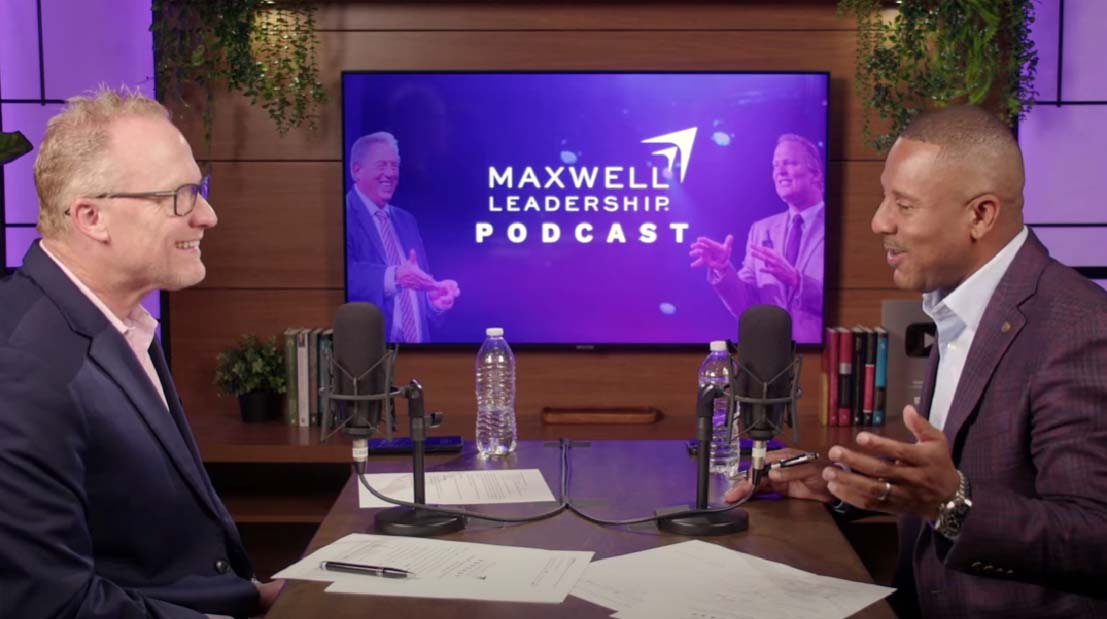
In this episode, Chris Goede and Perry Holley explore the crucial role feedback plays in driving employee engagement. They stress the importance of leaders providing regular, constructive feedback to their team members, as this helps individuals understand their performance and feel valued within the organization. Goede and Holley also discuss practical strategies for conducting effective one-on-one meetings, which serve as an excellent platform for delivering feedback and checking in on team members’ well-being. Throughout the conversation, they emphasize the courage required to give and receive feedback, acknowledging that while it may be uncomfortable, it is essential for fostering growth and maintaining high levels of engagement.
Perry Holley:
Welcome to the Maxwell Leadership Executive Podcast, where our goal is to help you increase your reputation as a leader, increase your ability to influence others, and increase your ability to fully engage your team to deliver remarkable results. I am Perry Holly, a Maxwell Leadership facilitator and coach.
Chris Goede:
My name is Chris Goede, executive vice president with Maxwell Leadership. Welcome and thank you for joining. One of the things that Perry and I talk about all the time is where is your team when it comes to being engaged? And we do a lot of research, we do a lot of study, we do a lot of work. And what we do know is that it has room to be a lot better. We also know that at times as leaders, sometimes we don’t understand the reality of really what the engagement level is on our team. Some of our teams are great actors, some aren’t. Well, we’re going to talk a little bit more about that today. Before we do, I want to encourage you go to MaxwellLeadership.com/ExecutivePodcast and you can download the learner guide of this episode or leave us a question or a comment.
Chris Goede:
You can also look at the weekly blog that’s tied to this content and you can dive into some more of application pieces. Well, today’s topic, as I mentioned, is using feedback to actually rekindle engagement of your team. So this is something that every leader is wrestling right now with is how do I get, as Perry likes to say, more people rowing in the front of the boat and not poking holes in the back of the boat? Right.
Perry Holley:
Drills.
Chris Goede:
Yeah, we don’t need any drills. We want them rowing in the same direction. And, and it may not be a mystery to you that you’re. Some of your team is, is disengaged. And that may be telling you something about either your leadership or their involvement. But we’ve got to get to the bottom of this. And so how do we go about using some feedback the right way, the right to drive additional engagement?
Perry Holley:
Yeah. You know, I heard our friend Jeff Hancher say that engagement doesn’t die in a day. And then I added it dies day by day.
Chris Goede:
It does, it does.
Perry Holley:
And I thought, wow, it erodes slowly over time. People don’t just automatically just set up. I’m, I’m not plugging in today. I’m gonna quite quit or whatever. But when feedback is skipped or softened or silenced, people, they don’t know how they’re doing. I think it’s when I heard him say that, I go, man, I, I’m gonna go with this. And, you know, we’re working with Jeff on some stuff. But I think we how feedback, the right kind of feedback can really get that engagement kick started for your organization.
Chris Goede:
Yep. We are in the very near future we’re going to be talking about this partnership with Jeff and this feedback content because it is something that every leader, every organization, they talk about it when it comes to communication. And we had some great content around there, some good deliverables. This is going to be amazing. And so our team went through it. Perry has sat in under an entire workshop and so man, we know, that’s why we’re talking about it. We know that feedback is something that you guys desire and we’re super excited about bringing that to you. So stay tuned for more on that to come.
Chris Goede:
We used to talk about and it’s so funny when I say used to this quiet quitting thing because I think it, it feels like it just happened right. And there always, there’s always something new that’s coming out. And a lot of people kind of associate that with the Gen Z. I just got labeled with it that they were quite quitting as kind of a trend. But it’s really not just that. It’s actually all of us. And what ends up happening is it begins to happen when feedback from your leader disappears. And so you know when as a leader you provide a lot of direction, tasks are being done, but you don’t provide any type of feedback appreciation, people can just start checking out.
Chris Goede:
It’s like, do they even notice what’s going on? And so they begin to then not bring their A game. They go, oh well I could bring my C plus game and stay here and still get a paycheck until they begin to be disengaged. And that’s how it all starts. And so if you’re not hearing from your team, if they’re not giving you feedback by the way, then don’t assume that things are fine. It actually is probably a situation where maybe they don’t even feel safe speaking up or because you don’t recognize or give any type of feedback, they may not even feel like it’s worth it. And so they just stay quiet.
Perry Holley:
I’ve heard John say that leaders who don’t listen will eventually be surrounded by people, people who have nothing to say. And I think it’s not because they’re lazy. They are. They’re trying to lead themselves as best they can in the environment where they’re not really sure how they’re doing. And if I had to tell you one thing, I hear more than anything in individual Coaching, especially individual contributor groups that we do is when I say, what are you. How you doing? What do you need? It is, I have no idea how I’m doing. Just had a senior leader at an organization where we work say, actually, you. You assigned him to me because he said, I’m not getting any feedback.
Perry Holley:
Can you help him get some feedback? So we, you know, started on a journey about how can we get his senior team to let him know how he’s doing? Because he is. He’s kind of spinning his. His wheels. He doesn’t know how he’s doing, so he’s not really sure what direction to go.
Chris Goede:
Yeah.
Perry Holley:
And I thought, man, that is a crying shame, because one of the easiest things to do is to let people know, what do you see and what are you sensing? And there’s definitely some positive aspects of that, but there’s also some constructive. So I think it’s a really great topic.
Chris Goede:
Yeah. And this is a leadership problem. It’s not. Not a people problem. It’s. As leaders, we need to step up and understand the power of feedback. And. And we need to let them know, like, to Perry’s point, like, how are they doing? Are they going in the right direction? Are they doing the right things? One of the things that I did periodically was, hey, come in.
Chris Goede:
Let’s talk about your top three priorities. Not because it was about feedback, but, like, they just. We needed to make sure that I heard from them and I was redirecting them. They were redirecting me. Like, having this conversation in this feedback loop will 100% drive engagement, because you won’t get engagement from your team. Imagine the individual just talking about. Imagine if on a continual basis, they were getting both constructive and positive feedback. Imagine the production that would be happening there.
Chris Goede:
And that leader, you know, produces pretty heavily as it is. And so. And we’re not talking about. When we talk about this feedback, we’re not talking about your annual reviews. I was on the phone yesterday with somebody in the HR world, and I was like, yeah, don’t. I’m not. Don’t talk to me about annual reviews. That’s the only time you’re having conversations.
Chris Goede:
Like, that is not the way to go about it. And so you can’t just get to the end of the year and say, hey, good job doing this. And, oh, by the way, back in the first quarter when you said, you know, or you got to have continual feedback and talking about it on a timely basis. The other thing is you hear the airplane example where if someone took off from la, California and coming to Atlanta and, and they’re off just a little bit. Well, if you don’t have a conversation or feedback by the time they get to the east coast, they’re up in Boston, right. And when they left they didn’t think they were that far off. And so by doing this man, you’re going to create engagement, clarity, connection and your team members are going to soar.
Perry Holley:
Self correcting on that. Well, feedback to me says that I see you and you’re making a difference. What you do matters, you’re relevant here. When feedback disappears, people begin maybe to stop believing that they matter, that their role is relevant, that what they do matters. And then when that goes away, then engagement pulls back and it kind of dies with it. I wanted to bring up a tool, Jeff Hancher, by the way, his book is Firm Feedback in a Fragile World. If you want to pick that up, it’s fantastic. But Jeff suggests that you do the feedback temperature check.
Perry Holley:
So picture a thermometer there. You’re going to do a temperature check on your feedback. He says these three indicators are a great way to, to spot and stop disengagement before it starts. So why don’t you start us off with this. What do we need to do first with this temperature check?
Chris Goede:
Indicator number one I talked about in the intro about what are you getting from your team in meetings or one on one. And indicator number one is silence. Are your meetings quiet? How many people are speaking up? Are they sharing ideas, are they pushing back? Because if not, then they just think, well what I think doesn’t matter and they’re going to do whatever. And so they just, they just stay silent. And so that’s the first indicator is silence.
Perry Holley:
Number two was, see Jeff called it the surface compliance that tasks may be getting done but there’s no heart, no creativity, no spark. I call this the salute and stay mute. They just, they do what they’re supposed to do. There could be a sign that they’re just in survival mode. They’re just getting from day to day and you don’t have really any engagement with that.
Chris Goede:
The third indicator is withdrawal. Now this could be almost a sister or brother of silence. This is actually a little bit deeper where they’re just there. And not only are they being silent, but you can just tell they’re not present, like they’re thinking about something else. They’re on their phone, they’re checking other, they are not bringing anything, objections or ideas to the table. And you can see a lot of it in their body language.
Perry Holley:
So let’s get practical as we like to do. And obviously the best practice in this is to provide ongoing feedback on a regular basis coaching every member of your team and not at the annual review, but on a regular basis with that. But if you take this temperature check, feedback, temperature check with your team and you notice you may have some disengage. You know, what are some things that you can do. And one simple yet direct approach to this is to check with every person on the team that you’re concerned by just maybe simply asking. I’ve noticed you’ve been a little quieter lately. Or whatever you’re noticing about them. Maybe they, they used to bring you ideas.
Perry Holley:
Now they don’t. Checking in with them. How are, how are you doing? How has your work been lately? What are you, what are there any obstacles with your work? Are there challenges you’re facing in your work? The key here is not to defend. Don’t jump in. Just listen. Hear them. I heard Greg Groeschel say once, you know what, what, what’s happening that’s frustrating you. He said it’s so when they tell you something to start.
Perry Holley:
Oh yeah, let me tell you about. No, don’t, don’t defend it. Listen to it. Let them be heard and then real take it. Is that they’re giving you feedback now. Is it valuable at all to do that?
Chris Goede:
I feel like that was a personal comment towards me and Sarah called trying.
Perry Holley:
Not to look at you when I said it.
Chris Goede:
Yeah, I was just thinking about conversations where I immediately, you know, want to justify what I did right away. Right. Like that’s my natural reaction. Craig, you’re Rochelle was talking about there. So hey, I’d also think about and revisit your, your one on one strategy. Now I just said that and some of you go, well what’s a one on one?
Perry Holley:
Don’t, don’t do that.
Chris Goede:
That might be a problem too. Meaning we got to start meeting with our team now. There’s certain number of direct reports we would love for you not to go over but you got to have one on one meetings with them. And so what are you using them for now? I’ll just give you an example. For me it’s, that’s their time to bring the agenda to me and they’re. But I never miss the opportunity in there to check in on them. To your point. And so what is your strategy behind your one on ones? Are you getting to a place to where not only are you getting some things done, but you’re also able to check on their quote Unquote, you know, emotional level.
Chris Goede:
How are they feeling about work? Perry gave you some great questions. What’s frustrating you? What does that look like? But also take that opportunity to say, hey, what’s it look like to be on the other side of my leadership? We ask this question at times and people go, oh, I don’t know if I want to ask that. But it’s allowing them to give you feedback about you that you probably need to hear and you can grow from, by the way. Once you do that and you model it, then they feel even more comfortable with you giving them feedback.
Perry Holley:
Right. What is the I love this about the one on one. If I had to say one thing that more light bulbs come on on coaching calls is when I ask that question. Tell me about how you structure your one on one. Well, I really don’t have time for one on one, so I really don’t do one on ones. I thought if I had the one thing that changed my leadership journey was somebody telling me you need to have a regular. It may not be every week, maybe once a month if you have too big a team, but whatever it is, people need to know they have a spot of quality time one on one with you. And a wise person once told me, you, the leader, are not allowed to cancel.
Perry Holley:
You’re only allowed to reschedule. They, the individual contributor can cancel. If they say I don’t have anything, boss, I don’t, they can cancel. But you cancel more than once, it sends a message that it’s really not that important to you. And you and I do this all the time. You will never cancel. But you’ll we often reschedule. We often reschedule because of our schedules to do that.
Perry Holley:
But I think about you one on one when it comes to feedback. I like I did hear from Rochelle about asking pointed questions about how are things? How are you doing? What do you need from me? Am I frustrating you? Is the work frustrate trying to get them talking about that? But do you actually use one on ones to give feedback or are you seeking feedback mostly in your one on ones?
Chris Goede:
I am probably giving feedback more than seeking and I’m doing it through their agenda. So I love for them to bring the agenda. Here’s an update, here’s on challenge, here’s an opportunity, this and that. Listen to them and say, hey, let me Can I give you a different perspective on that? Or hey, here’s another thought or an idea or you and I just recently had this conversation. Well, let me tell you the context that’s way behind a lot of this stuff. That could make some examples here. Right. So like trying to, to work it into the agenda.
Chris Goede:
Not that I’m looking to give feedback at every comment, but I’m looking for opportunities to help create clarity so that there’s lack of frustration, so that there’s more engagement level no matter what it is. And I don’t ask about feedback as often in my one on ones but periodically I do.
Perry Holley:
That’s good. That’s really a good example because what you listeners don’t know is that I was, I said I’m going to do X and you heard that. And you know that probably wasn’t the exact right thing to do, but you said let me give you some further context about the bigger picture, some things you may not be aware of. And then you filled in some of the color commentary and I went, oh wow, that’s now tell me this and that. Then we’re able to formulate a better path forward. But you had to have the courage to step up and say hey Perry, that’s while that might be okay, that’s not really what we’re trying to do. And so you gave me the feedback by giving me a bigger picture view and it, it and changed a lot.
Chris Goede:
Back to what we’ve talked about previous feedback. Like I was doing that for the best interest of you even though it’s like I don’t necessarily. I could have let you do that.
Perry Holley:
Yeah, yeah.
Chris Goede:
But you were about to exhaust a lot of energy because I know you and over deliver on certain things and with some additional context I was protecting you but still had to hey, say hey, there’s more there. Can I speak into this really quick kind of thing? So having the courage to do that because it was going to benefit the team member versus let me tell you what I know. Right. Like that was not the posture of it at all.
Perry Holley:
Another challenge with this feedback and a real practical thing you need to know is that I heard Jeff Hancher say this, that if you feel like giving feedback is really risky, Jeff said you’re doing it right and that you should keep going. It means you’re getting close to what really matters with your people. Don’t wait for disengagement to happen before you start to speak up. Reach out, check in with people. These one on ones is a great idea. Have this conversation, find out where there’s concern, find out where people have questions, find out how people are executing, get information from others, be able to give people some indicator about how they’re doing and maybe a constructive idea or two to go forward. I will tell you, it’s hard sometimes to give constructive feedback because it feels a little risky. It’s also hard on the hearing side to hear it.
Perry Holley:
And I’ve done a couple of examples in workshops where I’ve asked the group watching me for three hours. I said, I’m going to step out and get a coffee I’d like for you to give me. And I put my name on a flip chart, draw a line, says, positive, constructive, go. And they have little sticky notes. It’s anonymous. I said, I want you. I’m gonna get a coffee. Go.
Perry Holley:
Stickier, sticky up there. And I looked at their faces, and it looked like I’d asked them to take off their clothes and stand on the table. They were, like, mortified. I thought, seriously, I’m asking for your feedback. Help me be a better facilitator.
Chris Goede:
Yeah.
Perry Holley:
But when I came back, I noticed also on the other side of that, when I went to read on the board, a little glitch in me and wait a minute, I asked for it, Right? And now I’m. What? And now I’m feeling upset about it or I’m feeling uneasy about it.
Chris Goede:
Right. So pride, ego. Yeah, all of that.
Perry Holley:
I think it’s just. We just admitted it feels bad giving it, it feels bad receiving it, but the outcome is so worth it if. And especially if you earn the right. Is another thing we talk about is that, do you have the relate. Have you done the level two? Do you have the relationship? Can you speak into people’s lives and they know that it’s coming from a good place? And those three questions we talked about in the last podcast, do they know you’re trying to help them? Do they know that you care about them? Do they know that they can trust you? Well, then unload, Unload. I want to know, because I know you care about me.
Chris Goede:
So I think that’s so interesting because I had not heard you make that example before, nor was I in the room, which is probably. This is. That was probably designed. He didn’t want me in the room when he asked that question.
Perry Holley:
But the one that flipped.
Chris Goede:
That’s right. On the positive side. But what I love about that is think about that, right? The credibility as a. A leader. You were leading the room. You’re facilitating the credibility is like. Like I’m going first. Yeah, right.
Chris Goede:
The other thing, too, is, is that I think with this. Is that you mentioned this previously. Your other people on the team are watching what’s going on. They know what’s going on. And as a leader, you’re willing to accept that. So you’re sitting in this room, just as an example, and let’s just say you don’t do this. Let’s say you’re chewing bubble gum and you keep blowing bubbles, right? Like, everybody’s in the room’s like, man, does he. Does he not know? Right? And so then you go out, they put, quit blowing bubbles.
Chris Goede:
Oh, okay. And you stop. You know what I’m saying? Like, everybody is aware of it. And so your credibility as a facilitator, or even in this example, a different example, as a leader, it continues to get undermined until you’re willing to accept that, even though it’s hard. So as we wrap up, man, this is just a great conversation. Conversation leaders need to be having with their people. 80% say that they would be more engaged if they had feedback on a weekly basis. Specific feedback, just positive, constructive, whatever it might be.
Chris Goede:
But fewer than one out of five are actually getting it in corporate America. So we got to be a different leader than most are out there. And Perry, through a couple of his examples, gave you great questions. Maybe you’re like, how do I even start the conversation? Go back, listen to this podcast again, and get to a point to where you’re just comfortable just asking a couple questions that go, well, hey, what’s it look like to be on the other side of my leadership in that particular situation? And, you know, I think one of the things we got to make sure that we understand is that by doing this as leaders, it may be hard, but your engagement level of your team will not increase unless you’re having these conversations. So then you begin to look at the. The ROI of your leadership, which is your return on investing in people. What is that? Well, if you’re having feedback, it’s going to escalate, but if it’s not, it’s probably just going to stay the same. So have the courage.
Chris Goede:
As Perry said, it’s uncomfortable on one side, it’s uncomfortable on the other side. Everybody’s uncomfortable. But I love even just thinking about, how do I approach it? What’s the common language I do? I start with every time they know where my heart is, they know that I care and trust and then be able to deliver that.
Perry Holley:
Terrific. Well, if you want to get the learner guide for this episode or learn about our offerings or other podcast offerings, you can do that at MaxwellLeadership.com/ExecutivePodcast. You can also leave us a comment or a question there. We love hearing from you, and we’re very grateful you spend this time with us. That’s all today from the Maxwell Leadership Executive Podcast.
Transcript created by Castmagic.
Maxwell Leadership delivers corporate training that strengthens executive leaders, aligns teams, and transforms culture. Discover how our proven frameworks equip your organization to lead with clarity and impact.