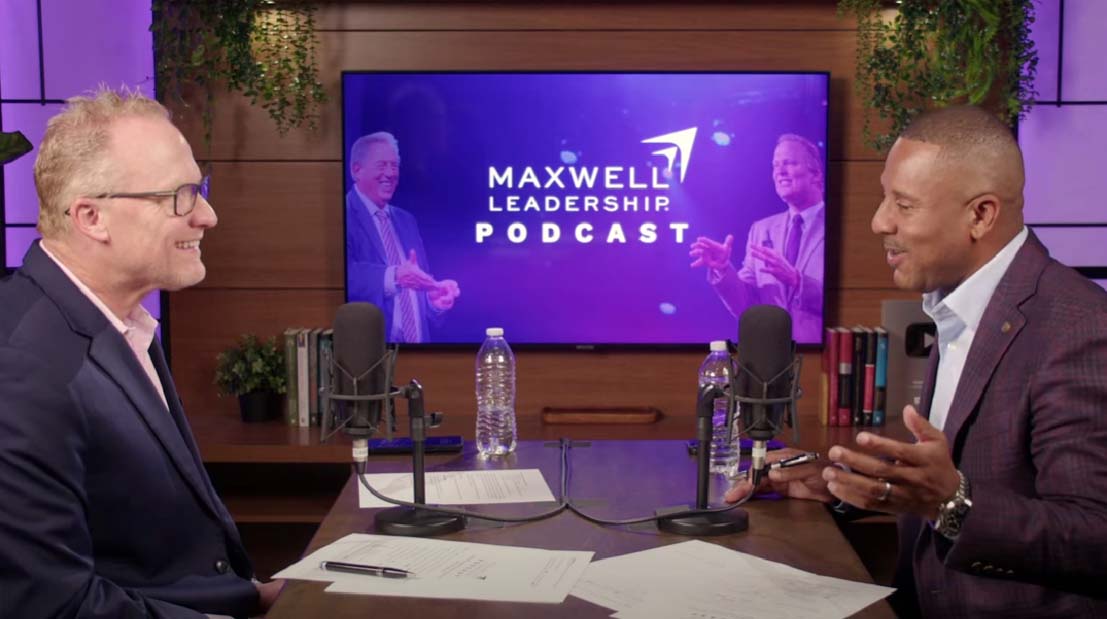
In this episode, Chris Goede and Perry Holley explore the concept of finding common ground to connect with others. They discuss the barriers that prevent leaders from effectively connecting, like assumptions, arrogance, and indifference, and provide strategies for overcoming these obstacles. Chris Goede and Perry Holley share personal stories that illustrate the power of genuine curiosity and the importance of focusing on the other person in a conversation. The hosts also remind listeners that building authentic connections requires time, intentionality, and a willingness to be open and adaptable. Learn practical tips for finding common ground and strengthening your ability to connect with and influence others.
Perry Holley:
Welcome to the Maxwell Leadership Executive Podcast, where our goal is to help you increase your reputation as a leader, increase your ability to influence others, and increase your ability to fully engage your team to deliver remarkable results. Hi, I’m Perry Holley, a Maxwell Leadership facilitator and coach.
Chris Goede:
And I’m Chris Goede, Executive Vice President of Maxwell Leadership. Welcome and thank you for joining. Want to encourage you to go to MaxwellLeadership.com/ExecutivePodcast. There you can click on a button on that main page. There you can download the learner guide. If you don’t have access to that, leave us a question, maybe a future content discussion that you’d like us to have on the podcast. We would love to be able to do that. One of the things about the Learner Guide is we’d love for you to take that and, and this lesson and hand it out to your team, encourage them to listen to that, bring it back and first 10 minutes of your team meeting.
Chris Goede:
Have people share some of the highlights we’ve seen that really drive some great engagement during team meetings and growth. Well, today we’re going to talk about Connectors connect on common ground.
Perry Holley:
Love this.
Chris Goede:
Connectors connect on common ground. And one of John Maxwell’s most foundational ideas, he’s a great communicator, but for communication and leadership is connecting on common ground. There. There is 1% somewhere in every person to connect on. And then how do we. How do we go 100 in on that? And so that phrase, common ground, it may sound simple and some of you that are listening right now go, oh, I. I do this. This is so easy.
Chris Goede:
I get that. But hopefully there’s gonna be a nugget or two for you in our conversation today to help you even become a little bit better. And then secondly, you may go, man, I don’t. I just struggle. Well, today is for you. And there’s some things we’re gonna talk about that, because every leader needs to be able to have that, to have authentic relationships, lead effective teams, and to really inspire those that you have influence with.
Perry Holley:
Yeah, my. One of my favorite topics, and you were right, almost everybody thinks they can do this. And I find it to be a real art form. John has actually said that if he had to pick the rule, one rule of communication that helped him the most, it was finding the opening doors to more connection with people is the ability to find common ground. And you think, well, what is common ground? It really is these shared experiences, shared beliefs, shared values, shared backgrounds, something that you have in common with others that will allow you to connect with them. I think at the five levels of leadership, we talk about level two being about relationships and building that, Getting that permission from people to influence them. Relationships is one thing. I can build a relationship with you, but to connect with you is like taking relationships to the next level.
Perry Holley:
And really this idea of being able to find common ground. I started practicing this when I travel. Just when you have that few minutes, and I don’t want to be the guy, you don’t want to sit next.
Chris Goede:
To an airplane when you sit down.
Perry Holley:
But when I sit down, you’ve got, you know, a couple of minutes before airplane etiquette says you should put on your headsets and mind your own business. But I’ll often introduce myself or say, hello, and where are you from? Are you. Are you going. Are you from here? Are you from where we’re going? Or some opening question and then say, oh, you’re. And then you. Then you have another question. He said, well, how long have you been there? So some guy last week said, well, I’m. I’m going to Michigan.
Perry Holley:
I go, I used to live in. I lived in Lansing. Where are you? Oh, I’m just north. And all of a sudden we. I’m. I’m just finding a way.
Chris Goede:
Yeah.
Perry Holley:
And why do I want to do that? Will I ever see this guy? You don’t know, but, you know, just practicing the idea of letting other people know that you’re interested in. I’ll tell you something. Somebody asked me just this week, how did you get with Maxwell Leadership? How did you get that? Because you seem this, like, perfect. Were you always there? No, I wasn’t. Well, how did you get hooked up? A guy I used to work with at IBM told a buddy of his at his church that you should meet this guy I know at IBM named Perry, because you guys have a lot of. You talk the same language about leadership and stuff. That guy took a risk and reached out through an email, and I took a risk and answered, and we connected and we met for a coffee. And as we’re meeting for a coffee, he’s.
Perry Holley:
I just asked him, I said, are you from here? What are you. What do you. No, I. I grew up in this area of town. I go, oh, that’s where I went to high school. He goes, that’s where I went to high school. I go, what your last name? This was Michael. Brian said, michael, my brother Steve.
Perry Holley:
Ago, I played football with Steve on the. The high school football team. I said, well, what did you do before you started doing coaching? He says, well, I was in the real estate business. Said, I only know one guy. His name’s Gary. Oh, Gary’s my best friend. I thought, boom. He goes, hey, there’s a guy at Maxwell that needs a coach.
Perry Holley:
Would you be interested in applying for the coaching? I go, sure, Give me the information. What’s Chris Goedy? Look at here?
Chris Goede:
And here we are.
Perry Holley:
Here I am. All that because of finding common ground with someone who made a connection, who then became now one of my closest friends ever.
Chris Goede:
Yeah.
Perry Holley:
And we are sharing ideas and all that because some guy said, you should find common ground with this. Yeah.
Chris Goede:
And I love what you said. Right. Because it’s driven by the intent. Your intent was not, how do I get to Maxwell Leadership.
Perry Holley:
Your.
Chris Goede:
Your intent was you want to genuinely.
Perry Holley:
I had a job.
Chris Goede:
I didn’t. Right. Yeah. Yeah. You’re like, yeah, and come do this.
Perry Holley:
No.
Chris Goede:
What do you say? Right. But that. That’s what I’m saying. Like a lot of people, I think. And listen, we all know. You can just smell it. You can sense it when the. The intent behind why they’re trying to connect is not necessarily the right way.
Chris Goede:
And we’ll talk a little bit about that as we go. We go through this because we’re not trying to just get to a point to get us somewhere else or to transmit information. We’re actually trying to build a genuine relationship. As Perry talked about that, that now is one of his best friends years and years and years later because they were working to. To connect. Now there are some of us, and even those that feel like we’re gifted in this area, that there are some barriers to this that we need to be aware of. And a lot of times we think it’s about the other person or it’s a situation. No.
Chris Goede:
We’re going to give you a couple of barriers that are actually internal to. To us as individuals and leaders as we try to connect. The first is assumption. I already know that what others know and feel and want or whatever. I. I do this sometimes, and my wife calls me out on it all the time. She’s like, why are you making the decision for them without even asking the question? I’m like, they would not want to do that. Why would they want to go play 18 holes of golf with me? Right.
Chris Goede:
And stay an extra? Why don’t you ask the question? You know, so. But I’m. I will notoriously do that. Right. And I feel like I connect with people. That’s what I was saying. There’s gonna be some nuggets in here. But internally, I’ll make an assumption.
Chris Goede:
And then I go, man, how many times have I missed out on a great connection, genuine connection with people because I made an assumption that I knew their answer ahead of time or whatever it might be. And so as a leader, we need to make sure that we are aware of that because we need to make sure that we know where our people are. We cannot make an assumption where they’re at. And it’s our responsibility as leaders to close that gap. How do you close that gap? By asking questions and finding that common ground.
Perry Holley:
Well, you think about it as a leader, you got, I kind of know this team I have. I feel like I. And that’s where that assumption comes in. So it’s not like me getting on an airplane. I can’t assume I know anything about this. I know nothing about this person. But, but the people I work with every day, I assume that they would like it or not like it. I assume that I already know what they would say already.
Perry Holley:
Like, that’s a great point. Is that. No, I can’t assume. I should just ask anyway and maybe I’ll learn something new.
Chris Goede:
Isn’t it, isn’t, isn’t it fascinating when we do the values card exercise with teams that have worked together forever.
Perry Holley:
Yeah.
Chris Goede:
And they, you, we hear them walking out going, man, Perry, I never knew that.
Perry Holley:
I’ve worked with you for 12 years.
Chris Goede:
Right. Because we, we, we, we just make some assumptions about ourselves and other people. But yeah, yeah. So great. As internally, don’t make that assumption.
Perry Holley:
And second one after assumption is arrogance. It probably sounds a little strong, but I don’t really need to know anything. I already know enough. But my position, my experience level, it’s enough. I, my ego gets in the way of my leadership sometimes and I just, I don’t even think I need to know about you. So while I don’t want to assume, I also don’t want to be arrogant and thinking there’s nothing I could learn.
Chris Goede:
That’s right. Yeah, that’s right. The third one is just being indifferent. Right. I don’t care to really know what others know, feel, or want. This one sounds a little bit harsh. Almost like I have no feelings. Okay.
Chris Goede:
I need to just double check myself right there. I do have a feeling, because it does feel a little bit harsh. But you know, sometimes leaders, let’s just be honest, when we are overloaded, when we’re burned out, maybe we’re on a tight schedule, you know, like, am I really getting to the place to where I know that I need to let my eq, my empathy stay engaged and not let it fade away. Because we don’t, we don’t ever want to get to a point where we don’t care what other people think. We, we have to understand that we do care about them. And if we want to grow our influence with the right motive, we need to to make sure that we do that the right way. And back to my comment earlier. Isn’t it true that when someone’s acting this out and they’re truly indifferent, you know it like you feel it.
Chris Goede:
You’re like this, well, this is painful like and then you just shut it off and move on to the next one.
Perry Holley:
So you know, another thing is hearing you say that another challenge could be control. As I. If you know this. But when you’re building common ground, you have to actually share something too. And that ability because maybe I don’t want other people knowing what I know or knowing how I feel or knowing what I think. I’m about guarding my myself and not want to expose too much of myself. And that, that’s a bit about vulnerability is are you willing to be vulnerable about yourself, your background, your feelings, your thoughts and share with people? Because that’s how I find common ground. You have values that people didn’t want to share.
Perry Holley:
Well, I have a high value of integrity. And you think I never knew about that. You, you have to share something about yourself and that vul vulnerability, again, it’s about trust. And I think the first challenge of finding common ground is self awareness. Are you okay and know yourself? So you’re willing to share openly with others.
Chris Goede:
Yeah. Perry said share some things, not everything okay to those that you know, like you can over. Over share. Yeah, I’ve been in some conversations where I got uncomfortable but you know, but also then it becomes they become dominant in the conversation. So there’s a balance there when, when you’re connecting with people. So the barriers are. Are one thing. Even more important though is figuring out how do we make an intentional choice to find that common ground with people.
Chris Goede:
And the first choice is availability. Choose to spend time with people. Going back to my example just a few minutes ago, when I’m making an assumption, I’m also making a choice not to want to spend time with people. Right in that. And so am I making myself available to be able to connect and to find that, that common ground. Leaders who are visible and approachable can create connections in all kinds of ways and all kinds of opportunities. When you understand how to get that done, you also must Focus on listening. When you listen, you learn what matters most to others.
Chris Goede:
And Perry and I have talked a lot about this. Right. And we all want to listen to understand. But be curious about what they’re saying and dig in a little bit, because when you do that and you’re. You’re engaged in your listening, the connection will be so strong on their end because you’re listening and engaged and you’re more curious about what they’re. What they’re sharing. Personally.
Perry Holley:
Yeah, that curiosity about asking questions. You’re available, you’re listening, but are you asking good questions of them? And curiosity. Just a reminder, we talk about it a lot here. Curiosity is really like a secret sauce of great leadership, is that not only do you listen, but you’re cur. You’re not just asking questions to get people to prove they know something. You’re curious means you’re trying to learn something. So if I’m genuinely curious, I’m trying to learn something new about you. I also find that having a mindset of helping and serving others is that if I put myself as.
Perry Holley:
It’s a bit about humility, perhaps about when I’m in a conversation with someone and I’m genuinely curious, I’m available, I’m listening to you. I’m really looking for that common ground. I’m really looking for that. That little hook that says, hey, we, we’ve got some things in common to do that, but I’m doing it from how I serve you. How can I make things better for you? And then I, I think you mentioned a little bit about openness is. And I need to be open to share. But I think you, you put up a good guard rail. There was.
Perry Holley:
I often think about it as being a, you know, social media has trained us to. What I call the front stage act is that I can make you think whatever I want to make you think about the Perry show, by the way.
Chris Goede:
I think the Perry shows, you own your own side woodworking business, that we needed a conversation about woodworking and barbecue. Yeah, that’s right. Where’s leadership?
Perry Holley:
But I can make you think whatever I want you to think. Because the curtain behind me is closed. You only see the front stage act. And so if I want to be a little vulnerable, I. I open the curtain back. So you can see there is a backstage act here. And it’s not as pretty as I might like it to be. I’m a real person.
Perry Holley:
I make mistakes. I have challenges. I need help. I ask questions. The problem is people think they need to open the Curtain all the way to the edge of the stage so you can see all the dirty. No, you don’t. But letting people know, being a little bit open will help people to know you better.
Chris Goede:
Yeah. And as you were just talking, one of the things came to mind was, remember the, with the right intent, these connections and these conversations, some of these barriers and things that we’re talking through, it’s about them, not about you in that conversation. Now if they’re a gifted connector and community, they’re going to pull it out of you. Right. But there’s that balance there. And so these conversations are really about them. When you connect with them initially and then you kind of mature through that. A couple others.
Chris Goede:
Just real quick is, you know, be. Be caring people don’t. You’ve heard this, right? People don’t care how much you know until they know how much you care. Do. Are you really interested? Are you really. Do you care about them? Is there authenticity behind hey, where are you from? Like, okay, so why is that taking you here? And man, I used to live there. Right. And so you’re having this kind of connection of where the roots were when you guys lived in Michigan in that example.
Chris Goede:
The other one is be adaptable. You know, when I talked about this is about their world, not yours. So take what you’re hearing and you’re learning and then build off of that in their world. Because what you want to do is kind of cross over to see the way that they see things. I think this is a great way for people to understand others perspectives. One of the pieces of advice, and here I think I’ve shared this with you either on this podcast or off. But the story of John tells periodically about being in the green room with a very young communicator. And he was actually going to be speaking after John later in the day and he’s already kind of worked up.
Chris Goede:
And John’s just sitting there like he’s done it 20,000 times. Like he has. And so the guy’s like, I mean, what are you thinking about right now? Like, are you memorizing? And John’s like, no, I’m just trying to figure out what is it that they need to hear, where are they at and how do I connect with them? And then he’s like, good luck. And then he walked up and killed it.
Perry Holley:
That poor guy had to follow him.
Chris Goede:
Right. But yeah, so it’s just being adaptable. So you may have a message in this example I’m giving you to John. You may have a message for your team Right. But you may need to share it differently. You need, you need to meet your team where there. Maybe you need to slow down a little bit and let them catch up. Maybe you need to, whatever it is, but you gotta, you gotta go where they are and you gotta be adaptable when you’re trying to connect to individuals or your team.
Perry Holley:
You know, I didn’t put this in this lesson. I can’t believe it. Because it’s one of the greatest lessons I ever learned. Because as I’m hearing you talk, you say it’s not about you, it’s about them, and you’re trying to connect with them. But we all have a natural tendency to want to be interesting to others. I want you to find me interesting, and I am the worst about that. And I’ve just learned and got it from Dale Carnegie. But the phrase of, you can make more friends in two months by being interested in others, and you can in two years trying to get them interested in you.
Perry Holley:
But my little mind worm that I use for me when I’m. When I’m in a conversation with someone, especially someone I’m meeting on the first time and in a conference or where we speak, a lot of events, and you’re meeting people, they always want to ask questions about me. And I love it. Just love it.
Chris Goede:
For those that aren’t on YouTube, Harry just lit up.
Perry Holley:
I love it.
Chris Goede:
I don’t know if you heard it.
Perry Holley:
You all love it when people ask about you. It’s our favorite subject is me.
Chris Goede:
That’s right.
Perry Holley:
Come on.
Chris Goede:
That’s right.
Perry Holley:
But the mind worm is as. As someone starts asking me to share something about me is. And I’m going to share, but I want to be careful not to take the hook and run like a fish that I, you know, and talk for 20 minutes. But the mind worm is. Be interested, Perry. Not interesting. Interested, not interesting. And so somebody will ask me, man, Perry, You’ve been in 60 countries.
Perry Holley:
What’s your favorite country? And that is like bait on a. I want to run with that because I’ve got a lot I can talk about for an hour about these travel. But I, I saw there’s so many beautiful countries. Have you ever traveled internationally? And then if they’re not trained, then they take the bait and they start telling me about all their international travels. And I, I love it because now I can be interested in them, not be interesting to them. And that helps me learn more about them. It’s not about me. So that little extra that went in there.
Chris Goede:
No, I. And I’m surprised it wasn’t.
Perry Holley:
Yeah.
Chris Goede:
Because I know that’s big. Yeah, I know that’s big for. And I’ve heard people say life is about the books you read and the people that you meet. They’re going to take you places, those books and those people, and you’re going to learn more from them if you go about connecting the right way and you’re a lifelong learner and using those opportunities to learn than anything else that you could do any travel that. That you can do on. On a plane or anywhere around the world.
Perry Holley:
Right.
Chris Goede:
So the biggest shift that many leaders must make is, is what Perry just talked about, that struggle of man, I don’t want to impress anybody else. I’m just trying to engage and learn from the people that I’m. I’m having the privilege of sitting next to or on my team or in the community or at church. Right. And so don’t get into a place to where you want to tell people everything that you know. It’s not about that. It’s not about that. I had someone come to me years and years ago, and they’re like, man, how can I do a better job of carrying conversations with people that I’ve.
Chris Goede:
I don’t know and I’ve just met? And I’m like, it’s. For me, it’s a natural thing to say, I want to learn. Tell me. Tell you do what for a living? Like, what is that and what about that? And so I see this in the news and so how does that impact that? And so you kind of engage where they’re at. And so we want to be able to see their point of view. When we stop asking, what do I want to say in this conversation? And we start asking, what do they need to hear? We move from talking at people to communicating with them. And that’s the start of influence.
Perry Holley:
And I love that it’s. Applying it to your everyday leadership is that you’re creating shared spaces for people to. And for you and your teams to be together emotionally, strategically, relationally. Having taking time to understand your people’s world before you try to get them to understand yours means replacing that assumptions that you make with. With curiosity, arrog, with humility and indifference, with empathy, control, with openness. And so take those things we say with the barriers and the flip side of each of those and really remembering that all your influence flows through connection. And if people aren’t bought in or connected with you, that they’re going to be much harder to lead. And I love this whole idea.
Perry Holley:
If I can make this strong connection with that. You will join me willingly. Not because you have to.
Chris Goede:
Because.
Perry Holley:
Because you want to.
Chris Goede:
Yeah. Well, as we wrap up, I want to give you a closing thought. Perry mentioned something throughout the podcast today that’s so true. Building a relationship and building connections with people are two totally different things. I want to. I want to kind of now go directly into your team, and I had the opportunity, my wife and I did, to lead this group over the last couple of months of young marrieds, and we were just talking about this the other night. Matter of fact, we have some avid listeners. So shout out to Barrett and Jolie, who are a young couple, but already listening to these two old guys talk about leadership.
Chris Goede:
Yeah, we wondered who those other. The third and fourth listeners were, but we started talking about specifically in a marriage, but now I’m talking about from a leadership and a team. Isn’t it true that when people have natural connection, right? It’s like, oh, man, we. I think we were separated at birth. Like, you think alike, you’re wired alike. And so what happens is there’s a great connection naturally. Now, tension may build at times when you want to do things differently and. But you’re both wired the same.
Chris Goede:
You can kind of work through that. The hardest part, and hopefully some of these nuggets that we gave you today is when you’re opposite of that person, you immediately just want to disconnect. You’re like, I have nothing in common, right. And I’m not building a relationship. And leaders, we can’t do that because we need to lead people the way that they need to be led. So be aware of that. And as we talked about some of these barriers and some of the intentional things we want you to do to connect, be able to lean into that. So here’s a couple of challenges for you this week.
Chris Goede:
I want you to pick one relationship. Maybe it was the one we just talked about, where you disconnect from, right? And at work, in your community, at church, and intentionally engage in a conversation and try to find common ground and then learn more about where they’re at on that ground, not you sharing about where you’re at. And then, man, work on your listening skills, okay? Find that shared thread in that conversation and then engage in that conversation. John Maxwell reminds us that connecting always requires crossing a bridge, right? And so bridges, you guys know this. They’re built one plank at a time. And so it’s going to happen over time. It just doesn’t happen overnight like that. It’s going to be through shared experiences, connections.
Chris Goede:
Who do you know that I should know? Care. And so when you connect on common ground, you will be a better leader. You’ll have. You’ll have greater influence. You’ll be a better communicator. In closing, one last thing. John wrote a book, said it was the easiest book he’s ever sat down to write. And it’s called Everyone Communicates, Few Connect.
Chris Goede:
So my encouragement would be, as you work through this, if you want more content around this, is to lean into this book and dig into it. Because he’s a master.
Perry Holley:
Yes.
Chris Goede:
At it.
Perry Holley:
Yes. So, great stuff, Chris. Thank you. And as a reminder, if you’d like the learner guide for this issue, the one that you can share with your team, you can get that, as well as learn about our offerings or other podcast offerings, all that at Maxwell Leadership. You can also leave a comment or a question there. And we love hearing from you. Very grateful you spend this time with us today. That’s all for the Maxwell Leadership Executive Podcast.
Transcript created by Castmagic.
Maxwell Leadership delivers corporate training that strengthens executive leaders, aligns teams, and transforms culture. Discover how our proven frameworks equip your organization to lead with clarity and impact.