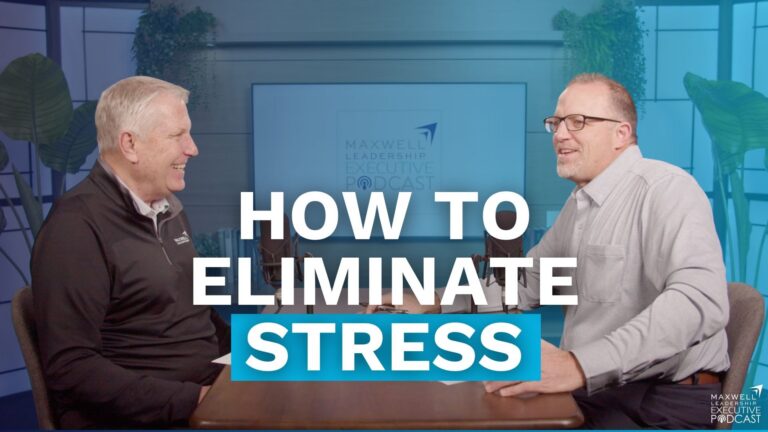
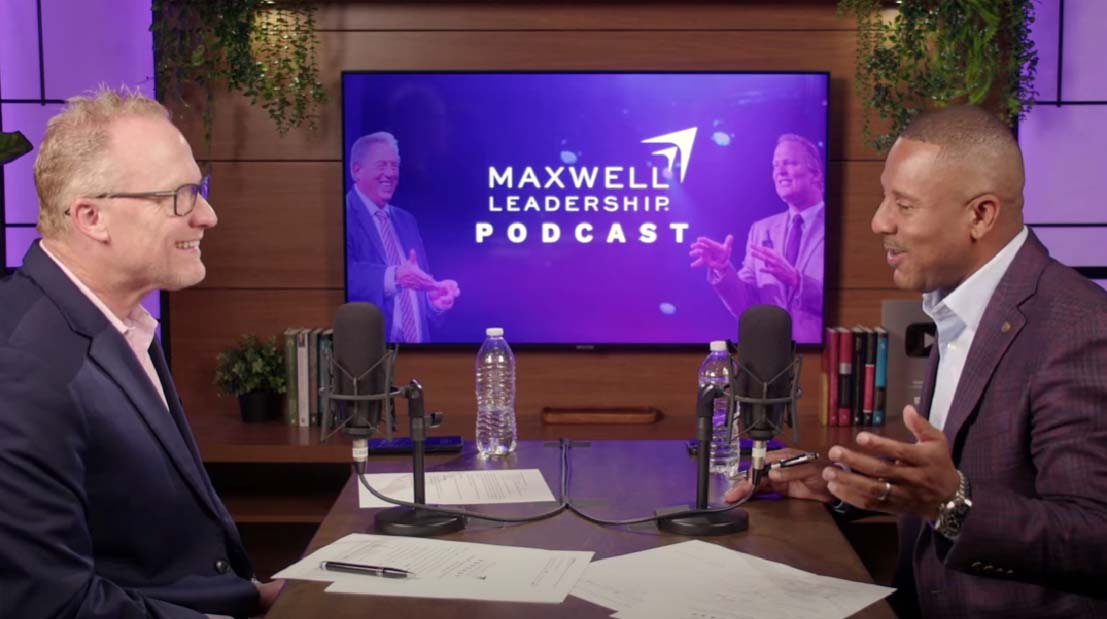
In this episode, Chris Goede and Perry Holley explore the idea that brilliance in leadership often begins with consistently embracing the “boring” fundamentals. They illustrate how successful leaders build trust and drive results by mastering daily disciplines, reinforcing core values, and maintaining consistency. They also outline practical leadership habits such as having hard conversations, clarifying roles, and preparing thoroughly for every meeting and challenge. Throughout their discussion, they share relatable examples and actionable steps to help leaders understand how consistency and authenticity pave the way for remarkable outcomes.
Perry Holley:
Welcome to the Maxwell Leadership Executive Podcast, where our goal is to help you increase your reputation as a leader, increase your ability to influence others, and increase your ability to fully engage your team to deliver remarkable results. Hi, I’m Perry Holley, a Maxwell Leadership facilitator and coach.
Chris Goede:
And I’m Chris Goede, executive vice president with Maxwell Leadership. Welcome and thank you for joining. I want to encourage you. Go to MaxwellLeadership.com/ExecutivePodcast. There you can click on the Download the learner guide button or it says explore Options. There you’ll see a form. We want to encourage you if you’re looking for some leadership development training for your organization. We do a lot of coaching, executive level coaching, leadership coaching, entry level coaching.
Chris Goede:
We would love to serve you. You can fill out the form, put some of your notes there, and our team will follow back up with you. Well, today’s title is Boring Before Brilliance. There’s so much depth behind this and I love this topic because we all want to brilliantly lead. We want to lead at the highest level, but are we willing to do the boring that comes before it? That’s what we’re going to really dig into and talk about. Are you able? I love this. You put this in here. We all want the highlight taper.
Chris Goede:
We do. We want to watch the practice tape. Do we want to be a part of the practice? And one of the things that this is really going to come out of is an interview that Perry kind of dove into and listened with pro golfer Steve Stricker about his experience. And we’re going to kind of flesh this out for you. What made me think about this is not improving our golf game. Perry. When I saw this, I was like, well, we’re going to use this to talk about there’s no help for our golf game, but it’s just boring.
Perry Holley:
There’s no brilliance.
Chris Goede:
That’s right. It’s just boring.
Perry Holley:
Yeah.
Chris Goede:
But John will tell a story that he had gentleman come up to him one time and John was asking him a question and he, John just got done doing a keynote and the guy said, well, hey, I want to do what you do. And John said, that’s awesome. Do you want to do what I did? The boring is in the dead. Right. And the brilliance is now in what he does. And I think that’s with us in all of our leadership. We just don’t show up and able to lead with brilliance like that. It is in the boring.
Chris Goede:
And so we’re going to unpack this a little bit. Yep.
Perry Holley:
So it was an advertisement For PNC Bank, I believe, on the PNC Championship a few weeks ago. And I was, I was just fascinated. Of course, Steve Stricker is a well known golfer and he’s really been, you know, hyper successful and very well known and all that. But he tells a story and that he’s, you know, this, you know, facing this par 5 with these long shots and everybody wants him to go for it. And he says, you know, just knowing my best shot and is with my short irons, my wedge and that kind of thing, I just, I just take these, you know, lay it up and then, and then go for it and put myself in a position to win. So, you know, I started thinking about how often do leaders feel the pressure to take the flashy shot, to do the go big, go fast, take risk, and it doesn’t really fit who they really are. And Stricker knew his strengths. He called it out that this is what I’m great at and I know where my brilliance lies.
Perry Holley:
And it’s because he has done a lot of work on that. And I thought about. John actually says, you know, successful leaders play to their strengths, not to their ego. And, you know, and especially in golf, there’s a little bit of ego in taking out. Let the big dog hunt these, you know, take the big swing and who can hit it the furthest? And he says, I don’t have to hit it the furthest, I just hit it the straightest and I can put it where it needs to be. But he knows his strengths in that. But the story kind of goes a little bit deeper than that. But that’s where this came from.
Chris Goede:
I love it. I immediately think of peer pressure. And we’ve all been, if you play golf, we’ve all been on the tee box and you’re like, let’s see how far we can hit this and then be on the green and two on a par five. And so you kind of, you fall to that at times instead of staying on. And so it goes on. It talks about early in his career, which this would be extremely intimidating. I actually had just been partnered with Tiger woods and talk about hitting the ball a long way, completely opposite of his approach. And afterwards, Steve actually confided in his wife and was like, man, I can’t do what he does.
Chris Goede:
I can’t hit the golf ball. Not many people can. But even at that level, right, there’s a big gap. And so what he wanted to do is he’s like, all right, I’m going to try to fix this. I’m Going to try to take my game to the level of his game at as far as hitting the ball as far as he does and try to match that. He goes on to talk about that it cost him a lot and his confidence dropped, his performance dropped. He actually lost his Tour card. For those that follow golf understand, those that don’t, you got to have a Tour card.
Chris Goede:
You have to stay in a certain level of ranking to be able to be on that. He lost that because he was in essence abandoning his strengths, kind of going away from what his strengths were to chase someone else’s brilliance, the long drive champion, the Tiger woods in this case. And so if you do that, you’re going to lose your footing as a leader if you’re not authentic to where you’re at. In his case, he lost his golf swing completely and it messed him up.
Perry Holley:
Well, that’s where the boring part began. So he lost his card and he’s not allowed to play there. And he was going to go do something else and. But he realized he really has a gift and he knows that he can play this game. But he goes back to working on his swing and doing. He said he hit eight irons and only eight irons and he would only the swing after swing after swing and doing the boring day after day task that he needed to do to perfect himself. And he it was repetitive and boring and it just wasn’t really didn’t seem like that would lead anywhere. But that’s the part I found in many of the people that I’m coaching that we skip.
Perry Holley:
And like you said, the people come up to us all the time. They say, well, I want to do what you do well, I think there’s a high compliment that you. Yeah, but are you willing to do what I did to be able to do what I do and find out? Are you willing to do these engaging, just really boring types of things we do day in, day out and the daily disciplines that are caught up in doing that? I know John saying one time that champions don’t become champions in the ring. That’s just where they’re recognized. And I’ve heard Muhammad Ali saying it. And everybody wants to be under the lights, but nobody wants to be on the street at 4am running in the cold and doing those hard things. So Stricker stayed with it and saw the bigger picture in mind about what he wanted to accomplish. He was willing to do the boring, repetitive things that he needed to do to perfect that.
Perry Holley:
And. And his confidence returned and now he’s known as one of the better golfers in history. And he’s well recognized as.
Chris Goede:
I don’t know enough about golf, but maybe even. Maybe a Hall of Famer. I’m not sure where that falls and his wins, but. But yeah, very well known. One of my favorite quotes from him said, if someone calls my game boring, it’s not a negative. Boring can transition very quickly into brilliant. When he’s on the green and I’d be in the water, right. Because he understands.
Chris Goede:
And. And that’s just. That’s a great perspective of his strengths and where. Where he’s at. So let’s get very practical on this. Boring leadership behaviors for those that are leading people and running organizations that can then produce an outcome of us that’s brilliant as a leader and that we’re able to increase our influence and impact people. So, number one, Perry talked a little bit about this. Repeat the fundamentals, right? Even maybe after he won a tournament, potentially, he’s hitting eight irons.
Chris Goede:
He’s trying to figure out, how do I repeat the fundamentals? How do I. What does that look like with me as a leader? So for us, I thought about a couple of things. Reviewing the values of your organization in every single meeting. That’s boring.
Perry Holley:
And we do that.
Chris Goede:
We do that. And I even made a note here, and sometimes I don’t want to do that because it’s boring. And you already don’t like coming to the meetings.
Perry Holley:
I thought we’re gonna make me read.
Chris Goede:
This again, and I don’t want to do that.
Perry Holley:
Right. But you know what it does, though? It does keep going.
Chris Goede:
Yeah, it knows. So. But it just. It puts it in our. In our heads.
Perry Holley:
And we’re. No doubt everybody on our team knows.
Chris Goede:
What values 100% and how they play.
Perry Holley:
So there’s what they look into. While it’s boring, it really is brilliant.
Chris Goede:
That’s exactly right. Another one is making sure that we talk about what the expectations are on our team. What does this look like? So everybody knows what the expectations are for us, it happens to be the seven values and what that looks like to be lived out. That’s the expectation. And we share that. And everybody knows what that looks like. And then make sure you reinforce standards instead of just assuming that everybody’s in alignment. What are the standards that we’re going to live by? You love talking a little bit about this, about this difference between, you know, are we going to just expect things or whatever, or we’re going to have the standards of excellence, rules and regulations that we live by.
Chris Goede:
Standards and expectations it also reminded me of Vince Lombardi. We’re big sports fans, obviously, where every. No matter if they just won the Super Bowl.
Perry Holley:
Yeah.
Chris Goede:
He started out with a team, professional athletes, and held up for those that are on YouTube, held up the football and said, this is a football. They’re like, no, duh.
Perry Holley:
Right.
Chris Goede:
We know what that is. And. And so we just got to make sure that we are continuing to. To repeat the fundamentals. I want to share a couple of stories really quick here. We have a client of ours that every single meeting, they stand up, that they have, they read the Daily Reader.
Perry Holley:
Maxwell Daily Reader.
Chris Goede:
Maxwell Daily Reader. Thank you. For those who don’t know, it’s just a short paragraph. It’s a leadership lesson by John. It’s some questions, and I love it. They go, hey, what does this look like here inside our culture and inside our organization? And listen, it’s not brilliant in the moment. It takes repetition over time. It can be boring, but it shows up as brilliance over time because it’s what becomes embedded in them.
Chris Goede:
It also made me think of one of their team members who we love being around. His name’s Bill. I won’t name the client, but he often talks about how options support decisions. Well, there’s options in every meeting that we run into. We can either start the meeting with the values or the Daily Reader, or we cannot and just jump into metrics. But the decision that comes out of that and how our team acts comes from the options that we gave them to run the meeting. And so absolutely love that. And as you think about it, we’ve got to get back to the boring, the fundamentals.
Chris Goede:
And even if we have to give them options of what that looks like, it’s not do we do the boring or not. It’s actually, well, do we repeat our values or do we read the Daily Reader right for them? And then you kind of go down that road that supports the decision that we’re going to make and how we’re going to live that out here in the organization.
Perry Holley:
Yeah. Another one would be choosing to be consistent over intensity. You think about, we let the emotions of the day and things swing us in different ways, but we. We lose our consistency. So this might be boring. Things like steady communication instead of emotional swings, you know, communicating heavy in the midst of trialing things, but not so much when it’s not. And we want consistency in that. Predictable accountability is pretty boring, but we.
Perry Holley:
We hold to the same standard of accountability no matter what’s going on, who it is, no matter what you Would have to be intense and sometimes and let off in others. We’re accountable. It’s pretty boring. Another boring things. Same expectations in good times as in bad. If we have a standard and we let off because things are easy, then you don’t have a standard. And so we want to make sure that we maintain that. And the reason it leads to brilliance if you do these things is that teams thrive when leadership is reliable.
Perry Holley:
We talk about this all the time. People are watching you. You’re. You’re leading by example, whether it’s a good one or a bad one. And people are watching that. And consistency builds trust faster than inspiration, I’m finding. So this, while it’s boring to be can do the same things over and over and be consistent in that it leads to brilliance every time.
Chris Goede:
It’s how people then begin to expect you to show up right through that conception.
Perry Holley:
Trust.
Chris Goede:
Yeah. 100%. Yeah. You know who’s going to show up every day. Number three I want to talk about is having the same hard conversations again and again. This is hard for me to say to have hard conversations. Right. But the boring part of this is how do we coach underperformance when we see it often.
Chris Goede:
Right. Doing it again and again, addressing anybody that maybe is misaligned, that what we see versus hoping that it fixes itself. That’s a. A lot of people think it just goes away. Right. But it’s not going to go away. We got to be able to do that. Number three under this topic is clarifying roles repeatedly.
Chris Goede:
Lack of clarity will drive confusion for your team, which will then lead to failure. And so we got to make sure that we are clarifying and we’re speaking about that. It’s boring, but it will lead to brilliance. Going back to addressing the misalignment, I want to make sure they just don’t disappear. They will actually compound. And going back to what you were talking about in regards to consistency, man, we got to make sure that we’re having the conversations repeatedly over and over and over again. Doing it consistently so that it fixes the issue that’s at hand versus us just expecting, let’s stay quiet. Let’s not say anything about it.
Chris Goede:
And no, no, the boring part is we got to have it over the conversation over and over and over again. And I promise that they will not compound. They’ll actually fix them.
Perry Holley:
And that’s where brilliance.
Chris Goede:
And that’s where brilliance.
Perry Holley:
Yeah. Yeah. So number four, this is my secret sauce. This is if I said anything that if anybody ever thinks I ever did things, brilliance, this would be the one, this would be the boring one. That helped me the most was preparing more than anyone sees. And this is boring beyond belief about reviewing. If you’re a leader on a team, reviewing agendas in advance, knowing in advance what’s going to happen in these meetings, thinking through that, thinking through second and third order consequences, putting some think time into things, studying competitors quietly instead of reacting publicly, knowing your business, doing the small things daily, consistently over time just leads to remarkable results. And you know, John Wood and John Maxwell both emphasize the preparation as the real separator among folks, that leaders don’t wing it, they don’t just phone it in that they, they are hyper prepared when things happen.
Perry Holley:
And I have to tell you for personally is I get up early and I have a plan and I work the plan and it is boring. But man, oh man, can I go in any room. I feel like I can stand up and there’s no way to be able to do the brilliant things if you haven’t done the prep and put that emphasis on that.
Chris Goede:
I think as you’re talking about this, I’m going to stop for just a second because you do have a routine and your routine is all baked into preparation and it’s boring. And it’s often done when no one’s watched it. Right. Because you’re up for everybody. You got a process. And we just had incredible two podcast sessions with Valerie Burton and we were talking about the corporate training that we built around resilience. And while that corporate training is going to show up as being brilliant, no one saw the boring behind what you had to do. Because we rolled it out and you’re like, it’s not right.
Chris Goede:
And the boring was you went after it and you attacked it and the systematically. And now it’s going to show up as brilliant. And so I was thinking about that as you were sharing. We’ve got to be preparing. We can’t just wing it. As Perry said, the fifth one is measuring what actually matters. So tracking leading indicators, not the results. I think about this with sales teams.
Chris Goede:
I mean we want to track and celebrate the end goal. But what are the leading indicators? That’s the boring stuff right at the top of the funnel. Yeah, here’s where it starts. And a lot of people don’t want to do that. Boring. And we got to lead into that. Next one is watching employee engagement and turnover trends. This is super important.
Chris Goede:
Valerie, we were talking just a minute ago about listening and watching with her about man, what are they saying? How are they engaged. What’s the activity look like and what’s the turnover? Perry and I talk a lot about this with employee engagement and turnover. And when you have a trend, turnover trend with a leader in a certain department, you are hemorrhaging and losing incredible talent probably in there. And so what are you measuring when it comes to the leaders that are on your team? Finally making sure that you’re monitoring, however your system, your customer and your business is set up, monitoring the complaints, the customer complaints before it impacts the business and the revenue. Right. So do you have CSI numbers and you know, what does that look like? And so this is a lot of the prevention side of things versus trying to recover. Right? The the brilliance is in u turn leadership. At times they’re like, oh, look at.
Perry Holley:
That, he turned right.
Chris Goede:
Well, really, the boring that leads to brilliance is doing the prevention work.
Perry Holley:
Finally, number six, reflecting regularly. How boring is that? Thinking about weekly self evaluations, taking a few minutes at the end of the day or end of the week to think about what went well, what didn’t go well. Asking yourself, I miss in meetings or in interactions with people. Really boring to do that. Seeking quiet feedback from, just getting feedback from others. It takes time. And you think, well, I don’t have time for that. It’s boring.
Perry Holley:
But why does it lead? These things about reflecting leads to brilliance is that Stricker was a great example of this, that he really looked in the mirror during the hardest part, during the hardest season of his life and reflected about, why am I not competing? Why I keep hearing my head. He goes, I can’t hit it like they hit it. I can’t compete. Then he said, I can compete. It’s just not the same way they do. But if I do the work, the boring part, I can find the brilliance. And he did love that.
Chris Goede:
It’s about authenticity, right? It’s who he was and is as a golfer that the brilliance came out in not trying to be someone else. And so leaders, I want to encourage you, man, authenticity as a leader, one of the top attributes that you can actually think about, not only in how you connect and increase your influence, but how you get things done. Staying true to that. John has a rule of five and it’s boring.
Perry Holley:
That’s right. I’ve got about that. It’s getting boring. Yes, right.
Chris Goede:
And so people are like, really? Like, that’s how you’ve sold 35 million plus books or whatever, you’ve written almost 100 books. Like, you release a book a year and your system’s boring. Oh, it’s boring. But he does it every single day. And he has a rule of five, and that’s how he goes about doing it. You read a book and you go, man, that’s brilliant. Well, the boring work was done every single day in his rule of five. My challenge for you leaders today, as you think about this, is if you want to be brilliant, if you want to have great influence, if you want to lead people, start there, but then back into what will it take? And that’s where the boring needs to be done.
Chris Goede:
And then build a rule of five for you of, hey, I’m going to start doing this every single day. These are my rule of five. These are the things I’m going to do. I’m going to, you know, I’m going to read and I’m going to ask questions and I’m going to follow whatever your rule of fives are. And that’ll lead to brilliance over time. But you just can’t walk in and be brilliant. You can’t just walk on a stage like you do in front of thousands of people and be brilliant. You can’t just develop a corporate training kit that’s going to impact thousands of lives around the world.
Chris Goede:
And it’d be brilliant if you didn’t do all the boring work that we talked about. So what’s the rule of five for you?
Perry Holley:
Fantastic, Chris. Thank you. And let me remind you, if you would like the learner guide for this episode or to learn about our other in our podcast family, or about our other offerings, you can do all of that at MaxwellLeadership.com/ExecutivePodcast. You can also leave us a comment or a question there. We love hearing from you. Very grateful you spend this time with us. That’s all from the Maxwell Leadership Executive Podcast.
Transcript created by Castmagic.
Maxwell Leadership delivers corporate training that strengthens executive leaders, aligns teams, and transforms culture. Discover how our proven frameworks equip your organization to lead with clarity and impact.