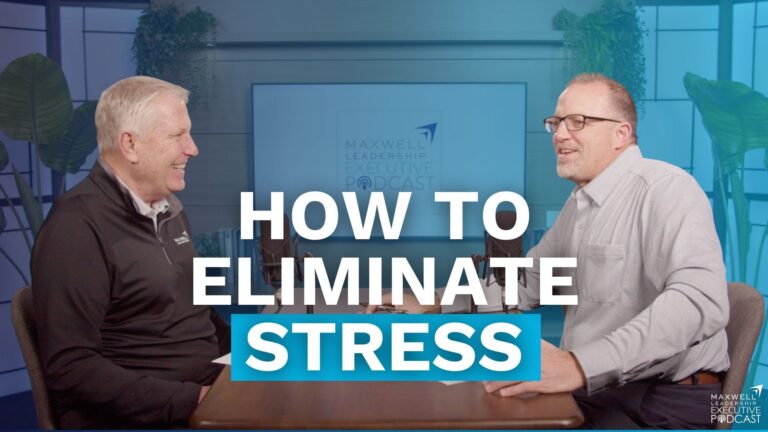
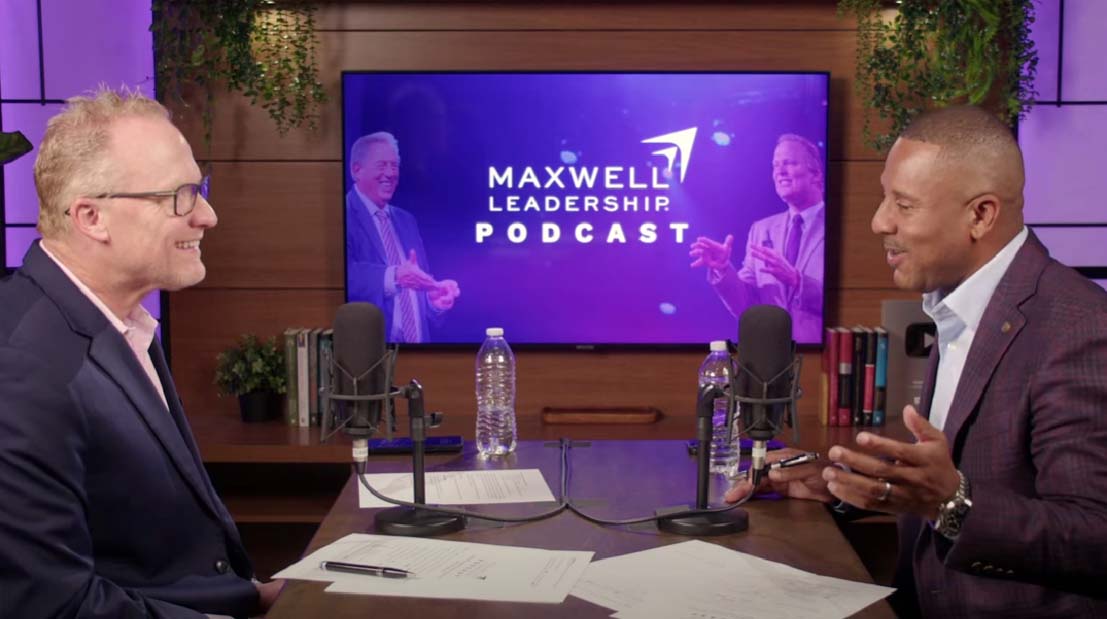
In this episode, Jared Cagle interviews Steve Robinson about the importance of leaders addressing their own inner health to cultivate healthier organizations. They explain how unprocessed trauma can shape leadership decisions and organizational culture, and why it’s crucial for executives to recognize and work through their internal challenges. Steve Robinson shares practical strategies for self-regulation, resilience, and post-traumatic growth, offering actionable steps for leaders who want to increase their effectiveness and well-being. Listeners walk away with a deeper understanding of how inner work not only strengthens individual leaders but also creates psychologically safe and thriving workplace cultures.
Perry Holley:
Welcome to the Maxwell Leadership Executive Podcast, where our goal is to help you increase your reputation as a leader, increase your ability to influence others, and increase your ability to fully engage your team to deliver remarkable results. Hi, I’m Perry Holly a Maxwell Leadership facilitator and coach.
Chris Goede:
And I’m Chris Goede, executive vice president with Maxwell Leadership. Welcome and thank you for joining. Now, you might be wondering, what in the world is this episode doing dropping in your library on a Friday? I’m thinking same thing because we just talked about 377 Thursdays in a row. In a row.
Perry Holley:
Now, one Friday.
Chris Goede:
Now we have a bonus lesson on Friday.
Perry Holley:
This isn’t a trend, is it?
Chris Goede:
It is not a trend, but we are going to do a little surprise, a little bit something different today. So today we are actually offering a bonus episode featuring one of our Maxwell Leadership Publishing authors, Steve Robinson. Steve actually has just released a new book called Soul Leadership. And as you know, we talk a lot about this and John Maxwell’s five levels of leadership. You can’t lead people well externally until you make sure you’re really, really good internally and leading yourself well. Because how you do that is going to impact how you lead and influence others. I know you won’t be disappointed. You’re about to learn a ton.
Chris Goede:
Plus, a gifted communicator himself on our team, one of our executive vice presidents of Maxwell Leadership, Jared Cagle, will be leading this discussion with Steve. So be sure to grab your notes, sit back and enjoy learning about Soul Leadership.
Jared Cagle:
Hey, welcome to the Maxwell Leadership Executive Podcast. My name is Jared Cagle, Executive Vice President here at Maxwell Leadership. I am thrilled about this conversation that we’re going to get to have today with one of our authors, really, one of our partners, long term partners of our nonprofit Equip, and someone that we’ve partnered with on multiple levels around the world and cannot wait for you to hear the content that he’s bringing to the table. Steve Robinson, thank you so much for being with us today, man.
Steve Robinson:
Jared, it’s awesome to be with you guys. And like you said, we’ve been a part of your world, John’s world, for about 25 years. And so of course supported Equip and had the privilege of being on the board now the last 15 years or so. So, man, we’re thrilled to be with you guys and thank you for partnering with us on this book, too. Super excited about the material.
Jared Cagle:
So we, we are, we are as well. You know, there was a time not so long ago when John heard you talking about this content. And I think he told you, hey, listen, we need to put that in a book. What do you think, Steve? Tell us a little bit about that story.
Steve Robinson:
Yeah, we were at the Bible museum in Washington, D.C. and we were doing a conference. I was one of the speakers. Unfortunately, I had to speak before John Maxwell. I mean, that’s like giving an altar call in front of Billy Graham. I’m like, oh, my gosh, man. I was like, this is. And it was all leadership.
Steve Robinson:
Okay, Jared. My talks. And I’m like, oh, my gosh. But afterwards, you know, I was just kind of watching his response, and he goes, steve, you took a very complex topic and made it very simple and relatable for the average person. And, man, we want to. You need to put this in a book. He goes, matter of fact, we’d love to help you. And so that was really the inspiration.
Steve Robinson:
As you know, John’s been a mentor to me and an inspire, a coach, somebody that’s really, you know, breathed wind in my sails over the years. And so I’m like, man, if John, if you feel like this is book worthy, man, let’s do this. And so it was actually interesting, Jared. The story is. So when I got my doctorate and under coach Tom Mullins, who’s been a friend of Equip and John’s, of course, for many, many years. And so because of my personal history and story, what things I went through, coach said, steve, you really need to do it on trauma in leadership. That’s really a passion of yours. And so technically, the book itself really is a popular leadership book based upon my dissertation that I did for three years, my doctoral research on.
Steve Robinson:
So, yeah, so we’re excited about getting the material out. We think it’s going to help a lot of people. It’s a blend. It’s interesting. People have asked me when they’ve heard me do podcasts, and they’re like, are you a therapist? I said, no, I’m not a therapist. I’m actually a leadership practitioner. I’m a pastor. But the book is a blend of theology, therapy, neuroscience, leadership, and my own personal story.
Steve Robinson:
So it’s a kind of a blend of all five of those dynamics coming together. And so when you hear it, when you read the book, you’ll see all of the interlacing of the theology and the therapy. I’ve had my own personal trauma story. So super excited about it, and you can see that intersection in the book. But it really is a popular book out of my doctoral dissertation. Three years of intense. Just a lot of research. Plus one more thing is I did a study, Jared, we did a study on.
Steve Robinson:
It’s a first of its kind trauma in leaders today, A national study. We interviewed 750 leaders for profit and nonprofit. We had 10 question format and really kind of got a whole level of research, contemporary like present right before. We did the book as well. So very well researched. 300 footnotes.
Jared Cagle:
300 footnotes. Incredible. Hey, let’s jump into the content, Steve. It is thick and I can’t wait for executives and leaders to hear this message because I think it’s very important. Hey, talk to us about this concept of inner health and from your experience and your research, why is that so important for the leader to focus on his or her inner health? And how does that shape the culture of the organization that they’re leading?
Steve Robinson:
Yeah, Jared, we did a lot of studies and analysis on organizations and what’s interesting is, you know, the key leader, the founder or the CEO, that’s the major influence in that organization. What’s interesting is, you know, very we’re going to cast vision, we’re going to be strategic, we’re going to build culture. We know that the CEO often frames or is a chief architect of framing the culture. What they fail to realize often is it’s not just people don’t only emulate the vision that you’re casting, but also watch this, the inner life that you possess. I did a study on this guy, built a really. The organization was interesting. He was a dynamic, brilliant, visionary type leader on the outside, but he was deeply fragmented on the inside. He brought in consultants I talked about, he brought in high paid consultants and you know, cultural architects to kind of help him reshape culture.
Steve Robinson:
They redid mission statements, vision statements of the values of. But what he failed to address was the inner fragmentation of his life. And because of the toxicity in the culture, he kept thinking, well, if I can just tweak the culture. Well, what. He failed to realize that it was coming out of him. The principle in the book I talk about mirror neurons. If you’re walking down the street, Jared, and somebody yawns within 60 seconds, there’s a subconscious firing of a neuron in your brain where. Watch this.
Steve Robinson:
We are designed subconsciously to respond to the actions of others. It’s the same thing in an organization. If you’re the CEO, if you’re the key leader, what’s going to happen is people are going to respond to and mirror watch this. If you’re dysregulated as a lead, as a CEO, guess what you’re going to produce a dysregulated organization. Why is that? Neuroscientifically, that’s proven neurologically. And marriage, for example, in therapy, there’s a term called co regulation where a spouse will co regulate the other. What I talked about in the book is that the founding leader or the present CEO, whoever, is that point person. They can actually watch this co regulate their organization.
Steve Robinson:
A calm leader produces a calm organization. A dysregulated leader produces a dis rate. Same thing in the home. A calm parent produces. This is not just anecdotal. This is scientifically proven through neuroscience and through the studies that are present in this book. And so it is important. It’s critical.
Steve Robinson:
It’s a must. Do your inner work. Because if you do the inner work, guess what? It does show up on the outside. John talks a lot about influence. I love it. Right. Everything rises and falls on leadership. You want to grow your influence.
Steve Robinson:
Here it is leadership. Do your work. Because what’s happening on the inside is going to spill out on the outside. It’s going to affect the culture of your organization.
Jared Cagle:
Yeah, yeah. I love this concept of it’s happening in you. And so if you’re not being intentional with what’s happening in you, then it’s going to come out one way or the other. Whatever is in you is going to come out as the leader and shape the culture. And being intentional with that inner fragmentation, what an awesome concept there. Hey, talk to me about your experience with Hurricane Katrina. You mentioned that in your story about how that really impacted you and shaped your leadership and the lens that you view it through. Tell us about that experience.
Steve Robinson:
Yeah, so I had some bumps growing up as a kid and grew kind of got some healing in my formative years in college and then went into a professional setting, started church the King when I was 30 years old. As a leader and five years, everything was great. Almost six. You know, it’s kind of like, man, this is happening. You know, you feel the momentum and the energy. Then there was a little storm. It was actually a big storm called Hurricane Katrina. And everything changed.
Steve Robinson:
We didn’t have church for a month, Jared. We had 3,200 people coming before we came back. A month later we had 1300 people moving, transferring. And so I threw myself, me and a couple group of guys started a relief organization and I threw myself into in relief recovery. Look, if you weren’t helping people in post Katrina, guess what? You were irrelevant as an organization. And so I just threw myself really for about a year. Running on adrenaline, dealing with crisis, getting people housing, dealing with my own concerns, my own house damage. So here it is.
Steve Robinson:
I’m impacted. And I’m also trying to serve my constituents and my congregants and the community beyond that. And what happened was I didn’t realize. I know now after years of therapy, I really have an understanding, But I was experiencing crisis induced trauma. Here’s what happens with trauma. Trauma is thrown around a lot. Trauma is a. And I’m going to talk about the brain in a moment.
Steve Robinson:
But trauma comes both from a sudden impact, from a hurricane, from an assault situation, but it also is cumulative. And this is where a lot of business leaders don’t realize. You’re dealing with the crisis. At work, you got a kid on drugs. At home, you got a marriage challenge. Here you got to let go of your buddy that you started the company with. It was a minority position. You’re trying to figure out how to do that.
Steve Robinson:
And so what happens is trauma is cumulative, it’s sudden. And. And so what happened was I didn’t realize it, but my brain literally was being impacted. There’s a book that I quote a lot in mind about the body keeps the score. Our body, the symptomology shows up in our body, in our stomach, right? The anxiety, persistent anxiety, a dysregulated nervous system. And what happened to me was I was about five years after Katrina, I went through Katrina. Then I went through a building project, a $40 million building project, Jared. We raised about.
Steve Robinson:
We had $20 million, what we call pledges in our faith community. We raised some capital up front. And then we had a little crash, a global crash called the Great Recession, right. 2008, the bank pulled our loan. So here it is. I’m reeling from Hurricane Katrina. I’m rebuilding our congregation, serving our community, state and region. Now we have this massive building project.
Steve Robinson:
We’ve got to build cash, we’ve got to raise $25 million above our regular giving in a very short amount of time. I’m dealing with people. I’m trying to help people. And it was February 2010. I was getting ready to go speak and I crashed. Call it a burnout, call it a brownout, call it a nervous breakdown, whatever you want to call it. And I was, I was speaking, and I’m not trying to be mystical or spooky, but I just like, okay, this is what happens to people. This is what happens when you kind of lose it.
Steve Robinson:
And so thank God I had a good community of faith around me, great eldership. My wife I took three days in Mobile, Alabama, at the Grand Hotel. And I just told her, I said, I’m just done. I can’t do this. And it really began a recovery process. Thank God. They sent me to a therapist, counseling. And I began to understand I had five years of cumulative trauma.
Steve Robinson:
And what happens is the health of your soul when you don’t address the pain. It is going to manifest. You can’t just keep it hidden. I remember as a kid, you know, when I had this little rubber ducky. You hold it under the tub, you know, and it pop up. Let me tell you unprocessed pain. Can I tell you something, Jarrett? It’s going to pop up. And so when I speak about trauma, again, I’m not a therapist, I’m a leadership practitioner.
Steve Robinson:
But let me give you real quick three parts of the brain that are most impacted by trauma. Number one, prefrontal cortex. This is what we call your thinking brain. Number two, your limbic system, which. Where your amygdala and hippocampus are your memories. Hippocampus, your. Your. Your amygdala is your emotional brain.
Steve Robinson:
And then of course, you’ve got your brain stem. When you experience crisis, what happens is crisis after crisis after crisis. It can literally. It doesn’t separate your brain, but watch what it does. It reorganizes your brain. So your logical brain becomes overwhelmed and it literally separates the front part of your brain in the middle, where your emotional, your reasoning and your feelings get disconnected. Trauma is not stored in the event. It’s not the event.
Steve Robinson:
It’s your brain and body’s response to that event. So I began an 18 month recovery process and then a 15 year journey. How to help leaders. I want to help leaders. I don’t want to see leaders burnout, blackout, brown out, quit, hurt themselves, hurt their organization. That’s really my passion in the, in the book. So that was my story. The good news is the last chapter of the book, Jared, I talk about post traumatic growth, is that you can not only grow back to baseline, but you can actually get stronger on the back end.
Steve Robinson:
So super excited about, as you can tell, and I’m enthusiastic about this content because I want to help leaders.
Jared Cagle:
Well, and it’s layered. I love how you’re unpacking that. You know, for those of our listeners that are listening, maybe in the car, you’re going to need to listen when you get home as well and take some notes on this because there are so many layers to what you’re describing here, Steve, and I love it. I Want to ask so many more questions. Go into something for me. The trauma trigger effect. You talked about this in the book. And what I love about the way you describe it is how you’re giving us helpful information, insight on how we can use this principle to help be aware of when it’s coming and then respond in a.
Jared Cagle:
In a more healthy or better way. Can you unpack some of that for us too, please?
Steve Robinson:
Absolutely. So I developed what’s called the soul leadership cycle, and it’s broken into three parts. Number one is the trauma trigger effect. We’re going to talk about that in a moment. Number two is what’s called the resilience equation. And then number three is the growth model. So let me unpack what’s called the trauma trigger effect. So what I talked about was your brain.
Steve Robinson:
Let’s think about this. I actually. This is a great. This is an easy analogy to understand. I went. I bring my kids. I brought all four of my kids to a summer camp in Northern California. Jared.
Steve Robinson:
And I don’t know if you’ve ever done this before. Have you ever jumped on the blob? You know what a blob is? In a lake? Okay. Yeah. They’re amazing, right? You just launch. You’re like, whoa. So the principle is your kid or whoever is on one part, you jump on the other part, right? And then it just catapults the other one up. What’s interesting is I use that analogy in the book related to how trauma and stress. Remember what trauma really is? It’s an overwhelming of stress.
Steve Robinson:
Either a sudden bam or repeated boom, boom, boom. So what happens is your prefrontal cortex is overwhelmed. You can’t understand it. That’s your thinking part of your brain right up front. So it’s like it hits here. Boom. And then what it does is it overly activates the region of your brain where your emotional center is. And so what happens is, here it is.
Steve Robinson:
So it doesn’t separate your brain. It disintegrates your brain. It restructures your brain. So now, instead of dealing with, like. You never hear this term, activated, triggered. What does it mean to be triggered? Here’s what it means. It means that you’re easily your emotional brain and your nervous system, it goes up like this, and it takes over your thinking brain. Heard a leader say this or somebody.
Steve Robinson:
I don’t know what I was thinking. Deeply traumatized people that have not received healing, guess what? Oftentimes they weren’t thinking. When your emotions are activated or triggered, your prefrontal cortex Goes offline. That’s where you make dumb decisions. That’s why make unwise decisions, Jared. So why am I saying all this? What we do is we do. We use the DSM 5, which is in the therapeutic language. It’s a criteria of how do you help somebody discern whether or not they have acute stress disorder or ptsd, and which I did have post Katrina.
Steve Robinson:
And what it helps you to evaluate the criteria in there is how do you know if you’re easily activated or triggered? What are the symptomologies? So, number one, the first step is awareness. You have to be aware, if you find yourself. Watch this. That your limbic system, that amygdala in your limbic system is hijacking your logic. If your emotions are hijacking, remember the blob, Your logic. Guess what? If you are overreacting disproportionately to small situations, you go, hmm, so it’s awareness. And so we give you a whole criteria and grid to be able to evaluate. Awareness is really the first thing.
Steve Robinson:
What are some of the signals? Hyper vigilant, persistent anxiety. Easily dysregulated. That means your nervous system. Again, you’re a leader. You’re trying to lead a team. All right, C suite, CEO, wherever you are, easily activated. Avoidance. I can’t deal with this.
Steve Robinson:
Numbing practices. So what happens is the first step when somebody begins to realize, whoa, I have trauma issues on my brain. It’s not in the event. Hurricane Katrina was not. The trauma is not in the event. It’s in your brain. So you carry it past the event. How do I get out of it? Number one, I’ve got to become aware.
Steve Robinson:
Number two is processing. You know, one of the things in the therapeutic world, the counseling world, that is good. I’m an advocate for great counselors is the safety component. What leader wants to go in and finally acknowledge. Matter of fact, when I browned out, they sent me to Texas. I’m like, I don’t want anybody to realize how crazy I am where I lead. You know what I’m saying? It’s like, send me to another foreign land. And what’s interesting, Jarrett, I went to Texas, and I walked up to the door and the guy’s name, and then it said, psychotherapist.
Steve Robinson:
I like, what? Why not life coach? Why psychotherapist? Remember Alfred Hitchcock? Remember that? And I thought, but that’s where the process began. So, number one, I’ve got to become aware. Am I easily triggered? Am I just overly activated where I dysregulate? Number two, I got to start processing. I got to find somebody I feel safe with and processing and talking about what happened is so important. And then number three, I’ve got to go into what’s called a rescripting format. I talk about rescripting. So here’s what I do. A lot of study, Jared, in the book, and I want you to see this.
Steve Robinson:
Your brain is a physical organ, Jared. Your mind is not a physical organ, but it’s an entity. So here it is. Incorporeal. Without matter is the mind. The brain is corporeal, like corporate. It has matter with matter, the brain. Without matter, the mind.
Steve Robinson:
You rewire the brain, but you renew the mind. They’re so closely connected. It’s like a duplex that shares the same front door. And the miracle of science that we now discover the word neuroplastic. Neuroplasticity. Paul talked about it in Romans, chapter 12. Be transformed by the renewing of your mind. This is the rescripting phase.
Steve Robinson:
Awareness processing. Rescripting. And I talk about the speech center and how you rescript the neural architecture in your brain re authoring the story of the event that took place to you. So I’m giving you a lot. And my heart for leaders, Jared, is they don’t realize that their dysregulated, activated self, it’s affecting their organization. It’s hurting people. So got a lot to say about this. I’ve tried to not give you a fire hose of this stuff, but let’s.
Jared Cagle:
Go into that just for a moment. I love what you said, that trauma is not in the event. It’s in the brain.
Steve Robinson:
The brain and body.
Jared Cagle:
So let’s play something out. There’s a CEO out there that’s listening, an executive leader that’s listening who knows the experience of being in a meeting and things are going awry, and they’ve been triggered by something that came just across their bow in just the wrong way. I want you to talk just for a moment, about, okay, how do we regulate in the moment in the boardroom when somebody of authority or even on your team throws something across the bow? And now you have to respond as a leader in a way that doesn’t create a crisis or cause more damage.
Steve Robinson:
Yeah. So I talk about the power of pausing in the book. And I talked about tactical breathing. Box breathing. It’s actually used by the Navy SEALs, and it’s four second. Four second. Four second, four second. Your nervous system, your parasympathetic nervous system, okay, Calms.
Steve Robinson:
Your sympathetic nervous system activates. So there is A way that you can watch this self regulate. The goal of a parent is to teach a child how to self regulate. What happens is if you didn’t learn those soothing skills as a young kid, you get into a leadership position. You’re brilliant, high acumen, you’re intellectual, you know how to make it happen, strong personality. And so you get triggered, you get activated. I teach some practical tactical breathing skills. I also teach some just pausing skills.
Steve Robinson:
I can tell you this, I’ve hurt my marriage. I’ve heard people, I’ve lead at times. And what happens is you get kind of stuck in this mode of hard charging, make it happen. Now let me say this. By the grace of God, I still lead a large organization. We’re still making an impact, we’re still growing, we’re still expanding. So I’m not talking about everybody needs to go be a monk and live in a spiritual community. And you know, that’s wonderful if that’s your calling.
Steve Robinson:
So I’m talking to leaders here. We have 190 employees. I’m talking. So I’m talking. But there are skills that you can integrate. And the key is to integrate, by the way, to move from fragmentation of the mind and brain to integration. And part of the key notable characteristic of somebody that’s internally integrated is they have what’s called soothing skills where they can watch this, assess a situation, Jared, in a calm way and a clear way. Again, what they don’t realize is when you get activated, you allow yourself to get what’s called hyper aroused in your brain, your emotional brain.
Steve Robinson:
It actually shuts down your higher critical thinking skills. In other words, you make poor decisions. Now, God designed us as a believer, I believe this. God designed us in such a way where adrenaline rushing through your body. You’ve heard this, it’s your fight or flight hormone. The house is on fire. Boom, we got to get out. So there’s nothing wrong with that in emergency situations.
Steve Robinson:
The problem is when your body is not well and your inner self is not whole and you’re easily triggered because of an unprocessed. It’s not trauma, it’s unprocessed trauma that becomes the issue. Unprocessed trauma in the brain, what happens is you go into a fight mode and a flight mode and you don’t realize you don’t need to do that. Instead, you should operate much, much more out of a calm state, clearer in your diction, clearer in your thinking, and actually more effective as a leader. I just want to say there’s. I talk about in the Book Soul Leadership is the book I teach. In the book, tactical breathing Skills, pause and walk away. I talk about how to regulate your brain and body gut, you know, how your brain and your gut are connected.
Steve Robinson:
I can feel anxiety rising in my stomach. I know I’m being activated. I’ll enter into tactical breathing. I’ll also pause. I’ll make sure to not make a big decision in that moment unless it’s an emergency. So there’s a lot, lot of strategies that C suite employ leaders CEOs can employ to really what’s called regulate their emotional lives.
Jared Cagle:
So helpful. Steve, Steve, there are, there are leaders all over the place that are maybe afraid to go do that hard work. What would you tell them? I mean and really how would you encourage them to take a step in that direction? That knowing that, hey, it’s not trauma that’s the issue, it’s the unprocessed trauma that’s the issue that’s going to come back up. So talk to the CEO that’s just afraid of sitting across from a professional and having these conversations.
Steve Robinson:
You know, one of the things, Jared, is when you begin to really have heart to heart conversations with people, everybody’s got stuff. Everybody’s had marriage challenges, everybody’s had a bump with a kid. Everybody’s had financial. And so part of it was what I call in the book, I talk about breaking the silence. And I hope that when I share my story, I get real raw in there about my story. I talk about my life, I talk about marriage, I talk about kids. Is that you have to be inspired by somebody that has been honest and transparent. I’m one who believes in sharing to be authentic, but to share on the other side of victory.
Steve Robinson:
I’m not sharing right in the middle of it. I’m now on the recovery side. But I want to encourage any leader out there. Here’s the good news. You know, the last chapter of the book, Jared, is about ptg, post traumatic growth. And what I talked about in there, not again just anecdotally with stories, but scientifically I prove it’s the work is out there that a person resilience is responding. And going back to baseline, PTG is actually going beyond that. And so my daughter, I’m going to respond to your question, but I want to do it this way.
Steve Robinson:
My daughter broke her bone when she’s in college. She got in a car wreck. And I remember talking to the orthopedic surgeon. He talked about how the calcium comes together. You put it together, it rebuilds there. But then it goes back to baseline, okay? It strengthens momentarily psychological trauma. When you watch this, you become aware of it. You get good professional help.
Steve Robinson:
You’re then in a loving, safe community again. As a person of faith, I believe there’s the God component in that as well on the healing side. But then you actually watch this, can experience PTG where you can grow stronger on the other side. In other words, you can be a wiser, more effective, more empathetic. Think of the team building skills. Think of how to build team cohesion. Think about how to build cultural awareness of when somebody is hurting you. Create space.
Steve Robinson:
So leaders that have experienced what I call PTG post traumatic growth become more effective. So in other words, you’re not damaged goods. You’re not like, man, I’m just a mess. No, no, no, no, no. You become very effective, very acute in your assessment, your analysis, and very caring in your ability to bring, to create space for people on your team to get well and for them to get better. So to me, I’m not believing for trauma, I’m not believing for crisis. But I love when it’s redeemed and it helps somebody become stronger on the other side. So I’m like an evangelist of hope for somebody that’s experienced trauma.
Steve Robinson:
I’ve gone through it, I understand it, I understand what it is to feel ptsd. I understand the symptomology, I understand the hyper arousal, the brain. I understand what goes, the fogginess. But I also understand, and it’s interesting. I finished the book Jared and I talked about several years ago when I finally got my manuscript finished. It was about a year and a half, two years ago, maybe a year ago actually. And when I finally like, okay, this is it. And I was speaking and I thought to myself, 15 years ago, and I was holding the, I was like holding the stage.
Steve Robinson:
They had like a pulp at a table. And I thought, my gosh, 15 years ago, I barely held that thing with my hands were just shaking. I was crying. And here it is now, 15 years later, I’m holding it, but I’m holding it differently. I’m holding it on the backside, encouraging people, teaching the material. And I thought to myself, it’s worth it. And I want to say that to any leader, break the silence. Many people have gone through what you’ve gone through.
Steve Robinson:
You’ve got to humble yourself. You need to get some professional help. You need to be able to be in a loving group of community. You can be better as a leader. You can be more effective, wiser, more empathetic. More resilient. But you got to be open and deal with your stuff. What you don’t work out, watch this.
Steve Robinson:
You’re going to act it out.
Jared Cagle:
That is crystal clear.
Steve Robinson:
Okay?
Jared Cagle:
PTG is a brilliant concept, by the way. Post traumatic growth and the work that it takes to get there. Okay, remember, just as a review, what. What Steve’s teaching us right here is so important. The trauma is not the issue. It’s the unprocessed trauma. Okay? So post traumatic growth is possible because we can work it out. Steve, you just painted a picture for us of standing at the pulpit or the lectern, and you.
Jared Cagle:
At one time, maybe we’re squeezing it tighter, but now you’re holding it differently. I want you to flesh that. That picture out even further and speak directly to the CEO out there, who is on the front, maybe afraid to do the work right, and they’re feeling the stress, the trauma, but they haven’t done the work yet. I want you to take them to the desirable future and what it would be like for their team. What are the things about the culture that reflects a healthy executive leader?
Steve Robinson:
It’s interesting. There’s a scientific term called homeostasis. And homeostasis is synonymous to equilibrium, where the brain becomes. It comes back into homeostasis, where you’re thinking and you’re feeling, they become even. Okay, Your thinking brain and your. So what I would say to the leader is, if you find that you are easily activated, consistently dysregulated, in other words, people on your team commit misdemeanors, and you respond with felony responses. Okay, you know, they’re disproportionate. Then what I would say to you is, it would not hurt you to just sit down with a, by the way, a trauma informed therapist.
Steve Robinson:
Maybe you start with your pastor or a priest or a rabbi or whoever, a spiritual leader to you. And I think that becomes really the first step. Jared, it’s very embarrassing for a leader to have to admit that because they think like I’m supposed to have all the answers. I’m so. Particularly if you’re a founder, you’re an owner, you’re the CEO, but I’m telling you, that’s the first step. So in other words, you have to break the silence. Number two, you have to realize your brain is not healthy right now, but it can come back into homeostasis. Neuroplasticity can kick in as you’re aware, process the trauma.
Steve Robinson:
And by the way, I do want to add this. Jared, all therapy is not the same. Just like you don’t go to a brain doctor for your foot, a podiatrist. You don’t go to an ENT to do brain surgery. You want to go to a trauma informed therapist. A lot of therapists will deal with the prefrontal cortex, but they’re not dealing with the limbic system. Trauma informed therapists, experiential therapy, emdr, they’re actually unlocking memories and they’re helping to disassociate and associate emotion with that. And so I would encourage people, number one, you can get well and stronger ptg.
Steve Robinson:
Number two, become aware of are you reacting rather than responding? Isn’t that what we want as a leader? We want to respond, but reactions always bespeak of dysregulation. Number three, we want to enter into rescripting mode in our life, but we often need the help of a therapist to do that or a spiritual leader, somebody. Number four, there’s got to be community around you where you are walking with people that you can process. I’ve got a friend, Jared, who is actually a Bible study leader to me in College. I’m 57 years old. This 37 years this guy’s been a friend of mine. He’s a little bit older than me, like an older brother, and he’s safe. Here’s the deal.
Steve Robinson:
You know, it’s like, well, I need friends. Well, you have to be a friend to have friends. You have to be a safe person to have safe people in your life. And I’m not suggesting that safe person doesn’t challenge you, but so I think the network of relationships around me, I’m comfortable. Become aware. You can get better. Don’t be scared to talk to a therapist. Trauma informed therapist number four, be in a community of people.
Steve Robinson:
And what I have found, and I’ll say this, what I have found is I’m so aware of when I see somebody, a leader that’s running. I was with a young leader recently. The guy’s exploding in influence. He’s writing books, he’s traveling around the world. But I saw it in the eyes of his wife, I saw it in the eyes of his kids. I thought, okay, this guy’s living on adrenaline, cortisol and dopamine hits. And I thought, this is a crash coming. And here is the lie that leaders believe.
Steve Robinson:
If I slow down, I’ll be less productive. I want to say, if you slow down, you’ll actually be more productive. I know there’s seasons of push. You’re in medical school, you’re taking exams. I get it. But you can’t habitate there. You can’t live there because when you live there, you live adrenalized. Your thinking is not as sharp.
Steve Robinson:
So that’s my appeal. Have awareness. We’ve got the criteria in the book. See a trauma informed therapist. Talk to a spiritual leader, pastor, priest, rabbi, somebody you can be honest with. Have a network, a social relationship of friends and be encouraged. You can come out stronger on the other side. You don’t have to be a statistic.
Steve Robinson:
You don’t. You can be a good statistic. I’ll say that way of somebody that grew stronger. So that would be my appeal to the leader on the other side.
Jared Cagle:
Incredibly helpful. Steve, I love that you’re painting for us a hopeful reality. When you saw this leader who you described that is on the way to burnout or on the way to crashing, you point that out because you actually see a path forward for them. You see that there can be growth on the other side. And a lot of times we do take the victim mentality if we’re not careful when it comes to trauma. And I love that you’re giving us a path forward. Steve, this book is very helpful. I know we’re just scratching the surface today.
Jared Cagle:
Soul leadership is out January 27th and we’d love for you to grab your copy everywhere books are sold. There will be a link in the show notes as well. Soul Leadership again by Steve Robinson, one of our Maxwell Leadership Publishing authors. We are so grateful to be with you and to help you or partner together with this resource. Steve, before we sign off, would love to give you a chance. Any final words of encouragement, anything you want to leave our audience with.
Steve Robinson:
I want to read to you something that I wrote and this is all in the book because what does a leader want at the end of the day? They want a happy life. They want to feel healthy on the inside. Those that are married, they want to have a happy marriage. They want happy kids. But ultimately they want to build something as well. A healthy organization. And I wrote just some. I just mentioned some aspects of what can happen on the other side with ptg.
Steve Robinson:
Healthy leaders. Here it is. I want everybody create psychological safety for their organization. We hear a lot about safety in marriage. You create healthy leaders create psychological safety in their organizations. They model appropriate vulnerability. They normalize growth. Watch this.
Steve Robinson:
And they give people permission to bring their whole selves to the table. I want to say that again. Healthy leaders. And this can be you. If you’re listening to me today, this can be you. A healthy leader creates psychological safety. For their organization. They model vulnerability, they normalize growth, and they give people permission to bring their whole selves to the table as a result.
Steve Robinson:
That organization is not toxic, but it’s a healthy culture. You can produce that. So those would be my final words.
Jared Cagle:
I love it. It’s powerful.
Steve Robinson:
Thank you so much, Jared. You guys are amazing.
Jared Cagle:
Steve, you’re the best. We do this because we believe everyone deserves to be led well. And you have helped us and thousands of others do that today. So grateful for you. Thanks, everybody, for listening. We’ll see you next.
Steve Robinson:
Time.
Transcript created by Castmagic.
Maxwell Leadership delivers corporate training that strengthens executive leaders, aligns teams, and transforms culture. Discover how our proven frameworks equip your organization to lead with clarity and impact.