Do your expectations shape your reality—or limit it? Imagine what would happen if you raised the bar for yourself and those around you. In this week’s episode, John Maxwell reveals how the expectations you set determine the experiences you create, and why possibility thinking is every leader’s secret advantage.
After his lesson, Mark Cole and Chris Robinson share actionable strategies for resetting team expectations and building a culture of higher achievement, so you can apply John’s insights right away.
Our BONUS resource for this episode is the What You Expect is What You Experience Worksheet, which includes fill-in-the-blank notes from John’s teaching. You can download the worksheet by clicking “Download the Bonus Resource” below.
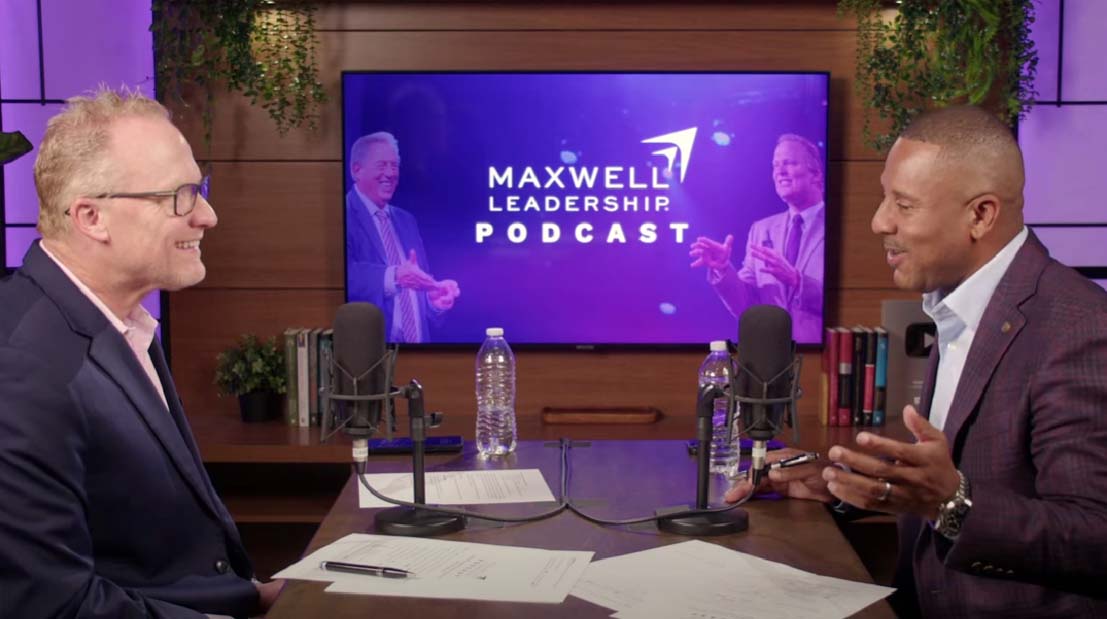
Mark Cole:
Hey, welcome to the Maxwell Leadership Podcast. I’m so glad you’re here because today is about expectations and experience. But before I do that, Chris, I’m so glad to have you in this every time. Every time.
Chris Robinson:
Brand new year.
Mark Cole:
It’s brand new year. Thank you for finally showing up. No, I’m just kidding. We did a podcast a little bit earlier this year, but here’s what I want to ask you. So you’ve had a little time to reflect on 2025.
Chris Robinson:
Yeah.
Mark Cole:
If you look back to 2025, what’s probably one or two of the biggest experiences, the things you’re probably the most proud of?
Chris Robinson:
Yeah. Well, I’ve got a couple that come to mind I took just like you. I take a couple days at the end of each year and I go and take some time to reflect. And I did that through a cruise. And so I figured, you know, a couple years ago I go to a hotel and hold up anyway, you know, why can’t I go to a hotel that’s moving and I can see a little bit something different without having to do anything. I like it, you know, get out my car, anything like that. So I did last couple years. But as a result of that, one of the parts of that reflection time is what are those things I’m grateful for? What are those things I’m proud of going through a picture review, things of that nature.
Chris Robinson:
But when I think about two things I’m really proud of last year, number one is the book. I mean, the impact and the difference that that book has made in people’s lives has opened up doors for me to speak in places and for people to get a piece of my heart and my story. It’s really impacting lives. The stories that people are coming back to me with has just been amazing. The second thing would be, is still the amount of time, as much as I was away from home last year, was the amount of time that I was able to still get with the children. To be able to take each one of the six, you know, on a single individual trip and have that time with them individually. So making sure that I was still tuned in and available and creating memories and experience with them was my biggest accomplishment. Because I think we get away from that as high paced leaders.
Chris Robinson:
Sometimes there’s a separation of we go all success in business and then there’s a complacency that settles at home and I don’t want that to kick into place. So those would be the two that.
Mark Cole:
I would say, I love this, I love this. Both first time evers as far as taking all six kids on an individual, well, they all.
Chris Robinson:
I’ve done that for a couple years.
Mark Cole:
You have done that. And so then writing this book, that’s incredible. What a great 2025. Hey, for all of you listening, I hope that you have taken some time to learn and relive experiences from 2025. We’re getting to the end January 2026 and I want 2026 to be your best year ever. Make this podcast a part of your development journey this year. Today, John is going to talk about what you expect. It’s what you experience.
Mark Cole:
Robinson and I are going to come behind John’s teaching and we’re going to talk about how we drive that as behavior disciplines in our organization here at Maxwell Leadership. And we believe it’ll give you some things to help you do that as well. So if you would like to along and download our bonus resource or if you would like to view us on YouTube, you can go to our show notes. Go to MaxwellPodcast.com/WhatYouExpect and you will be able to grab not only those two tools, the link to YouTube or the link to the downloadable resource, you can also get other things that we’ll put in there that will help you this week become a better leader. Now for now, grab a pen, grab some paper. Here is John Maxwell talking about what you expect is what you experience.
John Maxwell:
People see what they expect to see. The thesis of the teaching is just something that you can put your hands around. There’s a relationship between what we expect and what we experience. And so the question is, what kind of expectations are you setting? When my children were growing up, when we were getting ready to do something, there are a lot of times I would say, now what do you expect? On our little venture out today, we’re going to perhaps a ball game. What do you expect? And I love to kind of ask them what their expectations were. And what I discovered was not only in children, but in our lives is that many times we basically see what we expect to see. So let me just share with you some observation I’ve had about highly successful people and their expectations. These are just my observations as I’ve studied history and I’ve watched successful people and there are four of them.
John Maxwell:
The expectations of successful people are as follows. Number one, their expectations are much higher than normal. In other words, successful people, when they go into a venture, they by and large have higher expectations of what they expect to see, receive, give. Their expectations are just higher than the average person. Number two, their expectations are almost always self driven. It’s not somebody else coming along and coaching them and what they should expect from the experience. They already kind of have a self driven knowledge, intuition and desire. Number three, their expectations increase over time.
John Maxwell:
Highly successful people don’t go throughout life with the same expectation level as they see and expect and experience. They’re constantly upgrading their expectations. They’re constantly looking for more, bigger, better things than they’ve ever seen before. And finally, their expectations are very personal and very clear in their life. Their expectations are not what they’re trying to put on someone else. They are expectations that they carry with themselves personally. For example, Leonardo da Vinci, his expectations were very simple, could be described in a phrase that he often said, make perfect paintings. When he got ready to paint, he had an expectation of a perfect painting.
John Maxwell:
Winston Churchill during the war. His expectations were very clear, very strong. Stop Hitler. We cannot allow him to advance any further than he’s advancing. Jeff Bezos Amazon his expectations build Earth’s most customer centric company. We’ve got to be more customer centric than any other organization. You see, they understand that what they see is what they expect. And so they make their expectations what they need to be seen.
John Maxwell:
I wrote this down and if you’ll just let me take a moment, I want to read it to you. Set expectations as high as you possibly can. So long. Don’t miss this. Get the picture. Set your expectations as high as you possibly can, so long as you truly believe that these expectations can be realized. If you want unreasonable success, you must have unreasonable expectations. The ceiling of your future is the most that you can ever imagine and the most that you can ever expect.
John Maxwell:
When I set expectations, there have been many times I’ve had doubters or they’ve had people say, oh, John, that’s never gonna happen. You can’t do that. That can’t be a. I mean, you really don’t have to believe me, but when I’m given you those expectations, you have to believe that I believe me. Because if I believe me, those expectations have great possibility. But if I don’t believe me, I will sabotage myself. Maybe another way to say it is how we view things is how we do things. That’s a fact.
John Maxwell:
I expect to see problems. In fact, can I tell you this? I expect to see problems every day. So when people say, oh my gosh, I just, whoa, I just got hit by a problem, I just say, well, I get hit by problems every day. I expect those problems. I think one of the first things we can ever do to Build strong leaders is to say, let me explain to you. You choosing to be a leader means you choose to have a lot of adversity if everything worthwhile is uphill for the average person. The only difference between this uphill for the average person and the leader is the leader’s uphill is like this. If you’re a leader, you just need to expect more problems because you not only have yours, but you have others.
John Maxwell:
You see, you don’t mind finding the problem if you believe that there’s always an answer. I always expect to see problems, but I expect to see answers. And that possibility thinking that I have has taught me some things that I want to share with you quickly. Possibility thinking teaches me one, to look for options. See, I not only believe that there’s always an answer, to be honest with you, I usually believe there’s more than one answer. In fact, when I find the answer, I’m pleased that I found the answer. But I’m never content like, okay, I found the answer, I just found an answer. And if I look long enough, there’s a better answer and there’s high possibility that, that there’s a better answer than what I found.
John Maxwell:
But I believe there’s always not an answer. And I have that possibility thinking. It gives me options. Number two, it allows me to persevere. When you believe there’s an answer, you hang in there, you stay in the game longer. Who quits? People who think there’s just not an answer. People who stop to say, wait a minute, wow, there’s nowhere to go here. Thirdly, possibility thinking teaches me to be creative again.
John Maxwell:
I don’t fear the problem. I look at the problem and embrace it. Because I know, hey, in the midst of this problem, that there’s some opportunities somewhere. And it teaches me, number four, to live on the other side of yes. I love the expression of living on the other side of yes. And living on the other side of yes just basically means that there’s just always an answer. And if there’s always an answer, you, you can live on that side. And if I could do anything for anyone, it would just be.
John Maxwell:
I would just like to walk into their life and I would just like to help them understand the power of possibility thinking. And by the way, the seeing what we see and what we expect, they are so close together. If I see the negative, I will expect the negative and I will receive the negative. If I see the positive, I will expect the positive and I’ll receive it. So what does living on the other side of yes Mean? Well, here’s what it means for me. Living on the other side of yes. Number one. It gives me a head start.
John Maxwell:
You see, I’m always leaning in to yes. So what that means is if you and I have an opportunity, while you’re kind of wondering whether you should do it or not, I probably have already started. I’m already leaning forward, ready to say yes. It gives me a head start. It allows me, when I wrote the book, 25 Ways to Win with People. One of the things I teach is be the first to help. Well, who’s the first to help? The person who is ready to help. The person who understands that when opportunity comes, it’s too late to prepare.
John Maxwell:
They’re already leaning into it. And so you always remember the first person that comes to help you, but you don’t remember the fifth person, the sixth person. You see, being first, you gives you that edge. It’s not the fastest person that wins the race. It’s the person who started first. Living on the other side of yes increases my possibilities. You see, we only find our limits by pushing them. You don’t find your limits by observing.
John Maxwell:
You don’t look and say, well, I think probably this is what I can accomplish. No, you have to push them. And living on the other side of yes. Thirdly, it’s the message that I have for other people. It’s my message I have for you. Well, I just don’t want you to miss this. Okay? Many, many, many years ago, I mean, Margaret and I, we were dating, okay? This was in McDonald’s in their early years. And I stopped at McDonald’s, and Margaret wanted a Diet Coke.
John Maxwell:
And so I went up to the little lady there and I asked for a Diet Coke. And she said, well, we don’t have Diet Coke. It was before they had Diet Coke. So I thought, okay. I said, could I have a cup with ice? Just full of ice? And now she’s looking on her little deal to punch, and there’s no place where it says cup. You know, cup with ice. So she said, oh, I’m so sorry. She said, I don’t think I can do that.
John Maxwell:
And I smiled real confidently at her, and I said, yes, you can. And she looked at me and she said, okay. And she went and got me the cup of ice, and she handed it to me. And I got in the car and we went to some convenience store and I got the Diet Coke and I poured in for Margaret, and all is well. And that day was a breakthrough day for me. Hopefully it was a breakthrough day for her. I said to myself, I’m going to spend my life being a yes, you can man. It’s kind of like my philosophy of life.
John Maxwell:
Say yes, tell the world, Figure it out. It just works. So the next time you have an opportunity, just say, yes, tell the world. And then you go, figure it out. People see what they expect to see, so if you raise your expectations, you’ll raise your sight.
Maxwell Leadership Certified Team:
Hey, podcast listeners, many of you listening right now would probably love the autonomy that comes with owning your own business or becoming a coach that helps other businesses succeed. Well, we have a phenomenal strategy where you are 100% in control of your own business, earning income on your own terms, and have access to the people, tools, and resources you need to build a thriving leadership development business. When you become a Maxwell Leadership Certified Team member, you join a global community of entrepreneurs led by our expert team of mentors and faculty, including John C. Maxwell. You’ll also get one of the top leadership certifications in the world next to your name, giving you the boost you need to get started. Visit us online at MaxwellLeadership.com/JoinTheTeam to find out more.
Mark Cole:
Charles Kettering says that high achievement always takes place in the framework of high expectations. And so, Chris, just as we have been on John’s team, we realize the pace of play, but the pace of expectation and what that requires. It was good to just kind of hear John break that down today.
Chris Robinson:
Yeah, it really was. You know, and he talks, you know, when you talk about the pace, I mean, the pace of everything is fast. I mean, we move at light speed around here. But again, that goes back to what John expects. He expects the pace to be fast. And I love how he opens up and teaches that, that people tend to see what they expect to see. So tell me about a time when you walked into an organization where morale was already low. All right, can you walk me through a specific situation where you saw leaders not getting exactly what they were expecting and how resetting those expectations begin to change what was happening on the ground?
Mark Cole:
Man. So I can and I can here at Maxwell Leadership. It was several years ago, and we had allowed a competitor. Excuse me, we had allowed a partner to become a competitor. This would have been, oh, 20 years ago, maybe. And what had happened there, Chris, is when we got our eye off the ball of being our best self, our best version. So our expectations were no longer our best. Our expectations was beating somebody else’s best.
Mark Cole:
And anytime you get into a comparative game of one team comparing to the other one company’s performance. But compared to other, you’re on a road to a different difficult. In my opinion, I think you’re on the road to destruction. Because eventually you may beat them for a while, but you’re not going to beat them eventually you’re going to beat yourself. So what happened in that setting is we spent about two years having a problem with a partner that was really helping us accomplish our goal better than we could ourself. And the challenges of that partner was greater than the power of accomplishment we were having with that partner. Number one. That’s the first challenge, that’s the first deviation.
Mark Cole:
Because our mission was being accomplished, our results were exponential and yet we couldn’t figure out how to work through the differences because the main thing didn’t stay the main thing. The minor things became the major things. Then we fired them, got rid of them, decided to go a different direction, and then they became a competitor. And then every decision we made for 15 months began to be what are they doing so we can do it a little bit better? What are they trying to do so we can try to do it a little bit better? And we spent 15 months. And now to your question. What happens when that morale gets rock bottom? John had to do an incredible reset in the organization. I believe that the morale and the challenge and the buy in of a team can be so bad that the only way you fix it is a complete reset. I don’t believe that’s always the case.
Mark Cole:
I wouldn’t be resetting every year because then nobody can figure out what you’re doing and why you’re doing it. But there’s a time in how you articulated that question that you have to do a complete reset. And what do I mean by that? Reset ownership, reset leadership, Reset the direction of the organization. And we literally reset every one of those three things and the organization completely got out of that business completely. Whereas two years before we were at the top of our game impacting a lot of people because we went down the route of making the major things minor, of making a partner a competitor and making our goal to bettering our competitor rather than being the best version of herself, took us down a wrong path. We had to completely do a reset.
Chris Robinson:
Wow, man, I love that. You know, I mean, when I. When I think about resets, you know, one of my final jobs is a sales manager. You know, I started off my career as a telephone sales rep and worked my way up into sales management and eventually into executive sales management. And my final job at that company was as a cleaner. That Was the term that we used to go in. And every single month, I had a 30 day assignment. It was 30 days.
Chris Robinson:
And we had multiple sales teams over, you know, 35 sales teams. I would go to the worst team every single month, and I would have to reset. And so what I would do is when I would go inside of these teams, Mark, is I would go in and I would ask these five questions to every single team member that was on there. Because when you go to the worst team in the company, the morale is low.
Mark Cole:
Yeah, for sure.
Chris Robinson:
They’ve got all the things.
Mark Cole:
There’s a reason I’m here. Not very good.
Chris Robinson:
They’ve got all the bad leads. Leads they’ve got, you know, where they’re being cheated on and, you know, it’s just not working. But I would go in one of the resets, I would ask five questions. I don’t want the listeners to write these five questions down because if you’re going to reset expectations, you got to do it with one individual at a time. So I would go to each team member and I would say this. I say, tell me, what is it that you love most about this company? All right. Because what I’m doing inside that context is I’m really trying to figure out why are they here and what are we doing? Well, the second question I would always ask is, what is it that you like least about this company? Now, that gives me the nuances of the people that give them problems, the hiccups or the small things that they see on the front line that we’re not fixing at the top line that I can get into. The third question I ask them is, who’s the most positive person on your team? It’s always the same person everybody points to.
Chris Robinson:
Then the next question I ask is, who’s the most least positive person on the team? Always the same person, and you let that person go. And then the fifth question I would always ask them is, what was one thing? If you could change one thing in this organization, what would it be? And they would give me that one thing. And so now, after talking to 10, 12 sales reps on a team, I would know who the most positive person was. I’d go to them, try to empower them, use their influence. I would fire the most, least positive person. I would find out what they like most and how can we do more of that? I would find out what they like least, how do we stop doing more of that? And then what’s the one thing they would change? And oftentimes I would say 80% of the time, the one thing that they would change were simple things that could get changed that didn’t cost money, didn’t cost much time that we can put in place to make them feel heard and seen. And so it’s expectations, you know, of what they see and when they see us put that in action, that morale changes well, too. You know, here’s what I love about this, is that expectations quietly become the filter through which leaders interpret everything.
Chris Robinson:
Okay? And that leads us right into this next observation that John makes, which is, successful people expect more than normal. All right? So John says, highly successful people simply expect more than normal. At Maxwell Leadership, we went through a rebrand, all right? We went. We talked about this before we started this, and we changed colors, we changed logos, we went through everything. And it was. You know, honestly, the timeline was faster than everybody anticipated. The budget was bigger than most the team anticipated, and that most companies wouldn’t even attempt take us into that time. What expectations were you holding onto that others, including myself, hadn’t fully caught on to? And how did you change the way that you showed up as a leader day to day?
Mark Cole:
Yeah, it’s such a. It’s such a good question in the context of this, from my perspective, most of the time, I answer questions what I expect on expectations related to John and his high expectations. But that example of the rebrand and the renaming of our brand, man, we got more wrong than we got right. I wish you’d asked me the question, how much you get right? And then we’d make Jake have three podcasts in one. You know, it’d be a three part. Two things that we got right is we had to build a belief in not only our internal team, but our external team that we were around to stay. Our brand has been built off of a personality, John Maxwell, and we needed to communicate that we were going to invest in our future. And so the price tag being bigger than we imagined was a statement that says we are bigger ahead than what we are now.
Mark Cole:
And it was a very intentional thing. I spent more money. I went off to people that had worked with Coca Cola, Chick Fil A. I could have found somebody less expensive. I could have found people on our team. I got somebody right here. I needed the magnitude of somebody big because it built belief. It didn’t deliver maybe anything any different than somebody with a lot less zeros on it would have done, but it made a statement.
Mark Cole:
We’re establishing ourself where the big boys play. That’s futuristic. That’s bigger than a person that’s a brand. Number two, we needed to create something that, whether you like the color purple or whether you didn’t, we had to create something that was inclusive of our values. We value all people. And we were living in a world where white and black. We were living in a world where red and blue. We were living in a world where blended colors was not the thing.
Mark Cole:
We were trying to divide everybody, if you’ll remember that. And I went, oh, no, no, no, no, no, no. I love purple. And I’ll tell you what the branding company got me to do. Purple is the. The biggest. Purple is the color that most needs all colors to make the color purple. And it was a color of inclusion.
Mark Cole:
And I went, you got me. I want that one. I want that one right there. And you didn’t like it. I put that on note. He didn’t like it. Kimberly, my executive partner, didn’t like it. The people very, very close to me didn’t like it.
Mark Cole:
I went, no, no, no. The color is not important. The statement is important. And this statement. I can defend this color because of the statement it makes, not the appearance it gives. That was huge. That was huge because that’s what it. The final thing that I would tell you is the brand was super important, because I have been saying for many years, you’ve heard me say it.
Mark Cole:
I’ve said it on this podcast, we are about better, brighter and bigger. Better is salt making things better. When we interact with. It’s going to be better. We are brighter. We’re bringing the light of valued leadership into a valueless society. We’re brighter and bigger means that our best days are ahead of us. And so getting that and capturing that, not with agreement.
Mark Cole:
There was a lot we didn’t agree on. We’ve laughed about some of that, but we got alignment on it, Chris. And today we’re living because. And it was more money than I had to put to this project. We’re living today because of the bold statement we made with those three tenets right there.
Chris Robinson:
Yeah, we absolutely are. And I’m proud of you for standing in that. And I love what it is and what it’s become and what it’s becoming. And, you know, as I look at the colors purple today and I see them all the time, I just. I just laugh. It makes. It brings me joy.
Mark Cole:
It does bring me joy, because the.
Chris Robinson:
Toil and the anguish, I’m going, I just don’t like it. I mean, I’m sitting there. I just don’t like it. But let me tell You. I love purple today.
Mark Cole:
You love what it means, don’t you?
Chris Robinson:
You love what it means.
Mark Cole:
We make change. We may change it down the road, but for the time, it just meant so much. Right. And that’s what we’re talking about. It’s what you expect. It’s what you experience. And man, just that experience that. This is about valuing all people.
Mark Cole:
This is about being bigger than a personality, and this is about believing and investing in a future that is greater.
Chris Robinson:
Yeah. You know, here’s the interesting thing about this. As we’re paying attention to this, I want people to catch this. Is that what’s interesting about this is that expectations don’t come from the circumstances, they come from the leader. And you set the expectation for that and you stood ground on that. And I mean, again, I just, I’m grateful for that and grateful for the way that you led throughout that circumstance right there. But, you know, as we know, John says the strong leaders also allow for their expectations to increase over time. Okay, it increases, we go up.
Chris Robinson:
We’re bigger, better, brighter. It goes to the next level. So how are you different in your leadership expectations today compared to when you were earlier in your career? So take us to a moment when you realize that the bar has to go up now and what growth was required at that time.
Mark Cole:
Yeah. You know, podcast family, I want to share this with you because I believe so many of you are experiencing greatness now, and you’re experiencing greatness so that you can see even greater things. Greatness is not for the sense of great and self accomplishment. Greatness is only meant to expand and extend your vision. John’s been saying something recently that he says, I used to believe that do play now, pay now, and play later. I used to believe, do the hard things first so you can do the easy things last. He said, I don’t believe that anymore. I believe that you pay now so you’ll have more to pay later.
Mark Cole:
I believe that you do the hard things today so you can do harder things tomorrow. What John’s really saying there is what you expect is what you experience. And then when you ask this question, Chris, that is there a time to where I saw expectations increase? Yeah, I can give you a bunch of them. Let me give you two one’s. In our nonprofit, we started out believing that we needed to train 1 million leaders in all seven continents. And so, John, that’s a big expectation. Big expectation. Right.
Mark Cole:
John says, we’re going to take my intellectual property, we’re going to put it into notebooks that we Fund with donor dollars and we’re going to give it away to areas that need it the most but have the least amount of access to it. We start down this journey, we get to a million leaders, not only in seven continents, but in about 40 countries. And John went, I’ll tell you this, we’re on a tear, we’re on a journey. We need to now go to every nation and train leaders in every nation. Now here’s what training leaders meant to us. Every six months, getting volunteers that would donate money to volunteer their time. Did you hear what I said? They’ll pay money to donate their time to go teach John Maxwell’s content around the globe. We had over 500 of what we called associate trainers that flew over 56 million miles, gave over $55 million to train leaders in every country of the world.
Mark Cole:
Over 6 million of them every six months for nine years.
Chris Robinson:
Wow.
Mark Cole:
It wasn’t just a let’s go have an event. It was a six month commitment for nine years. And we trained over 6 million leaders in every nation of the world. Expectation was a million, whoever we could get. The expectation continued to rise to where literally 50/4 million dollars. 50/8 million miles and over 25,000 donated to do this training. How is that? Why is that? Because the vision of John Maxwell continued to expand. It was not a destination vision, it was a direction vision.
Mark Cole:
Let’s head this way and let’s see what else we can get. Another one. Chris, introduce me to you. John and I were approached and said, hey, what if we create a coaching and certification business? And we was like, no. That kind of competes with some other things that we’re doing. What if we did it this way? What about this? What about this? Finally said yes to the idea that we would get 3,000 coaches over the course of five years. We had over 1,000 in the first year. We’ve never looked back.
Mark Cole:
We’re at 59,000 now. And I can truly say this. Our ability to live out the message I just gave you about our brand is because of those coaches. It has now become the only path forward is our team. It’s our team first. And my vision was expanded and I could really break all that down to a mentorship call that I had to where my vision was expanded as we got into it. And now I will tell you this, you and I are leading a charge this year on team first, which means we believe our team is, is the pathway forward to influencing and impacting.
Chris Robinson:
Oh, man, I can’t wait. So that leads me to the next One is living on the other side of yes. You know, and when I think about this one in particular, living on the other side of yes. When these expectations rise, you have an opportunity. You can either say, no, I’m not going. We did the 1 million. I’m not going. We did the 3,000, I’m not going.
Chris Robinson:
Or you can live on the other side of yes. And I remember us sitting on a box behind the stage and you saying, hey, Chris, would you go on this journey with me? And I had a choice. I could either continue doing what I was doing, I could have went some other directions, or I could live on the other side of yes. And I said yes in a time where I was doing fine on my own, I didn’t need to do this playing pickleball golf six days a week. Life was good, and I’m going, but there’s something greater on the other side of this yes. And so I’m grateful because it was a yes to something that was greater than me. It was a yes to being a part of a team that was larger than me from an executive standpoint that I had never experienced. It was bigger than me from the standpoint of getting closer proximity to you and John and being able to have that opportunity to live there.
Chris Robinson:
And so it’s truly a principle that I picked up as well, too, of living on the other side of yes. So tell me a story and explain how saying yes first actually expanded for what came possible for you in this organization.
Mark Cole:
Yeah. You know, just recently, I. I have not attempted to perfect any of the things that John really seems to anchor. So let’s look at things like consulting or things like speaking or writing. Those have been things that John has anchored. And there’s no way to really up level that from my role and my position. I want many other people to do it because we need it from the brand, but I need to really uplevel the things that from my position, I can. And so I had an opportunity.
Mark Cole:
John and I were working with. Well, we had lunch. It wasn’t even work. It was just kind of a connection. We had an ability to connect. And an opportunity came up that I would have said no, that I have said no to dozens, if not hundreds of times over the last 15 years as CEO. And I looked at John and I went, john, I feel like there’s something on the other side of yes on this one right here. And he began to teach me how to know that intuitively that you’ve got to always be considering options.
Mark Cole:
We’re an Options, organization options everywhere. But not every option is on the other side of yes. Some of it is a distraction that needs to be said no to. And so he began to work with me on how to know an option has a potential yes on the other side, the scope of the opportunity, the invitation of the opportunity, the influence of the opportunity, and the potential impact of the person on the other side. And I began to go through that, Chris, and I said yes to that opportunity. It was the biggest one day, kind of pay me for an opportunity that I had in a while that I’d ever had. The other side of yes, however, was not that. It was sitting on a plane headed to another country to where we were then talking about millions of dollars coming to our nonprofit because of the value that I’d got on something that I would have said no to before I said yes, extended value.
Mark Cole:
And it gave me credibility to have a conversation about millions of dollars to our nonprofit. Here’s the point that I want to illustrate kind of as we close today, Chris, when you look intentionally at what John’s talking about on expected, what you experience, luck doesn’t become a factor. Now, I’m a blessed person. You have a grid of faith as well. And we’re both just blessed beyond anything we could imagine because of the good Lord, in the human capacity of understanding expectation and understanding what to look for in experiences. It’s a science. It is absolutely digging into these principles that John said today and going, we’re going to create an environment that says we’re going to expect what we believe and then we’re going to ultimately experience. John said, it’s in your notes.
Mark Cole:
For those of you that download the notes, he said a statement in this podcast today that said, set expectations as high as you possibly can, period. Most leaders say, yeah, they’ve never said something they didn’t believe God couldn’t do, but they didn’t believe they could do it inside themselves. Right. It’s called exaggeration. But then John puts a comma on that and he says something more, set expectations as high as you possibly can, so long as you truly believe that these expectations can be realized. When John Maxwell says things like, we’re going to transform a country, he absolutely believes that we are. When John Maxwell says we’re going to have 10% of the world’s youth population through our values curriculum, he absolutely believes it. Many of us put something out there in the universe with our words.
Mark Cole:
We don’t believe there’s a chance in the world to get it. Now. There’s a difference in saying, I believe something, but I don’t know how I’m going to get it. But I still believe we can get it and it’s going to come to me. Somebody says, I’m going to say something, I don’t know, I don’t believe it at all. And what I would challenge us all today as we build on this lesson that John has given us. Always keep options, but always find a way to ensure that you believe, because that belief will give others around you a borrowed sense of belief. We have a podcast listener.
Mark Cole:
I love Dan. Haven’t met you yet or haven’t talked to you since this comment, Dan, but I appreciate you and Dan listened to a podcast called Acknowledge youe Humanness. That was an episode that we did a while back. We’ll put it in our show notes, but here’s what Dan said. He said this advice really humbles you as a leader, ensuring that one concentrates on what they are developing and creating, not just who you are. It also reminded me of the importance of mentoring others so they too can succeed. We call that Dan adding value to you, Dan, so you’ll multiply value to others. That’s what we do at this podcast that we want to do.
Mark Cole:
Let’s continue this year together because everyone deserves to be led well.
Transcript created by Castmagic.