Ever wondered what dancing and effective leadership have in common? It’s all about rhythm. In this episode, John Maxwell is sharing how you can know when to push your people, when to pull them, and when to be patient with them in the process.
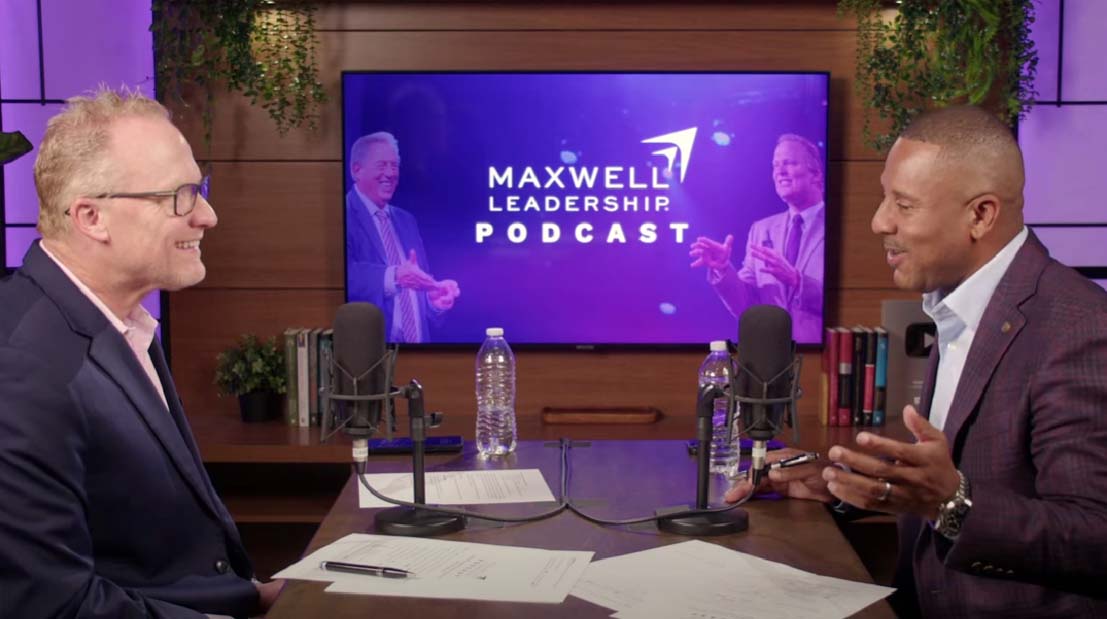
After John’s lesson, Mark Cole and Traci Morrow talk about what John has shared, as well as give you practical advice for how you can apply it to your personal life and leadership.
Our BONUS resource for this episode is the Leadership Rhythm: When to Push, Pull, or be Patient Worksheet, which includes fill-in-the-blank notes from John’s teaching. You can download the worksheet by clicking “Download the Bonus Resource” below.
Leaders, stop trying to do it all yourself. The best leaders know their limits, operate out of their strengths, and set others up for success. Find freedom with BELAY — pairing you with vetted U.S. virtual assistants so you can focus on what matters.
To help you get started, BELAY is offering Maxwell Leadership listeners a free download of their resource, 10 Strategies to Unleash Your Productivity. Just text MAXWELL to 55123 for FREE access.
Mark Cole:
Are you spinning your wheels on suboptimal tasks? Do you spend more time putting out fires than planning for long term goals? It’s so easy to lose yourself and your daily momentum with little tasks that take you off focus. Here’s the truth. Your time is too valuable to waste on pesky notifications, calendar invitations, and missed deadlines. Just because it all has to get done doesn’t mean it all needs to be done by you. That’s where our friends at Belay can help. A Belay Executive Assistant can take it all off your desk and out of your mind. From administration to project management, a Belay Executive Assistant can handle it so that you can focus on the tasks that matter. If you’re looking for new ways to reclaim your time while still maximizing your team’s productivity, download Belay’s free resource 10 Strategies to Unleash your Productivity.
Mark Cole:
With these tips, you’ll be back to doing what you do best in no time. Just text the word Maxwell to 55123 for your free copy today. That’s MAXWELL to 55123 to start accomplishing more while juggling less with Belay. Welcome to the Maxwell Leadership Podcast. We are so excited that you’re viewing and or listening today. Our podcast really is committed to adding value to you and that’s exactly what we want to do today with the caveat that you’ll go multiply that same value to others. I’m Mark Cole and today John Maxwell is going to help us figure out how to lead people better. In fact, John’s going to teach us how to know when to push people, when to pull people, and when to be patient with them.
Mark Cole:
Yes, I use the bad P word with some of you leaders. There is a time for patience. Now after this lesson, my co host, Traci Morrow is going to be helping me and joining me to offer help to you advice to you on how you can apply what we’ve learned from John today to your life and to your leadership of others. If you would like to download the free bonus resource for this episode or even watch this episode on YouTube, you can go to MaxwellPodcast.com/Rhythm all right, here we go. How to push, how to pull, how to be patient. Here is John Maxwell.
John Maxwell:
I call this lesson Leadership Rhythm. The very fact that I talk about rhythm tells you they say some people have rhythms, some people don’t. I remember when I was in San Diego, I had about a dozen of my friends. I decided we’d all go take dance lessons at a Studio. So I got my 12 friends and we went down just. I mean, for an experience. What we do is have our dance lessons. We go out to eat, just fun stuff.
John Maxwell:
And you should. Some of them, I mean, they had rhythm. They just had rhythm. And they did the lessons better. But we had a CFO named Steve Baby. And he’s the most rhythm less person I’ve ever seen. He has no shake in his body at all. His body could not get out of sync if he forced it.
John Maxwell:
I mean, and I could hardly wait because I took him on purpose because he’s a wonderful friend. But I knew that he would be like hysterical. I mean, just if this teacher can teach him. This teacher is the greatest of all dance teachers. And about the third lesson, the teacher before we got out to dance in our little groups, he just looked at Steve and he said, now, Steve, he said, you being able to walk out on the floor is an accomplishment to you. You don’t have to do anything, just stand, let your partner dance around. He said, I find no rhythm in you. Of course, we’re all howling because we all know.
John Maxwell:
And Steve’s great. He’s laughing too. And he said, and he goes out and stands. And his wife Barbara had all kind of good rhythm. She kind of danced. He looked like a Christmas tree or so. I don’t know what he looked like, but he had no rhythm. And so what I’m talking.
John Maxwell:
I’m going to talk to you about leadership rhythm. I know in the very beginning that some of you have more rhythm than others. And it’s okay. Those that have more rhythm have probably more of a natural leadership gift than those who don’t. Okay? So now that we got started, and the reason I’m going to call it leadership rhythm is I want to teach you in leading people when to push people, when to pull, and when to be patient. Because you have a team and there are times you got to push them. If you don’t push them, they’re not going to get where they want to go. There are.
John Maxwell:
Sometimes you don’t need to push them. And then there are times you got Steve babbies and you got to be patient. You know what I mean? You just got to say, this is going to be a long course. Because when you define rhythm, what it is, it’s a regular pattern of changes or movements. In other words, it’s very a regular pattern. It’s a pattern that’s regular, but it has a lot of movement and it has a lot of changes within it. Leadership rhythm, pull and push. Let me just say this.
John Maxwell:
It’s not either or it’s not like you are either pulling people all the time or you are pushing people all the time. You are pulling and pushing people, sometimes at the same time. And again, this is intuitive. When do I push them, when do I pull them, and when do I do both end? When do I do just one, and when do I do neither? Because I have to be patient with it. So leadership rhythm requires three things, okay? It requires motivating. It requires encouraging, which is not the same as I teach it, and it encourages waiting, which is the patient side. You already got that part. Okay, so you got all three going at the same time now.
John Maxwell:
Okay, let’s talk about motivating. Motivating is in the pushing field. What you’re doing when you motivate people is you’re pushing your team or your people to what’s before them. You’re pushing them to what’s in front of them because they sometimes don’t naturally want to take new territory. They sometimes don’t want to jump the fence. They sometimes don’t want to go where they’re never gone. When you push people, you make pioneers out of them. You help them to go where they haven’t gone before.
John Maxwell:
And a lot of people are very hesitant with that. They like to stay in the comfort. You push people when they’re in their comfort zone. Okay? That’s motivating. Encouraging is what is the pulling process. What you’re doing when you’re encouraging people is you know that they have it within them. They have the ability to do what you’re asking them, but you’re having to pull it out of them. It’s inside of them, but they have never pulled it out of themselves.
John Maxwell:
But it’s in them. Pushing is what’s before them. It’s outside. Pulling is what’s on the inside. You’re pulling it out. In other words, you say you have this ability. You can do this. You’ve shown me before that you’ve done that.
John Maxwell:
That’s. And so you’re encouraging them. You’re. You’re pulling out what is already inside of them. You’re not. You’re not pulling out what they don’t have. You’re pulling out what they do have. But because they’re in their comfort zone, sometimes they’re comfortable not doing it.
John Maxwell:
So you have to pull it out of them or you have to push them to what’s before them. You follow me? So you’re. You’re making. You’re making one a Pioneer. And when you’re encouraging people and pushing now to now, you’re making helping a person really grow. Okay. Now waiting, the waiting part is the patience aspect of this rhythm. And you have to have patience to allow push and pull to develop.
John Maxwell:
In other words, when you push somebody, you seldom, you don’t push them once and they get there. Momentum and pushing, it’s a lot of steps, it’s a lot of pushes. You may take five pushes to get them there, there. You have to be patient. Very seldom is it a one person push, one time push. The same thing with pulling. You have to be patient with them and understand that this is a process. And so that’s patience.
John Maxwell:
Understands that process. Okay. And this lesson is again about having that intuitive understanding. I push you now. Oh, I push you on this. I think I need to be patient with you now, give you a little rest. But oh, there’s something I can pull out of you. And I’m always wanting to pull something out of somebody or push something out.
John Maxwell:
I, I, I don’t always do it at the same time, but if I’m not pulling you, I’m probably pushing you and giving, pulling a rest or giving patience arrest. Okay. And, and to do these things, you have to know your people. How many times have you heard me talk about you got to find your people before you can lead your people? This is leadership rhythm says you got to find them. What’s the difference between pushing and pulling? When I’m pushing, I’m telling, and when I’m pulling, I’m asking. But, and there are times to tell. Hey, that’s before you, this is your job. You’re empowered to do it.
John Maxwell:
Get your butt out there. So there’s a, so telling works. So you push with but when you’re pulling, you’re asking it. And, and you’re asking because you’re trying to get something out of them. And the best way to get things out of people. Because here’s what and I, when I’m pulling, I generally ask and here’s why I don’t want to assume they have it in them if they don’t. So I, I’m trying to find them. So if I’m asking, I won’t assume which we know is the mother of all leadership mess up.
John Maxwell:
If I’m asking, I want to know where they are and what they know. If I’m asking, it’s a faster, a better way to connect with the people. And if I’m asking, it allows both of us to move very much faster. When you’re pushing, you’re telling a little bit more. Let me go to the second distinction. When I’m pushing, I’m focused on their performance. I’m looking at them and saying, there’s something ahead of you that you got to do good. So I’m pushing you.
John Maxwell:
I’m going to tell you how to make this better. I’m going to tell you how to improve yourself. So when I’m pushing you, I’m focused on your performance. When I’m pulling you, I’m focused on your development. When I’m pulling you, I’m. I’m. I’m doing the law of process. When I’m pushing you, I’m doing the law of performance.
John Maxwell:
And. And by the way, in matters of choice, I push people, okay? It matters of choice like values, deadlines, responsibility, production, commitment, attitude. Wow. I push them because these are all choices and they need to. And when I say push, here’s how they know I’m pushing. They constantly feel my hand on their back. They know that they can’t stop. The hand has a loving, gentle push.
John Maxwell:
Okay? The third distinction between pushing and pulling is when I’m pushing, I’m focused on their weaknesses. And when I’m pulling, I’m focused on their strengths. Remember, I just said I push when it’s a choice. Choices are in the areas of weaknesses. An attitude is a choice. Responsibility is a choice. A person can make the right choice and improve themselves very quickly. So pushing can have very quick improvement in a person’s life.
John Maxwell:
Because if I have a bad attitude and one day John pushes me to have a right attitude and I start having the right attitude, I can go from a 1 to a 10 in a matter of a couple months. Pushing. Pushing has much higher return. In the beginning, we’re pulling is now. I’m. What am I pulling out of you? I’m pulling your gifts out of you. I’m pulling your strengths out of you. I’m pulling out of you what you do really well in pushing.
John Maxwell:
Number four. I’m having so much fun teaching this lesson. When I’m pushing, I’m using candor. I’m very honest with them. When I’m pulling, I’m using compassion. And candor is needed. And compassion is needed. Both.
John Maxwell:
Here’s what I’ve discovered. Here’s what I’ve discovered. If I’m not worried about being honest, it’s easy to be kind. If I’m not worried about being kind, it’s easy to be honest. If I’m worried about being honest and kind, that’s hard. So pushing and pulling are very hard when you do it at the same time. That’s leadership art right there. Patience is not simply the ability to wait.
John Maxwell:
It’s how we behave while we’re waiting. And I think we need to behave with belief in people, not behave in quitting on people. Okay, that’s huge. That’s huge.
Maxwell Leadership Growth Plan Ad:
If you’re ready to stop drifting and start growing, the Maxwell growth plan is your next step. This year long journey guides you through four powerful seasons of growth, from building self awareness to clarifying your purpose to strengthening your leadership. Each season includes reflection, prompts, action steps, plus live teaching and Q and a calls with John C. Maxwell. It’s personal development with a plan. Start your journey today by visiting MaxwellPodcast.com/GrowthPlan. That’s MaxwellPodcast.com/GrowthPlan.
Mark Cole:
Hey, welcome back, everybody. I was just telling Tracy and Jake here in the studio, that boy, I’ve heard John teach this. I heard him teach it live. But just today, as I listened to the lesson in the studio here, I was really struck with how to better lead people, how to navigate between the push, the pull, the patient moments. You know, I’m reminded of a Gandhi quote that says, I suppose leadership at one time meant muscles. And I think there was a time it meant that. But Gandhi goes on and says, but today leadership means getting along with people. And I think that’s truly that quote and that understanding that leadership has shifted.
Mark Cole:
It’s not about your position anymore. It really is about your ability to influence. And I think that quite quote with Gandhi is what really struck me, Tracy, as I listened to John talk and go, man, how many times have I pulled when I should have pushed? How many times should I have been using patience when I didn’t even know how to spell that word? And so as a leader, you know, I think there’s more art to leadership than there is science to leadership. And what I mean by that is certainly my effectiveness as a leader is not just dependent on, on my skill set or my experience. It really is dependent on the dance that John was talking about today. It really is dependent on that dance with the people that I’m leading. And so anyway, I’m so excited, Traci, to be pulling this and pushing this and being patient with this with you today.
Traci Morrow:
Yes, me too. I wish we were in person because I would give you a little elbow and shoulder you a little bit to push you and pull you a little bit. I want to say, first of all, I think we should say first of all, we are so super sorry to Steve Babby, wherever he is, because he was totally outed for the wrong reasons on this podcast. I was thinking to myself, if I was Steve, I would be cringing right now. Like now everybody knows that I am not that great at dancing.
Mark Cole:
Well, the double cringe. The double cringe there is. I’m terrible at dancing too. So I related very strongly with Steve right there as John was talking. He’s talking about my dances public as well as Steve. So I feel you, Steve.
Traci Morrow:
Yes, it’s true. It’s true. So you must have been looking at my notes, Mark, because I wrote at the top that this really is the art of leadership. And I feel like we have systems put in place for our teams that help the whole team moving as a functioning unit in the same direction as a big organization. So that we’re all going in the same direction as a team, as a company, company, as an organization. But this really is about the fine tuning as a leader where when as John puts it, like really knowing your team. And this is like the development of the individual, not of the whole organization. And so I thought it would be fun to kick it off maybe to put some parameters up for our listeners.
Traci Morrow:
If you’ve got a large organization or even just a few small, a small team. I won’t put the numbers on it because I don’t want to define it because we have people of all sizes of teams listening. But I’m just curious with the organization that you lead at Maxwell Leadership, Mark, how many people would you say that you lead at this detailed of a level? Because I don’t think there’s any way that you can do that with an entire organization of fifty, one hundred, a thousand. But how many would you say at a time that you would say you are leading at this detailed level?
Mark Cole:
Yeah, so it’s 10 is to answer your question. And the reason I know that is this year, this year I got really specific now last year it was 4, so this year it’s 10. And it’s because this year’s objectives and my this year’s KPIs or sense of accomplishment really depends on my involvement with our P and L owners and our for profit and nonprofit. And so what I did is I stepped back into the performance of our business units responsibility this year and took on some of that. Therefore, I would have a group text called my sprint team how we’re sprinting the year 20, 25. And I would have 10 people on that that I am talking with that I’m sharing with that I am challenging. And, and, and so that would be, that would be the number. I, that’s.
Mark Cole:
I’ve had some years that it was up to 12. I don’t think there’s many of us that can lead more than 12 at a time at this level, but there’s been other times, like I said, there’s been only four.
Traci Morrow:
Okay, so how. In the past, you’ve just shared with us why you’re doing that this year. But in the past, how have you chosen the people that you have, have worked with? Is it a quality? Is it, you know, their, their, their title or their position? Position? Or is it, as John mentioned, is it, you know, he said you push people when they’re in their comfort zone. If hopefully you’ve printed out our, our bonus resource or there in the notes. Or is it some, you know, as John said, is it somebody that you notice? Okay, these are some people in their comfort zone. I need to pay a little bit more attention because, you know, your team.
Mark Cole:
Yeah, it’s, it’s really all the above. There’s been seasons to where the organizational structure of the, or of the company or of the team that I was leading required me to lead at this level in what I call you called the art of leadership. There’s been other times that I’ve kind of done the whole EOS concept. Many of you are familiar with that podcast land where I had the implementer and I was the visionary and only people that needed to access to the vision side of things. That was certainly last year that I had more of an EOS implementer, visionary kind of a mindset. And then there’s years like this year, I am trying to accomplish a certain strategic initiative and people that would not normally report to me. In fact, in the org chart, some of them are two or three levels down. I hate that word.
Mark Cole:
But two or three levels down of the organization. But because of the strategic initiative that I have, I’ve put them in as direct reports to me this year in the area of pushing and pulling and patience. So it really does. Sometimes it’s the organizational structure, sometimes it’s the P and L need of the organization, at other times it’s the initiative. What I’m trying to accomplish that particular year.
Traci Morrow:
Is it ever a time where you look at somebody and you just see somebody that you just see something in them and you want to spend that time with them and you, you, you select them just because of something that you see in them, or is that something that you would maybe have Somebody who would be a direct report to you that you would have them do what you’re doing with your 4, 10, or 12.
Mark Cole:
Yeah. You know, I very rarely will take the push pull and patient role with somebody that doesn’t organizationally report to me. I don’t think that’s fair to the leader that I’ve empowered. What I will do and I’m doing right now with people not even on what I call my sprint team this year, is I will take a mentoring role with somebody in the organization that is multiple levels away from my leadership. I will do that all the time. But that is 100% on the pulling side of things, not the pushing side of things. That’s more on the development side of things, not the directing side of things. I don’t believe that you can fully empower a leader if you reserve directing responsibilities to somebody that reports to them.
Mark Cole:
I think it gets too confusing. I will take a mentor role, a pulling role from people that are not direct reporting to me and report somebody that reports to me because it’s meant to mentorship. It’s really pulling out the best in them rather than expecting the best out of them.
Traci Morrow:
So is this something that you in your organization that is something that is defined like that everybody who is leading a smaller team within the bigger team, that they understand that this push pull, this art of leadership is something that is expected of them?
Mark Cole:
Yeah, it’s a great question. That was one of the takeaways I told everybody when we came back from John’s teaching today. Came back out of John’s teaching. Wow. I am really just sitting here contemplative, and I love it. And you, you kind of laughed and said, oh, good. I love it when they, when. When I do these lessons, you think, and what step, what really is happening right here, to be honest with you, is Tracy’s going, hey, I love it when we expose how bad Mark’s leadership is.
Mark Cole:
And I’m just kidding. That’s not what you say. I know, I know. But I just did here and in this. And I went, you know what? I have not taught our leadership team in a long time? The art of push pulling and patient. And I know many of our team listens to the podcast. By the way, congratulations, team. That’s listening to the podcast.
Mark Cole:
We’re getting ready to start doing some push pull patience with teams. But I’m not confident, Traci. That was one of my standout moments in listening to this podcast today when John was teaching. And I went, oh, it’s been a Long time since I double clicked on how people are pushing, pulling and being patient with our team.
Traci Morrow:
I was thinking the same thing in my own team and understanding like it’s one thing when you’re doing it yourself and then making that a part of the standard of the team expectancy of what the leader is doing. So I think we all are learning. I love that. So at the beginning, go ahead, say.
Mark Cole:
This on Tracy before, take us where you want us to go next. But let me say this. I do believe that every leader is better at one or the other than they are of all. So I think they have a better, they have a propensity, if you will. They’re more natural when they’re pushing or pulling. And there’s some leaders that are more natural, patient, naturally patient than others. So I believe the leader has a strong suit and I believe that the follower, again, we hate using language like that. But the direct report also has a way they perform best and it’s almost like a disc or an assessment or an enneagram.
Mark Cole:
We need to know if we’re better pushers or pullers. We also need to know if we’re lead the individual, not the team. But the individual is better at being pulled or pushed. And I don’t think we’re doing a good enough job of assessing ourselves as leaders. And I don’t believe we’ve done a great enough job recently to find out how people respond more effectively, if you will.
Traci Morrow:
You know, you again, I feel like you have been looking at my notes so I’m covering up my notepad and you can’t look anymore. But one of my questions was in the leaders that you are around and you hear the conversations and you’re kind of assessing this lesson as you listen. But with the leaders that you mentor and, and just through conversation, would you say that it is more common if you were to just kind of quickly run it through your mind. Is it more common for leaders to be pullers or pushers?
Mark Cole:
Pushers, Pushers. And again, here’s a reflective thing. I think leaders, leaders are naturally pushers. They’re directors. That’s why John had to mentor me over and over and over again. The value of asking questions, which is pulling, direction, pushing, pulling is asking the question. Pushing is performance, pulling is development. John gives us all these.
Mark Cole:
So leaders, I think naturally not only put an expectation on themselves, they put a belief that everyone else has the expectation that they’re supposed to give direction, they’re supposed to give the answers, they’re supposed to tell people what to do. So I think the absolute way that most leaders work is on pushing. I once again was thought and I went, you know what? I have more like a large percentage more of pullers on my leadership team than pushers. And I think a team has to be balanced. I think as it relates to a team, you need to have a good balance of people that are pulling and pushing because that’s where true patience can be determined. Because a puller is going to hold a pusher accountable to patients, and a pusher is going to hold a puller accountable to patients. And so I think.
Traci Morrow:
Wait, say that again one more time. Say that one more time. That’s good.
Mark Cole:
A puller is going to hold a pusher more accountable to patients, and a pusher is going to hold a puller more accountable to expectation. And so when you can put those two balances together, I think you have the right tension. And I just was thinking about a couple of leaders that we had where we walked out two weeks later, it felt like we had the same leadership meeting. Two weeks later, it felt like we had the same leadership meeting. And I think it was because we did not give enough voice to the pushers on our team because we were employing too much patience by trying to pull out of a team performance expectations rather than expect a team to perform.
Traci Morrow:
So what you just said could have been like a mind blower for leaders who find that they have a lot of pullers on their team as leaders, that there is expectations missing for their people who are their direct reports, because they are giving a lot of patience and a lot of encouragement and they’re being very patient as they’re trying to pull out the best in them without setting that expectation and flipping that. If you’re a puller and you have a bunch of. You have a bunch of pushers in your team, then you might feel like there is just a lot of tension in the organization and there isn’t a lot of patience. There’s not a lot of people feeling seen on the team and maybe feeling like their best is being pulled out of them. They’re just another number. I think that’s amazing.
Mark Cole:
And I. I guarantee you, Tracy, I guarantee it, and I wish I had the data to prove it, and I don’t. But I’m going to go. I’m going to go charge somebody or get somebody to do it, because I guarantee you this right here, too many pushers on your leadership team and you have high turnover. Too many pullers on your team and you have lower productivity. I guarantee. And I don’t have the stats on that. But you have people that have this complacency.
Mark Cole:
You have these people that are satisfied with status quo when you have too much pulling and you have high turnover when you have too much pushing.
Traci Morrow:
So true. I bet you were right. I will agree with you, even though I also don’t have the statistics.
Mark Cole:
Well, by the way, for anybody that’s weighed in on this particular subject, we have 100% of the respondents that agree.
Traci Morrow:
That’s right. So John was talking about knowing that push, pull. Have you ever found when you’ve tried to push someone out of their comfort zone? Because that’s what part of the pushing is, is getting them to pioneer, getting them out of their comfort zone, where they found that sweet spot and they don’t want to step out of their comfort zone. I know that personally, it’s hard to push yourself out, but it is good. It is very good to push yourself out as long as it’s in your gift zone. But have you ever tried to push someone out of their comfort zone and you really find that they are at their lid? It’s not that they are just in their comfort zone, but they’re at their lid. So as you’re testing, you’re learning yourself, because this is the art. Not only are you learning to push them out of their comfort zone, but you’re also learning as a leader.
Traci Morrow:
Are they at their lid? Do they have more in them and they just need to get out of their comfort zone? So what have you, in your experience? If somebody just is in need of more growth or maybe some more pulling, what do you do in a situation like that where you find that, gosh, it isn’t that they’re just being stuck in a rut, that they just need some more growth?
Mark Cole:
It’s so funny. I have a teammate on our team, and just a few weeks ago, I was meeting with this team member about a transition that’s happening in their life that is affecting both professional and personal life. And as I began to deal with this, in that conversation, we resolved some things at a relational level that I didn’t even know needed to be resolved from five years ago. And what we really were resolving was I had heard from that teammate, they wanted to be pushed, but what they discovered, what they told me five years later of it being unresolved, and Mr. Leader did not even know it was unresolved, said I really wanted pulling in that time, and you gave me pushing now, we didn’t use that language as clear as I could today because John just gave me a reminder of the framework. But I realized that I had misled that person, and it led that person, who’s also a leader through five years of unfulfillment because we never resolved that they were wanting, pulling, rather, and I was giving, pushing. And it struck me again, that was another deep thought that I had right in the middle of this. And I went, oh, my gosh, this person wanted pulling.
Mark Cole:
I gave pushing. They became less effective. I knew they became less effective, so I marginalized them in their contribution to the team, trying to help them out, but they were sitting there going, I didn’t want that kind of help. And so for five years, I’ve been sitting on, quote, unquote, sidelines. There’s no such things as sidelines in a John Maxwell game. And our John Maxwell organization. But you get the point. Was underutilized, marginalized.
Mark Cole:
And it all came because I thought it was a season of pushing and they really were looking for a seizing of pulling. And I. And by the way, here’s the. Here’s the third caveat. And I lost patience and just went, forget it. I won’t push our pole. Go let somebody else push and pull.
Traci Morrow:
Yes. Yeah. And you know what? I. What I’m. What I wrote down as you were saying that what I love about this lesson is, for one, we’re just all human and we’re trying to learn to do the best we can for one another, for the team, for the purpose and the passion of what we’re doing. But this lesson gives us a language for expectation. It gives us language for expressing our emotions and how we’re feeling in that tension that we maybe didn’t have before, like that team member. You know, you couldn’t beat yourself up that for five years you were trying to do something, but you were trying to do what you thought your team member was asking for.
Traci Morrow:
And your team member maybe asked for something, maybe using language that meant something to that person and didn’t meet, meant something totally different to you. So the beauty of a lesson like this is it gets us all using the same language with the same meaning to both of us. And this is why I love communication lessons like this is because then we’re all moving together again, and it’s truly really being known as a team member and as a leader. So I think. I think, I guess as we’re closing out, I know we’re we. I have six more questions here, all highlighted. But it truly. I believe this lesson is truly for a leader who wants to be an attentive leader.
Traci Morrow:
It’s very easy to push past it all and just be a pusher. Just be a pusher and just say like, oh, that’s too many details. I just want to get the job done. But if you truly want to be an attentive leader who not only is moving in the same direction with your team, but where a team member feels seen, valued, known and cared for. And so how would you advise a leader who has not known or grown with their team to this level of detail? So how would you. And. But they have a desire to. So how would you advise them to just take that first step with their team if they’ve been kind of missing the mark? Maybe they’ve got five years with a couple teammates and they’ve been missing misinterpreting one another and they’re frustrated.
Traci Morrow:
What would be a first step? Leaving this podcast to go to their team and begin again?
Mark Cole:
Well, I think giving your team a 15 to 20 minute talk on pushing, pulling and patience and saying, hey, guys, I push when it’s a matter of your choices. I pull when it’s a matter of your gifts. John’s given us common language and incredible handles in today’s lesson. And he says, hey, when I’m pushing, I’m gonna use candor. When I’m pulling, I’m gonna use compassion. And so John Truly, if you ever print out the bonus resource, this is the week to print it out. Because John Truly gives you not only three distinctives of a leader’s responsibility. Pushing, pulling, patience.
Mark Cole:
He gives you how to know the difference and he gives you common language to go and talk to the person on how they best respond. So, hey, I know you may not respond very well to pushing, but when it’s a matter of your choices, I’m gonna push you because that’s what a leader’s supposed to do. When it’s a matter of your giftings, I know you really wanna be pushed and told what to do, but when it’s a matter of your giftings, I’m gonna pull it because it needs to be within you. You’ll own it more. There is this true context that John has given us. I’m gonna go, Traci. Cause I. There’s so much to capture still here.
Mark Cole:
We almost need to do a part one, part two. Jake, this is so good. But there was a listener comment that I always close with a listener comment. So I’m going to start wrapping this up. But let me go to this listener comment by Solomon. Solomon, listen to part one of what you focus on expands. Okay? He focused on it. And Solomon did me a great favor.
Mark Cole:
Solomon, love you, man, because you gave me a question. And I really want to celebrate those of you that are starting to put questions in here, because I want to serve our podcast community by pulling you rather than pushing you. And when you give me questions, I can pull out from you what I see you’re looking for or asking. And this is what Solomon asked. He said, is unconditional love sustainable in the corporate culture of an organization? And how is it practically applied by leaders? Now, if there was ever a relevant question to the content that we’re sharing today, it’s been this time, Solomon. So you’re on point, brother. And here’s the point, Solomon. Yes, unconditional love is sustainable in corporate culture.
Mark Cole:
In fact, now more than ever, cultures are desiring, companies are desiring, teammates, employees are desiring a culture of unconditional love. My friend Joel Manby wrote a book called Love Works. Love Works. And he led an incredibly large company that ran over 17 different companies and the cultures of those 17 companies. You want to go get this book by Joel Manby called Love Works. So your first question was, is it sustainable in a corporate culture? And I’ll say, absolutely. It’s not only sustainable, it’s now a required component of culture, corporate culture. The next generation, the existing generation, Gen X, Gen Y, they are demanding a culture of love.
Mark Cole:
Care for me if you want me to care for your agenda. So, yes. Now, how do you apply it? I just applied it. I told you a little bit of a story just a moment ago. I just applied this wonderfully. I had a great leader on our team, a phenomenal person I needed to talk to, and I brought that leader in for a difficult conversation. We have difficult conversations around here. And I looked at the leader and said, hey, today I’m going to wear two hats.
Mark Cole:
The first hat is the leader hat, and I’m going to put on the leader hat. And I’m going to have a very upfront, very difficult, very directive conversation that you’re not going to agree with everything I say, but I’m going to tell you the. I’m going to tell you the direction, I’m going to tell you why the direction, and then I’m going to answer any questions you want with my leadership hat still on. But as soon as you will let me, I want to take my leadership hat off. I want to put my friend hat on and tell you what I would do in your shoes if I had just been given the direction from a leader. Like I gave. Like I’m giving. I’m going to wear a second hat today, if you will allow me.
Mark Cole:
I got done with the deal. It was as difficult as I thought. It was as disagreeable as I thought. But then that person did me an incredible favor, said, will you now put a friend hat on and let’s talk about what you think I ought to do. Now, I offered that as a leader, and maybe I get a couple of points in my leadership scoreboard for doing that. But who gets all the points, really, is the person who had to digest direction they didn’t agree with and say, will you still be relational with me? That takes a big person. It takes a powerful person that makes a secure person. And fortunately, that’s exactly what this person did.
Mark Cole:
So, Solomon, to your question, absolutely. You can lead with unconditional love, but you can’t unconditionally love without leadership. You got to have both in a corporate culture and you got to know how to navigate between them. One’s pushing, one’s pulling, but you’ve got to be able to navigate that. And then you’ve got to slow your role leader by using patience. And that, my friend, is sometimes the hardest thing for me. So, hey, thanks for listening. Today we have a couple of specials for you.
Mark Cole:
The High Road Leadership book. Cause High Road leadership is what’s this all about? What? Unconditional love. We have that available for you. We’ll put that in the show notes. And then we have a digital product on High Road Leadership that we want to make available to you. We’ll put that in the show notes as well. Hey, thanks for joining us today. Tracy and I could have talked a long time about this and because, hey, everyone deserves to be led well.
Maxwell Leadership Growth Plan Ad:
Hey, podcast listeners, many of you listening right now would probably love the autonomy that comes with owning your own business or becoming a coach that helps other businesses succeed. Well, we have a phenomenal strategy where you are 100% in control of your own business, earning income on your own terms, and have access to the people, tools and resources you need to build a thriving leadership development business. When you become a Maxwell Leadership Certified Team member, you join a global community of entrepreneurs led by our expert team of mentors and faculty, including John C. Maxwell. You’ll also get one of the top leadership certifications in the world next to your name, giving you the boost you need to get started. Visit us online at MaxwellLeadership.com/JoinTheTeam to find out more.
Transcript created by Castmagic.





Be the first to comment on "Leadership Rhythm: When to Push, Pull, or Be Patient"